Bigfruit hawthorn (Crataegus macrocarpa)
Care, watering, light and tips for Bigfruit hawthorn on Floravia.
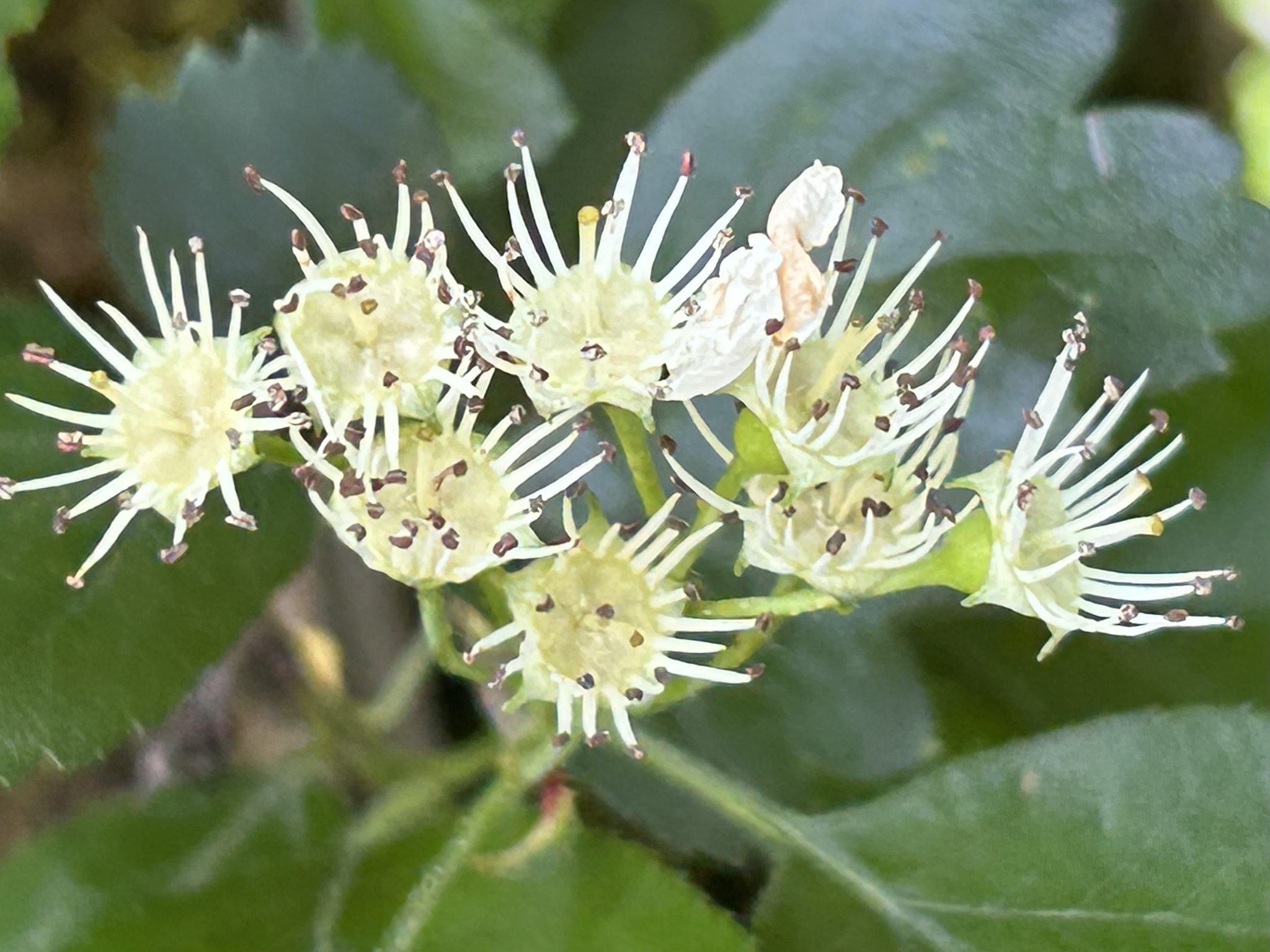
Quick facts
- Family: Rosaceae
- Difficulty: Easy to care for
- Watering: every 3 days
- Light: Full sun
- Temperature: 0–30 °C
About Bigfruit hawthorn
Crataegus macrocarpa, commonly known as large-fruited hawthorn, is a deciduous shrub or small tree in the Rosaceae family, valued for its dense foliage, white spring blossoms, and large red fruits that persist into winter. Its compact and thorny habit makes it ideal for defensive hedges, path borders, or as a specimen plant in rural and urban gardens. Its berries are attractive to wildlife and add ornamental interest during the colder seasons.
Native range
Southeast Europe
Care tips
It prefers full sun exposure for optimal flowering and fruiting, although it tolerates light partial shade. It is drought-tolerant once established but will appreciate regular watering during dry periods, especially in its first years. It adapts well to a wide range of soils, as long as they are well-drained; a loamy-clay substrate is ideal. A common mistake is over-pruning, which can reduce flowering and fruiting; limit yourself to formative pruning and removing dead or diseased branches.
How to save a dying Bigfruit hawthorn
- Warning signs
- Wilted, yellowing or spotted leaves, dry branches, no flowering or fruiting.
- First aid
- Check watering (neither excess nor lack), prune dead branches, check for pests/diseases. Apply balanced fertilizer.
- What kills it
- Constant waterlogging, lack of sun, excessive or mistimed pruning, very poor or compacted soils.
- Can it be saved?
- Yes, if you act quickly. Hawthorns are hardy. Identify and correct the cause.