Kansas hawthorn (Crataegus coccinioides)
Care, watering, light and tips for Kansas hawthorn on Floravia.
Quick facts
- Family: Rosaceae
- Difficulty: Moderate care
- Watering: every 7 days
- Light: Full sun
- Temperature: 0–30 °C
- Toxicity: Toxic to pets
About Kansas hawthorn
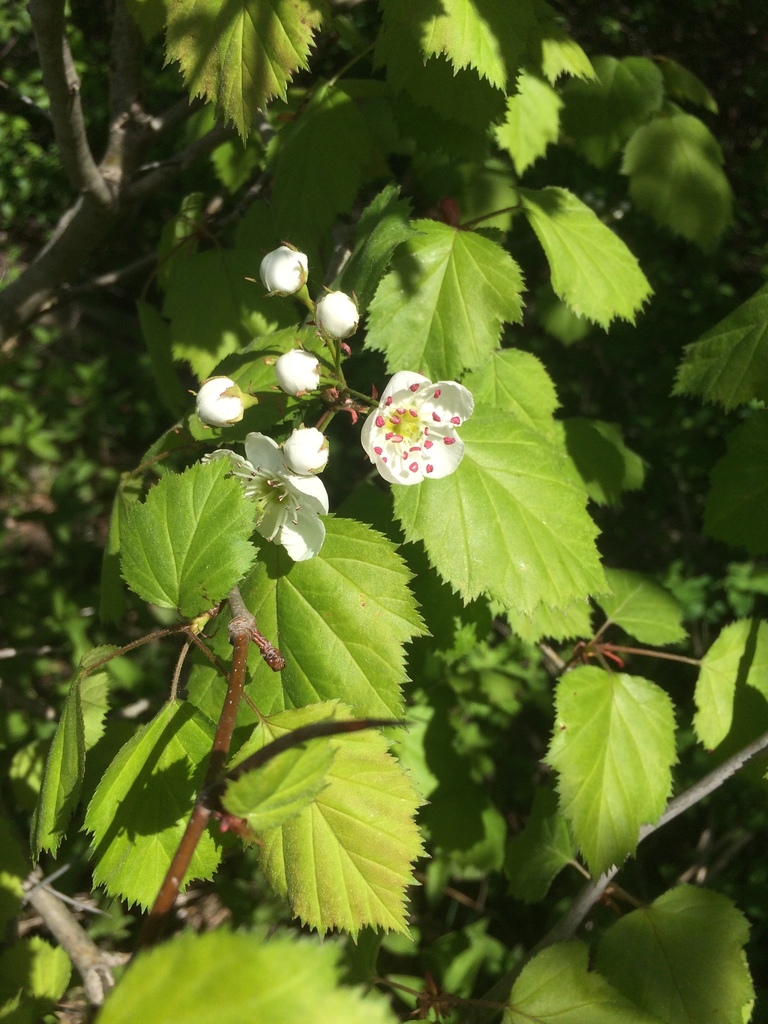
Crataegus coccinioides, commonly known as Widened Hawthorn, is a deciduous shrub or small tree in the Rosaceae family, prized for its attractive white flowers in spring and its bright red berries that persist into winter. Its leaves are broad and glossy, turning reddish in autumn. It is ideal as a specimen plant in gardens, for forming defensive hedges, or as an ornamental tree in parks and urban areas.
Native range
Eastern North America
Care tips
It prefers full sun exposure for optimal flowering and fruiting, though it tolerates partial shade. Regular watering is needed during dry periods, especially in its early years, but it is quite drought-tolerant once established. It adapts to a wide range of soils, as long as they are well-drained, preferably rich in organic matter. A common mistake is over-pruning, which can reduce flower and fruit production; it's best to prune for shaping or to remove dead/diseased branches after fruiting.
How to save a dying Kansas hawthorn
- Warning signs
- Wilted or yellowing leaves, premature fruit drop, dry or cracked branches, presence of aphids or rust.
- First aid
- Check watering, ensure good drainage. Prune dry or diseased branches. Apply insecticide or fungicide if needed.
- What kills it
- Overwatering causing root rot, or lack of water during dry periods. Lack of maintenance pruning.
- Can it be saved?
- Yes, if acted upon in time. It's a resilient tree, but needs attention to its basic water and pruning needs.