Portuguese laurel (Prunus lusitanica)
Care, watering, light and tips for Portuguese laurel on Floravia.
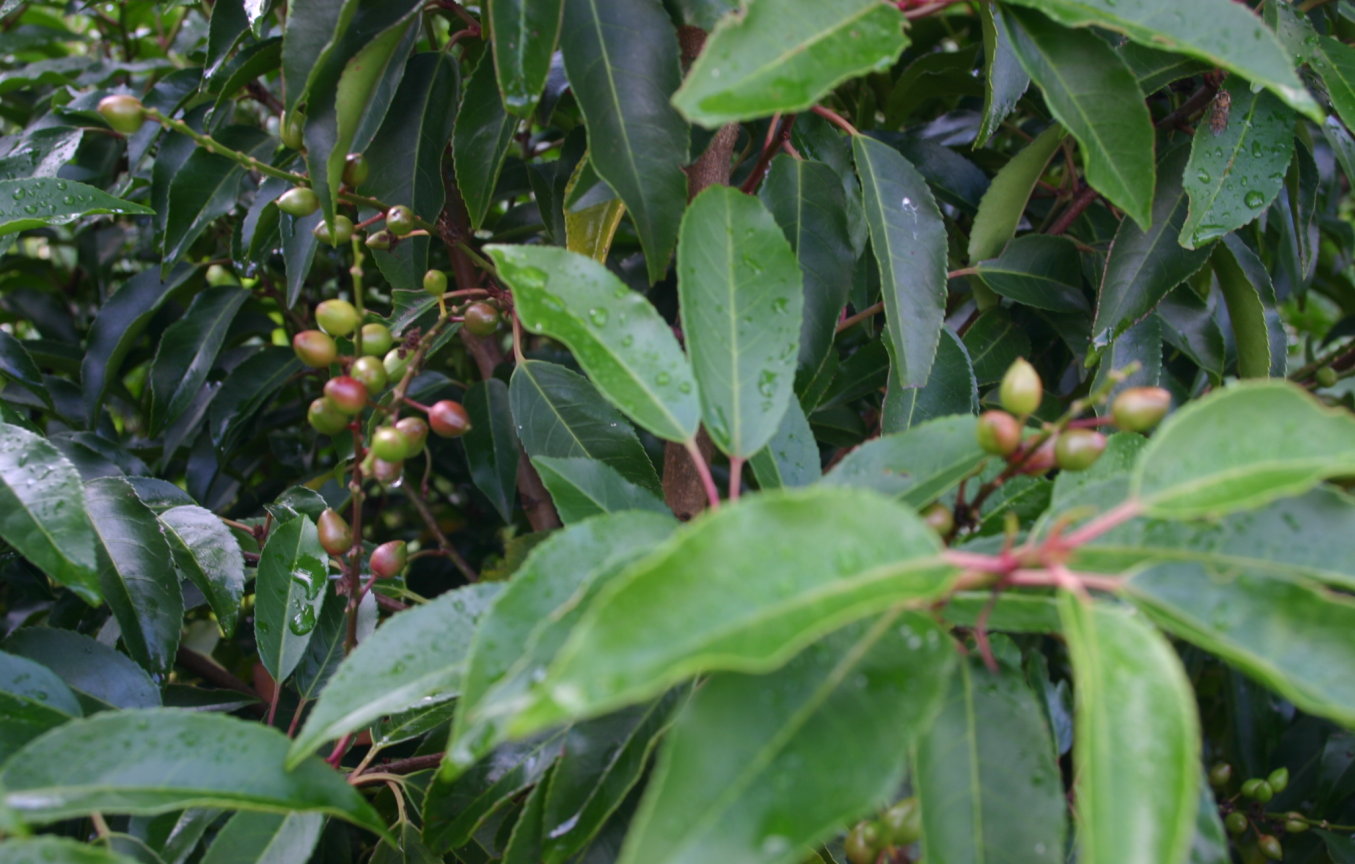
Quick facts
- Family: Rosaceae
- Difficulty: Moderate care
- Watering: every 7 days
- Light: Full sun
- Temperature: 0–30 °C
- Toxicity: Toxic to pets
About Portuguese laurel
Prunus lusitanica, commonly known as Portuguese Laurel, is an evergreen shrub or small tree highly valued for its dense, glossy dark green foliage and reddish stems. It produces small, fragrant white flowers in spikes during spring, followed by red fruits that mature to black. It's an excellent choice for formal or informal hedges, privacy screens, and as a specimen plant in Mediterranean or classic gardens.
Native range
Iberian Peninsula, Macaronesia (Canary Islands, Madeira and Azores), and southwestern France.
Care tips
It prefers a location in full sun or partial shade and is tolerant of a wide range of soils, provided they are well-drained. Watering should be regular during the first year to establish, reducing once the plant is mature, although it appreciates occasional watering during dry spells. Avoid waterlogging, as it can lead to root rot, and perform annual pruning to maintain the desired shape or to rejuvenate the plant.
How to save a dying Portuguese laurel
- Warning signs
- Yellowish or brown, wilting leaves; premature leaf drop; weak shoots.
- First aid
- Check soil moisture (avoid waterlogging/extreme drought). Protect from intense direct sun if newly planted.
- What kills it
- Overwatering (root rot) or prolonged drought. Poor or alkaline soil.
- Can it be saved?
- Yes, if roots aren't severely damaged. Act quickly with proper watering and substrate.