Japanese flowering cherry (Prunus itosakura)
Care, watering, light and tips for Japanese flowering cherry on Floravia.
Quick facts
- Family: Rosaceae
- Difficulty: Moderate care
- Watering: every 3 days
- Light: Full sun
- Temperature: 0–30 °C
- Toxicity: Toxic to pets
About Japanese flowering cherry
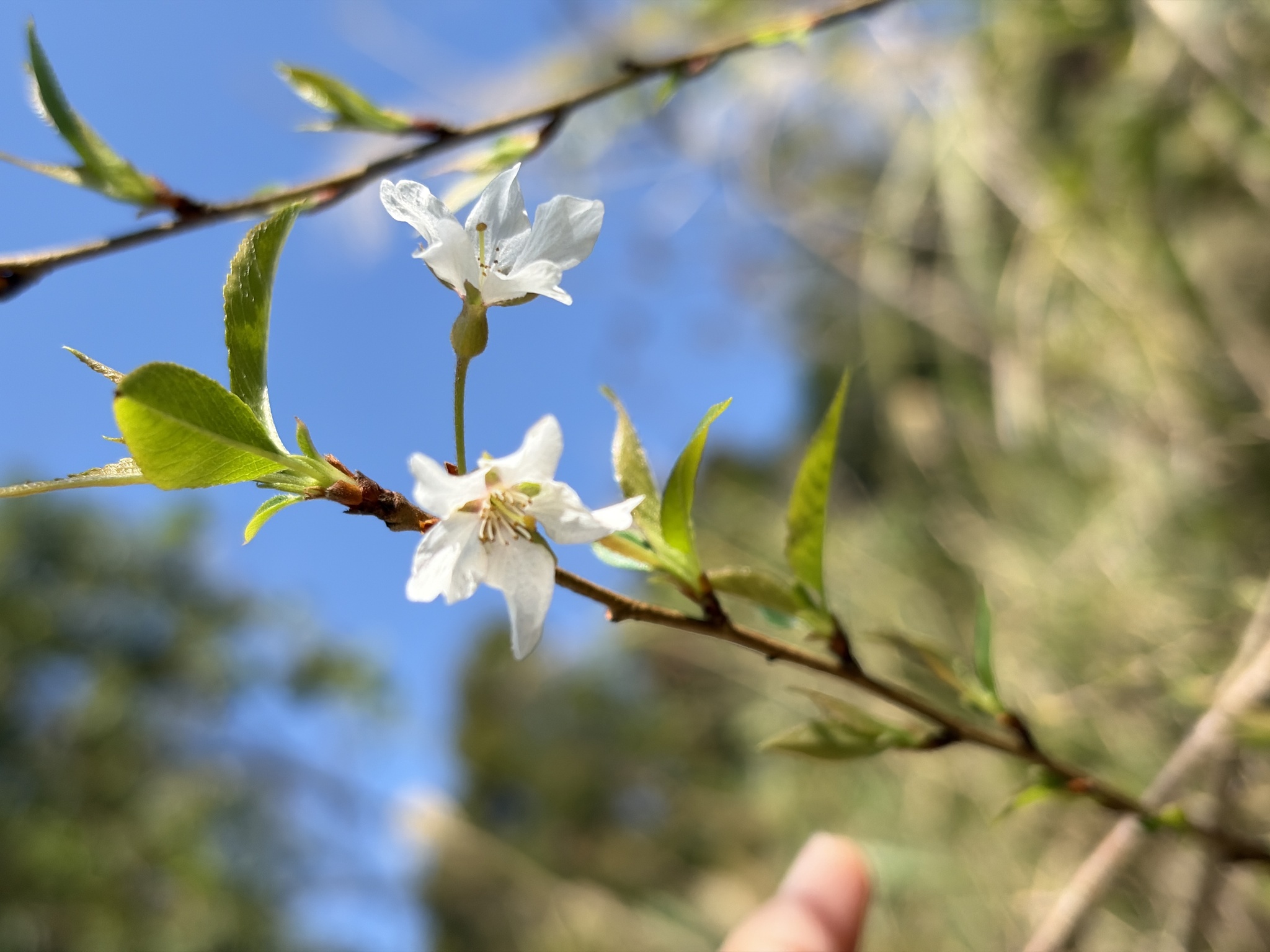
Prunus itosakura, known as 'Da Ye Han Ying', is an ornamental Japanese cherry variety valued for its early and abundant flowering. Its flowers, often pale pink to white, cover the bare branches before the leaves emerge, creating a stunning visual display. It is ideal as a solitary ornamental tree in gardens, parks, or as part of a Japanese-inspired landscape.
Native range
Japan
Care tips
It requires full sun for optimal flowering and prefers well-drained soil rich in organic matter. Watering should be regular during dry periods, especially in its early years, avoiding waterlogging. Pruning is best done after flowering to maintain shape and remove dead or diseased branches; a common mistake is pruning in autumn or winter, which reduces the following year's bloom.
How to save a dying Japanese flowering cherry
- Warning signs
- Wilted, yellowing, or dark-spotted leaves. Premature flower/bud drop. Dry branches or cracked bark.
- First aid
- Check watering (avoid waterlogging, maintain moisture). Protect from strong winds and late frosts. Inspect for pests or diseases.
- What kills it
- Overwatering causing root rot, or prolonged drought. Unsuitable location (poor light or soil).
- Can it be saved?
- Yes, if you act quickly. Good drainage and pruning can revive it. Patience is key.