Entire-leaved cotoneaster (Cotoneaster integerrimus)
Care, watering, light and tips for Entire-leaved cotoneaster on Floravia.
Quick facts
- Family: Rosaceae
- Difficulty: Easy to care for
- Watering: every 7 days
- Light: Full sun
- Temperature: 0–30 °C
- Toxicity: Toxic to pets
About Entire-leaved cotoneaster
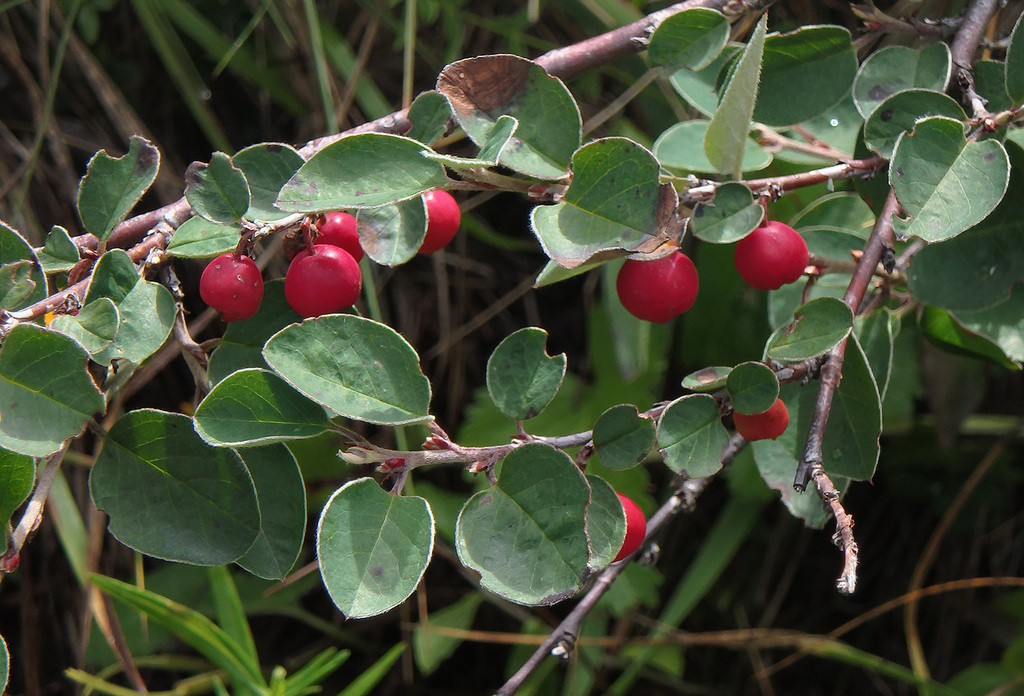
Cotoneaster integerrimus, commonly known as Rock Cotoneaster or Common Cotoneaster, is a medium-sized deciduous or semi-deciduous shrub native to Europe and Asia. Its arching branches are adorned with small, dark green oval leaves, and in autumn, with striking bright red berries that persist through winter. It is ideal for informal hedges, shrub borders, or as a standalone specimen in naturalistic gardens and rockeries.
Native range
Europe and temperate Asia, from the UK to western China
Care tips
It prefers full sun to partial shade for optimal flowering and fruiting, though it tolerates some shade. Watering should be moderate, allowing the substrate to dry out slightly between waterings, and it is quite drought-tolerant once established. It adapts to a wide range of soils, provided they are well-drained, preferring calcareous or neutral soils. Avoid overwatering, as it can lead to fungal root diseases.
How to save a dying Entire-leaved cotoneaster
- Warning signs
- Yellowish or brown leaves falling massively, dry and brittle branches.
- First aid
- Prune dead branches, check drainage, and water if substrate is dry. Protect from intense sun if young.
- What kills it
- Overwatering in heavy soils or lack of water during prolonged drought. Also summer transplanting.
- Can it be saved?
- Yes, if you act quickly and it's not completely dry. It's a resilient species.