Burrawang (Macrozamia secunda)
Care, watering, light and tips for Burrawang on Floravia.
Quick facts
- Family: Zamiaceae
- Difficulty: Moderate care
- Watering: every 10 days
- Light: Partial shade
- Temperature: 10–30 °C
- Toxicity: Toxic to pets
About Burrawang
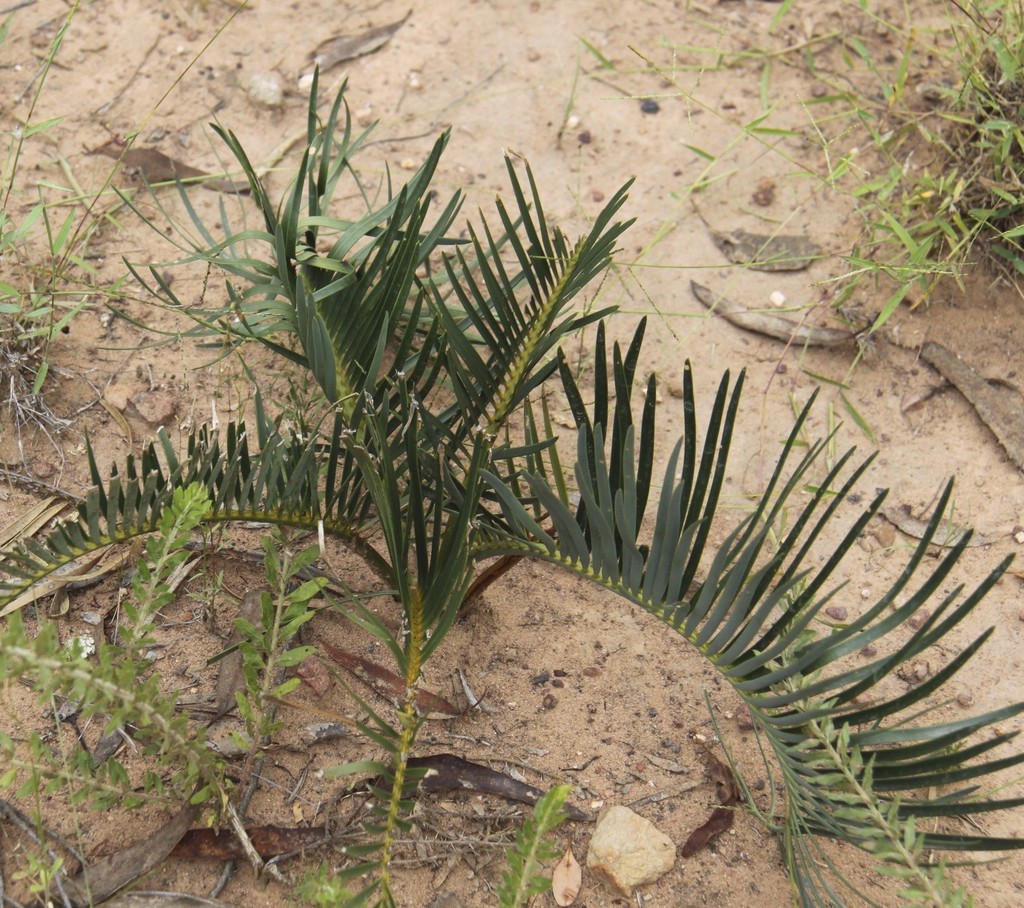
Macrozamia secunda is a medium-sized cycad, endemic to New South Wales, Australia, known for its stiff, arching leaves that often curve towards the ground, giving it a distinctive appearance. Its subterranean or very short trunk and narrow, rigid leaflets make it an ideal accent plant for rockeries, dry gardens, or as a solitary specimen in large pots, contributing a prehistoric and sculptural aesthetic. It is particularly attractive for its bright green foliage contrasting with the surrounding landscape.
Native range
New South Wales, Australia
Care tips
This cycad prefers full sun to light partial shade and well-drained soils, preferably sandy or rocky, as it is very susceptible to waterlogging. Watering should be moderate, allowing the substrate to dry out completely between waterings, especially in winter; it is a drought-tolerant plant once established. A common mistake is overwatering, which can lead to crown or root rot. For optimal growth, avoid frequent repotting and protect it from severe frosts, although it can tolerate brief periods of light cold.
How to save a dying Burrawang
- Warning signs
- Yellow or brown, soft or dry leaves. General decline of the plant.
- First aid
- Check drainage and soil moisture. Ensure good ventilation and bright indirect light. If potted, consider repotting to one with better drainage.
- What kills it
- Overwatering is its worst enemy, easily rotting roots. Also extreme cold or lack of light. Do not over-prune.
- Can it be saved?
- Yes, if you act quickly. Remove damaged parts. With good drainage and controlled watering, it can recover, albeit slowly.