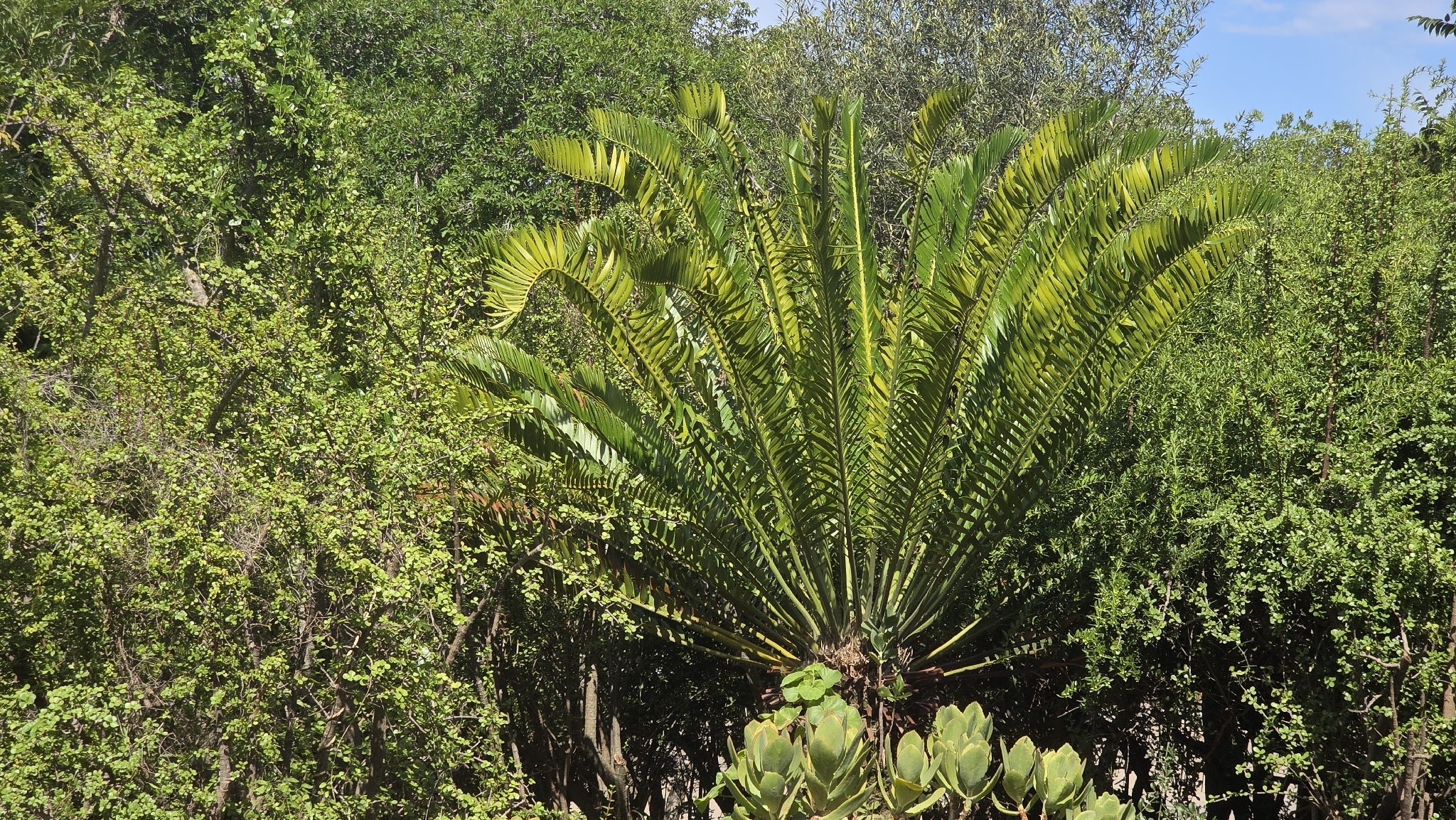
Eastern Cape giant cycad (Encephalartos altensteinii)
Care, watering, light and tips for Eastern Cape giant cycad on Floravia.
Quick facts
- Family: Zamiaceae
- Difficulty: Demanding
- Watering: every 10 days
- Light: Partial shade
- Temperature: 10–30 °C
- Toxicity: Toxic to pets
About Eastern Cape giant cycad
Encephalartos altensteinii, also known as the Eastern Cape Cycad, is a striking arborescent cycad native to South Africa, characterized by its robust trunk and crowns of stiff, bright green, pinnate leaves. This slow-growing, prehistoric plant adds a touch of exoticism and ancient beauty to any tropical, subtropical, or rock garden. Its majestic stature makes it an excellent focal point in large landscapes or rare plant collections.
Native range
South Africa (Eastern Cape)
Care tips
It requires full sun for optimal growth, though it tolerates partial shade in very hot climates. Watering should be moderate, allowing the substrate to dry out completely between waterings, and reduced in winter to prevent root rot. It prefers a well-drained, sandy or rocky substrate with a neutral to slightly acidic pH. A common mistake to avoid is overwatering, which is the main cause of problems in cycads.
How to save a dying Eastern Cape giant cycad
- Warning signs
- Yellow or brown, soft leaves from the base; soft or blackened stem, indicating rot.
- First aid
- Remove plant, inspect roots. Cut off soft, rotten parts with sterile tool. Apply fungicide.
- What kills it
- Overwatering and poor drainage. Cycads are very sensitive to waterlogging.
- Can it be saved?
- Yes, if rot hasn't progressed much and the growth cone is healthy. Act quickly.