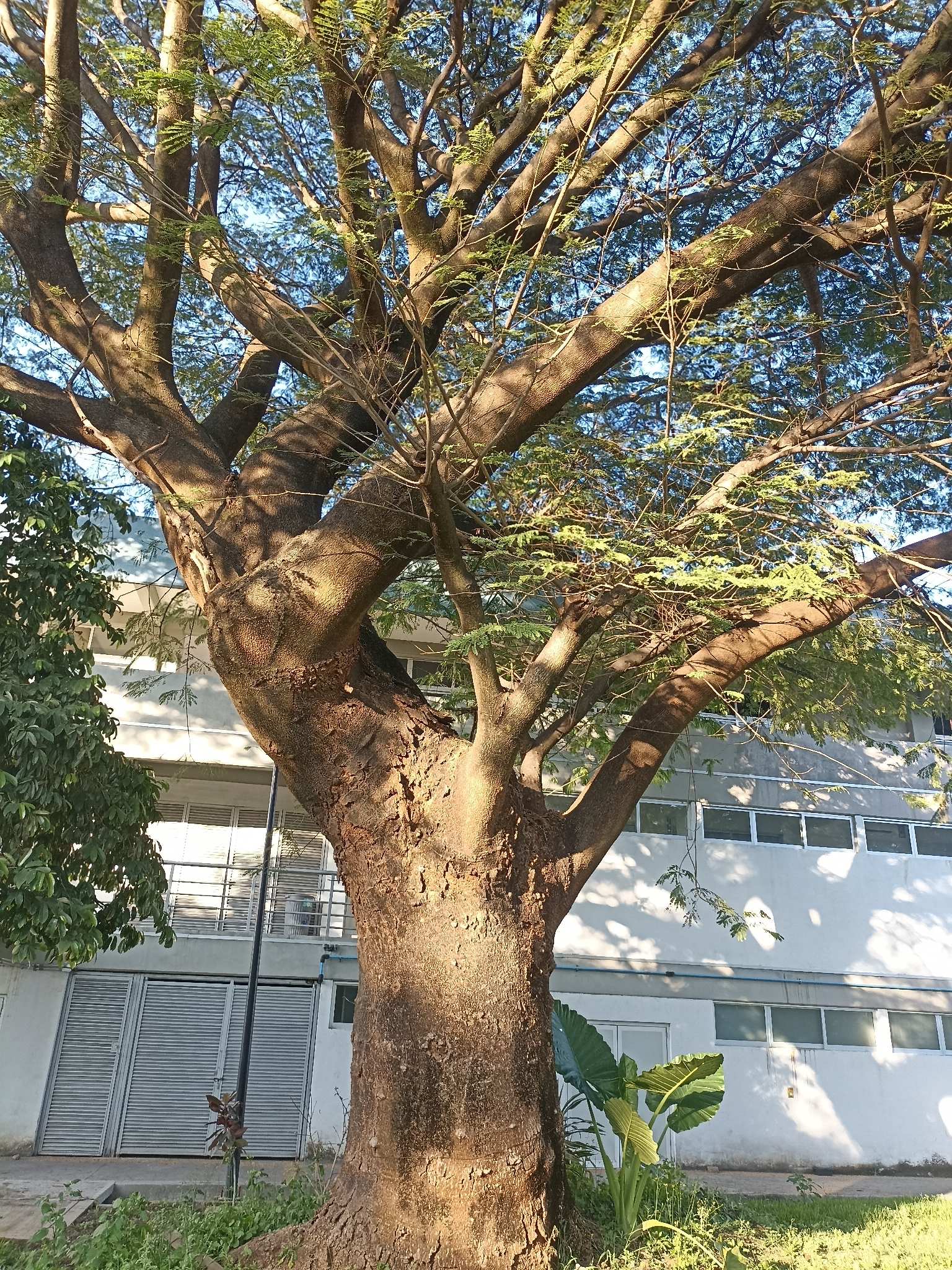
Guanacaste (Enterolobium cyclocarpum)
Care, watering, light and tips for Guanacaste on Floravia.
Quick facts
- Family: Fabaceae
- Difficulty: Moderate care
- Watering: every 5 days
- Light: Full sun
- Temperature: 5–35 °C
- Toxicity: Toxic to pets
About Guanacaste
Enterolobium cyclocarpum, commonly known as Guanacaste or Elephant Ear Tree, is a majestic tree from the Fabaceae family, native to tropical America. It is distinguished by its wide, umbrella-shaped canopy, which can reach 30 meters in height and a similar diameter, and its woody, spiral-shaped pods resembling an ear. It is ideal for large gardens, parks, and avenues, providing generous shade and a majestic visual impact.
Native range
Mexico, Central America, and northern South America
Care tips
It requires full sun for optimal growth and tolerates a wide range of soils, although it prefers well-drained and fertile ones. It is quite drought-tolerant once established, but benefits from regular watering during dry periods in its early years. Ensure you provide ample space for its extensive root system and large canopy. A common mistake is planting it in confined spaces, which will limit its development and can cause structural problems.
How to save a dying Guanacaste
- Warning signs
- Yellow or brown leaves falling prematurely, slow or no growth, cracked or damaged trunk.
- First aid
- Check soil drainage and moisture. If potted, consider repotting to a larger container or planting directly in the ground. Protect from strong winds.
- What kills it
- Excessive waterlogging (root rot), lack of direct sunlight (needs full sun), or poor, compacted soils.
- Can it be saved?
- Yes, if the roots are not completely rotted and the main trunk is not severely damaged. Act quickly.