Catclaw blackbead (Pithecellobium unguis-cati)
Care, watering, light and tips for Catclaw blackbead on Floravia.
Quick facts
- Family: Fabaceae
- Difficulty: Moderate care
- Watering: every 7 days
- Light: Full sun
- Temperature: 5–35 °C
- Toxicity: Toxic to pets
About Catclaw blackbead
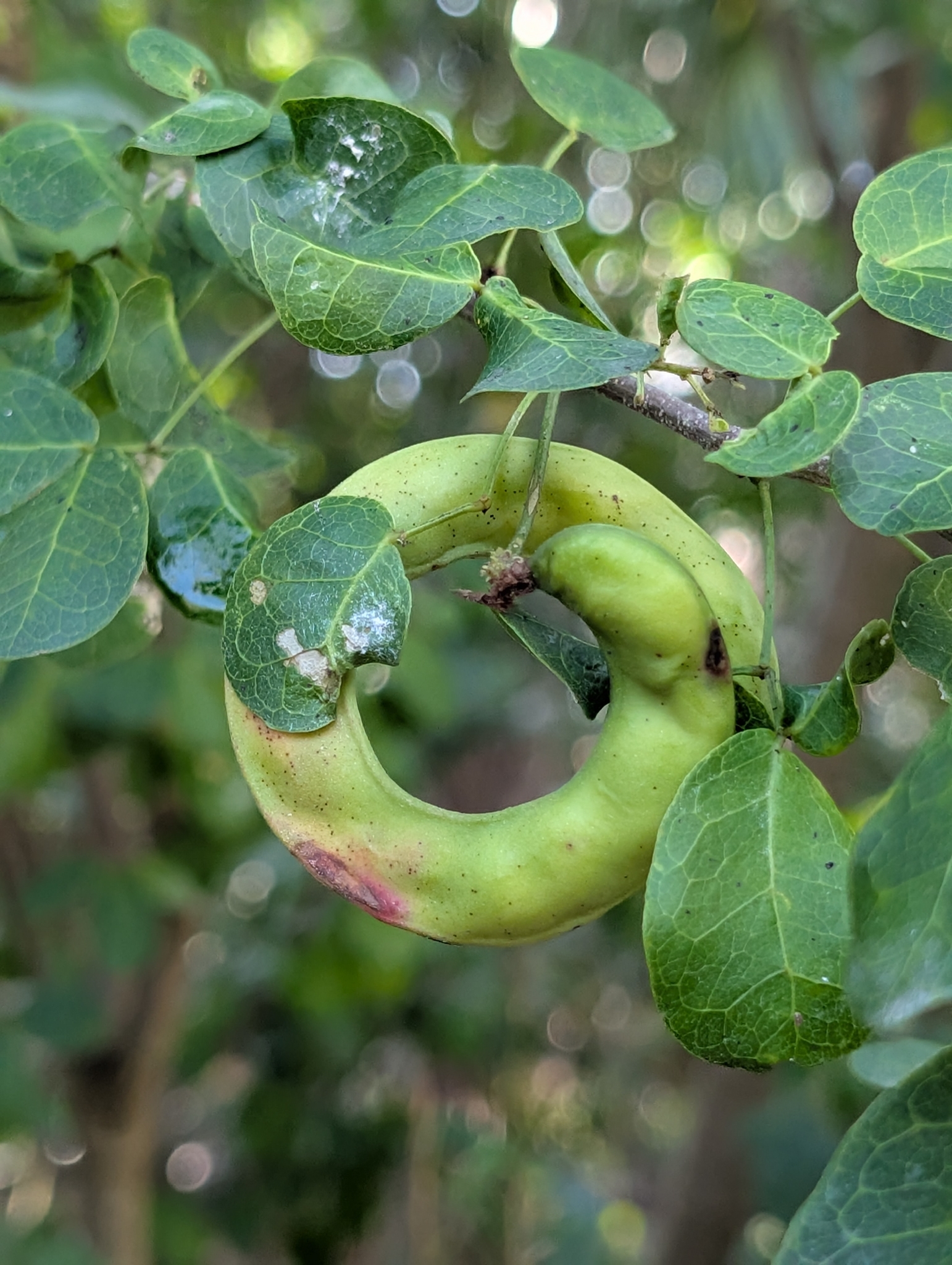
Pithecellobium unguis-cati, commonly known as Catclaw Blackbead, is a perennial shrub or small tree native to tropical and subtropical regions of the Americas. It is characterized by its small bipinnate leaves, brush-like whitish or pale yellow flowers, and notably, its twisted seed pods that resemble a cat's claw. It is ideal for xeriscape gardens, as a living hedge, or as a standalone specimen due to its interesting form and hardiness.
Native range
Tropical coastal regions of Florida (USA), the Caribbean, Mexico, and Central America.
Care tips
This plant thrives in full sun and tolerates partial shade, although it will flower best with ample light. It requires moderate watering once established, being quite drought-tolerant; avoid waterlogging as it is susceptible to root rot. It prefers well-drained, sandy, or calcareous soils and is not demanding regarding nutrients. A common mistake is overwatering or planting it in heavy, poorly drained soils, which can be fatal for the plant.
How to save a dying Catclaw blackbead
- Warning signs
- Yellowing or massive leaf drop, dry or brittle branches, no new shoots.
- First aid
- Check drainage and watering. Provide shade from strong direct sun. Prune dead branches.
- What kills it
- Extreme over or under-watering, waterlogged soil. Too much direct sun in dry climates.
- Can it be saved?
- Yes, it's resilient. Act quickly if you see severe wilting or defoliation.