Japanese pagoda tree (Styphnolobium japonicum)
Care, watering, light and tips for Japanese pagoda tree on Floravia.
Quick facts
- Family: Fabaceae
- Difficulty: Easy to care for
- Watering: every 7 days
- Light: Full sun
- Temperature: 5–35 °C
- Toxicity: Toxic to pets
About Japanese pagoda tree
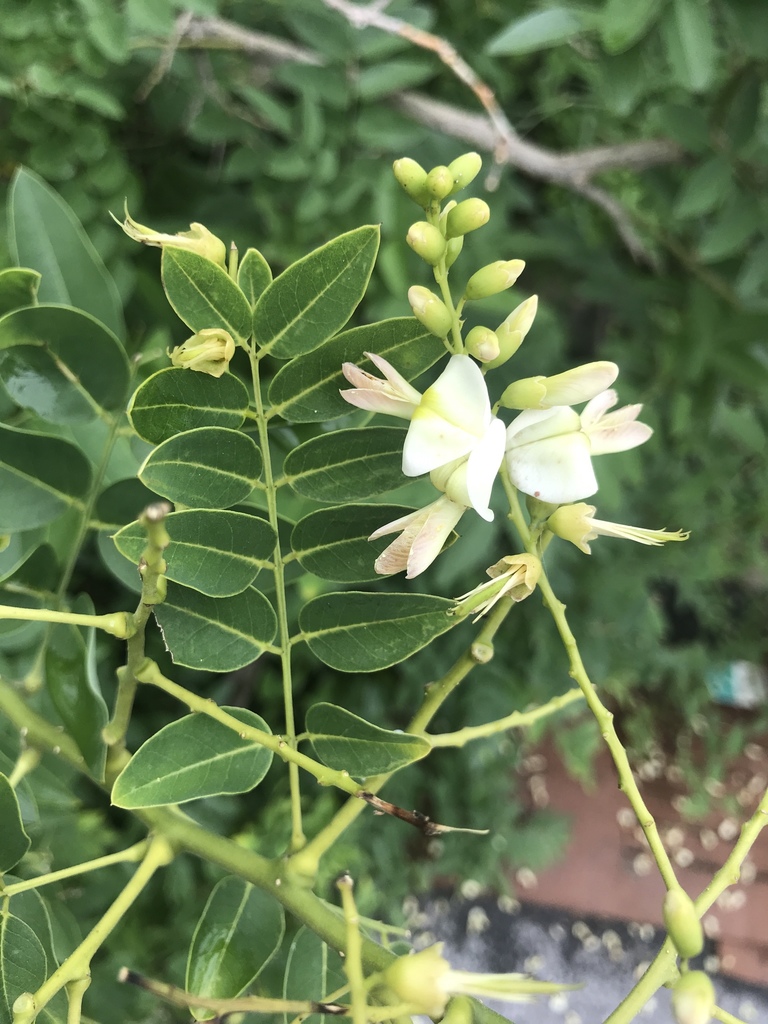
Styphnolobium japonicum, commonly known as the Pagoda Tree or Scholar Tree, is a medium to large deciduous tree, valued for its elegant rounded canopy and clusters of creamy-white flowers that appear in late summer. Its dark green foliage and distinctive late bloom make it a magnificent specimen for parks, large gardens, or as a street tree. It is particularly attractive for its seasonal interest, from the shade it provides in summer to the beauty of its late-season flowers.
Native range
East Asia (mainly China and Korea)
Care tips
It prefers a full sun exposure for optimal flowering, although it tolerates some partial shade. It is very adaptable regarding watering, tolerating periods of drought once established, but benefits from regular watering during its first few years and in periods of extreme heat. The ideal substrate is well-drained, fertile, and slightly acidic to neutral, although it is quite tolerant of different soil types. A common mistake is planting it in very compacted soils without proper preparation, which can hinder its establishment.
How to save a dying Japanese pagoda tree
- Warning signs
- Yellowing or wilting leaves, premature leaf drop, dry or brittle branches. General decline.
- First aid
- Check watering (moist but not waterlogged soil). Ensure good drainage and adequate sun exposure (full sun).
- What kills it
- Overwatering causing root rot, or prolonged drought in dry periods. Lack of light.
- Can it be saved?
- Yes, if roots are not completely rotted and the main trunk is undamaged. Act quickly.