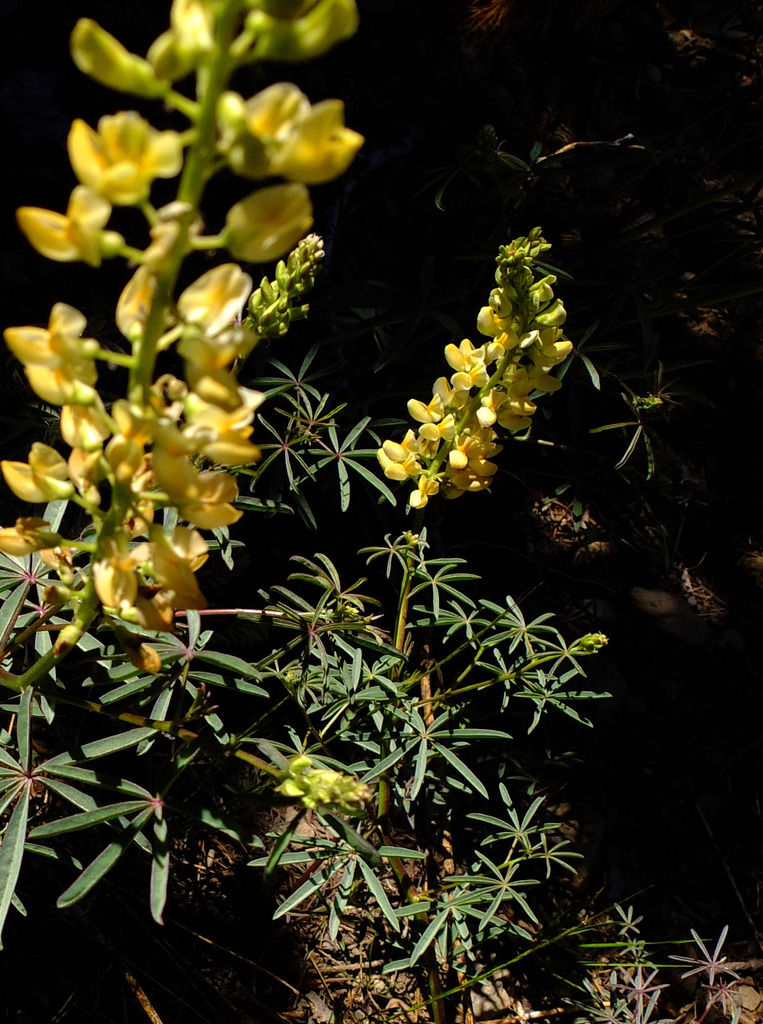
Narrow-leaved lupin (Lupinus angustiflorus)
Care, watering, light and tips for Narrow-leaved lupin on Floravia.
Quick facts
- Family: Fabaceae
- Difficulty: Moderate care
- Watering: every 7 days
- Light: Full sun
- Temperature: 5–35 °C
- Toxicity: Toxic to pets
About Narrow-leaved lupin
Lupinus angustifolius, commonly known as narrow-leafed lupin or blue lupin, is a beautiful annual legume that produces spikes of blue or purple flowers. Its pale green foliage and dense flower clusters make it ideal for naturalized meadows, garden borders, and as a green manure. It's a plant that adds a rustic and vibrant touch to any landscape.
Native range
Mediterranean region, Southern Europe and North Africa.
Care tips
It requires full sun for optimal flowering and prefers well-drained soils, slightly acidic to neutral. Watering should be moderate, allowing the substrate to dry out slightly between waterings, as excess moisture can lead to rot. Avoid transplanting once established, as it does not tolerate root disturbance well. It does not need much fertilization, as it fixes its own nitrogen.
How to save a dying Narrow-leaved lupin
- Warning signs
- Yellowing or wilting leaves (lack of water/nutrients), leaf spots (fungi).
- First aid
- Check soil moisture, lightly fertilize with legume-specific feed, prune affected leaves.
- What kills it
- Constant waterlogging (root rot), poor soil, lack of direct sunlight.
- Can it be saved?
- Yes, if you act quickly. Observe the stem; if firm, there's hope.