Lupinus bracteolaris
Care, watering, light and tips for Lupinus bracteolaris on Floravia.
Quick facts
- Family: Fabaceae
- Difficulty: Moderate care
- Watering: every 5 days
- Light: Full sun
- Temperature: 5–35 °C
- Toxicity: Toxic to pets
About Lupinus bracteolaris
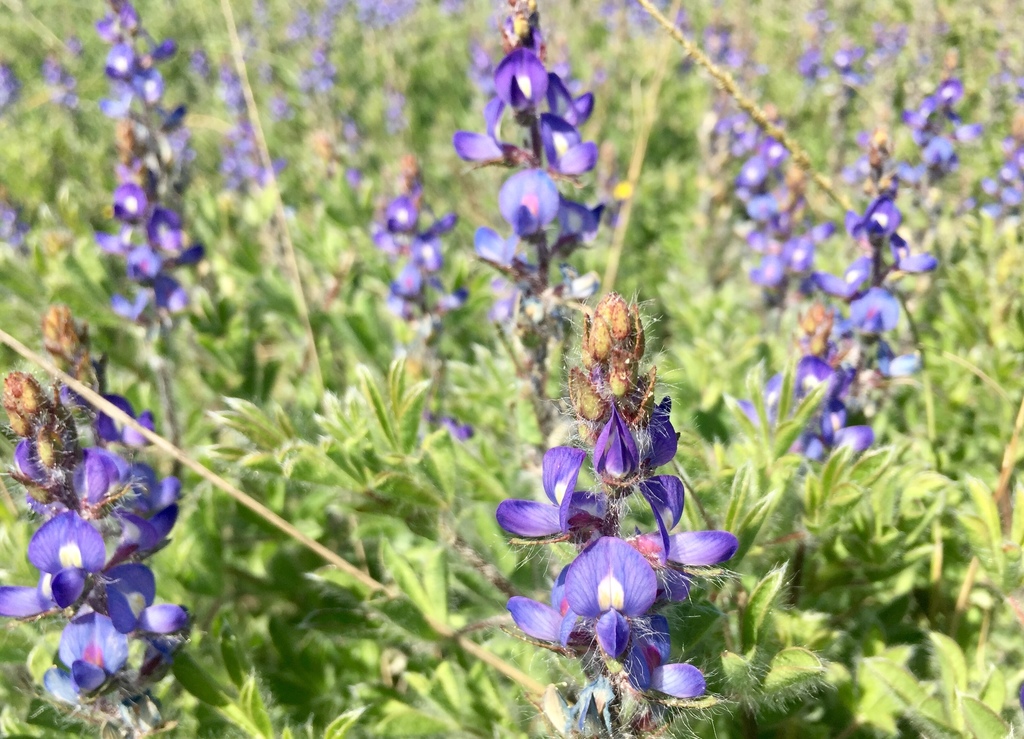
Lupinus bracteolaris, commonly known as tremoço, is an annual legume native to the Iberian Peninsula, notable for its striking blue-violet flowers clustered in dense spikes. Its silvery-green foliage forms a compact mound, making it an excellent choice for rock gardens, path edges, or as an ornamental potted plant. It attracts pollinators and can be used to improve soil quality due to its nitrogen-fixing capabilities.
Native range
South America, specifically in the Andean region of countries like Peru, Bolivia, and Argentina.
Care tips
It prefers full sun exposure for abundant flowering and well-drained, slightly acidic to neutral soil. Watering should be moderate, allowing the substrate to dry out slightly between waterings, and it's important to avoid waterlogging as it is susceptible to root rot. A common mistake is attempting to transplant large seedlings, as lupines do not tolerate root disturbance well; it's best to sow directly in their final location. It does not require excessive fertilization, as it is a legume.
How to save a dying Lupinus bracteolaris
- Warning signs
- Yellowish or brown, wilting leaves; no flowering or flower drop.
- First aid
- Check drainage and watering; ensure 6h+ direct sun; if potted, consider repotting.
- What kills it
- Overwatering (root rot) or poor/compacted soil. Also lack of direct sun.
- Can it be saved?
- Yes, if you act quickly. Good drainage and sun are key to recovery.