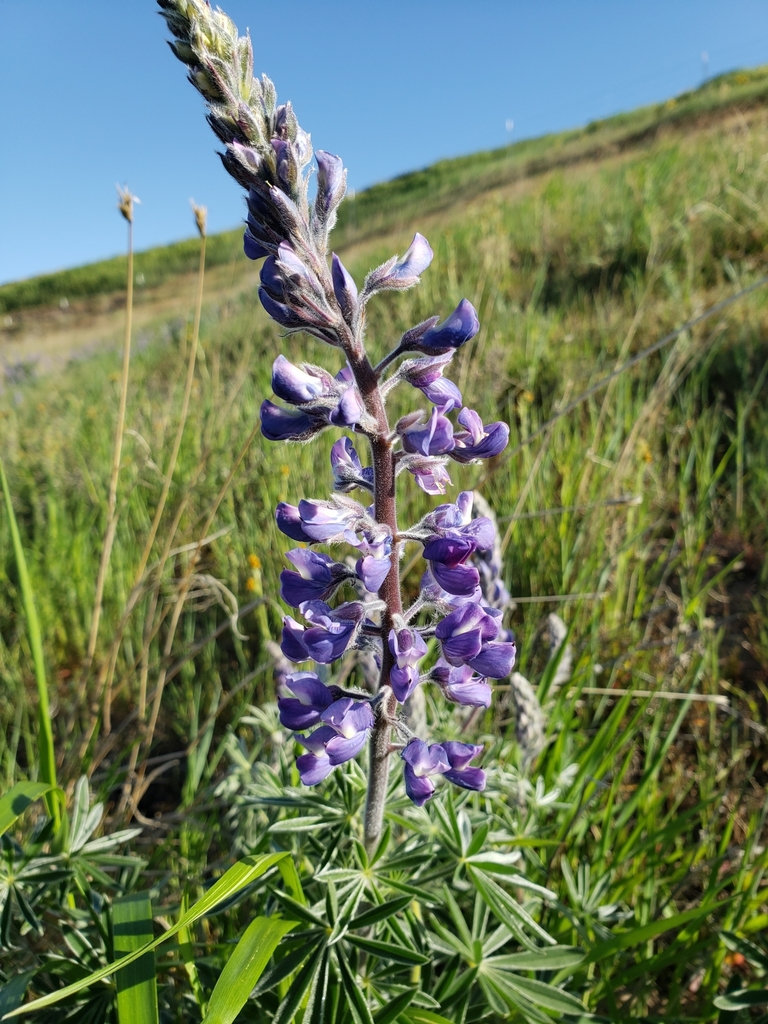
Lupin (Lupinus mollis)
Care, watering, light and tips for Lupin on Floravia.
Quick facts
- Family: Fabaceae
- Difficulty: Moderate care
- Watering: every 7 days
- Light: Full sun
- Temperature: 5–35 °C
- Toxicity: Toxic to pets
About Lupin
Lupinus mollis, commonly known as soft lupine, is a robust perennial herb belonging to the legume family, native to North America. It is distinguished by its velvety, silvery-green leaves and spectacular spikes of flowers ranging from lavender-blue to deep purple, appearing in spring and early summer. It is ideal for naturalistic gardens, meadows, or as a focal plant in perennial borders, attracting pollinators.
Native range
North America (primarily the northwestern United States and southwestern Canada)
Care tips
It prefers full sun and well-drained soils, even poor or sandy ones, though it does not tolerate heavy clay. Watering should be moderate, allowing the substrate to dry out between waterings, as excessive moisture can lead to root rot. A common mistake is attempting to transplant established lupines, as they dislike disturbance to their deep taproots; it's better to sow directly or plant young specimens carefully. It doesn't require much fertilization, but a layer of compost in spring can be beneficial.
How to save a dying Lupin
- Warning signs
- Yellowing or wilting leaves, soft or drooping stems, lack of flowering.
- First aid
- Move to partial shade, water moderately if soil is dry, check drainage.
- What kills it
- Overwatering (especially in heavy soils), waterlogging, intense direct sun.
- Can it be saved?
- Yes, if acted upon quickly. Requires good drainage and avoiding scorching sun.