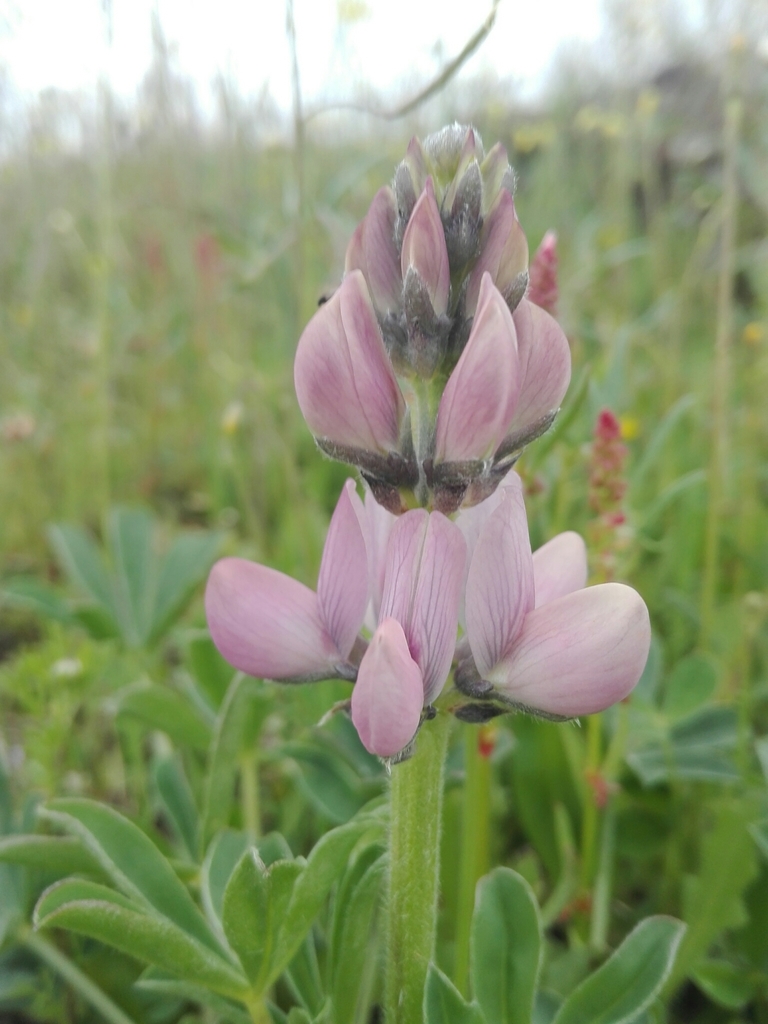
Spanish lupine (Lupinus hispanicus)
Care, watering, light and tips for Spanish lupine on Floravia.
Quick facts
- Family: Fabaceae
- Difficulty: Easy to care for
- Watering: every 7 days
- Light: Full sun
- Temperature: 5–35 °C
- Toxicity: Toxic to pets
About Spanish lupine
Lupinus hispanicus, commonly known as Spanish Lupin, is an annual herbaceous plant native to the Iberian Peninsula, characterized by its showy blue-violet flower spikes. Its blooms, appearing in spring, form dense clusters that attract pollinators and add a wild, colorful touch to gardens, meadows, or roadsides. It's ideal for naturalizing areas and adding height and texture to low-maintenance flower beds.
Native range
Iberian Peninsula and Northwest Africa
Care tips
It prefers full sun exposure for abundant flowering and vigorous growth. It requires moderate watering, especially during establishment and dry periods, avoiding waterlogging as it does not tolerate excessively wet soils. It thrives best in well-drained, slightly acidic to neutral soils, and does not require rich soil; in fact, it can improve soil quality by fixing nitrogen. A common mistake is attempting to transplant mature specimens, as they usually have a deep root system that does not tolerate disturbance well.
How to save a dying Spanish lupine
- Warning signs
- Yellowish or whitish, wilted leaves, stunted growth, no flowering. May indicate over/underwatering or alkaline soils.
- First aid
- Check soil moisture. If dry, water deeply. If waterlogged, drain and improve soil. Ensure acidic pH (5.5-6.5).
- What kills it
- The main mistake is overwatering, causing root rot, or growing in alkaline soils, leading to chlorosis and nutrient deficiencies.
- Can it be saved?
- Yes, if you act quickly. Correct watering and adjust soil pH. If root rot is advanced, recovery might be difficult.