Liquorice (Glycyrrhiza glabra)
Care, watering, light and tips for Liquorice on Floravia.
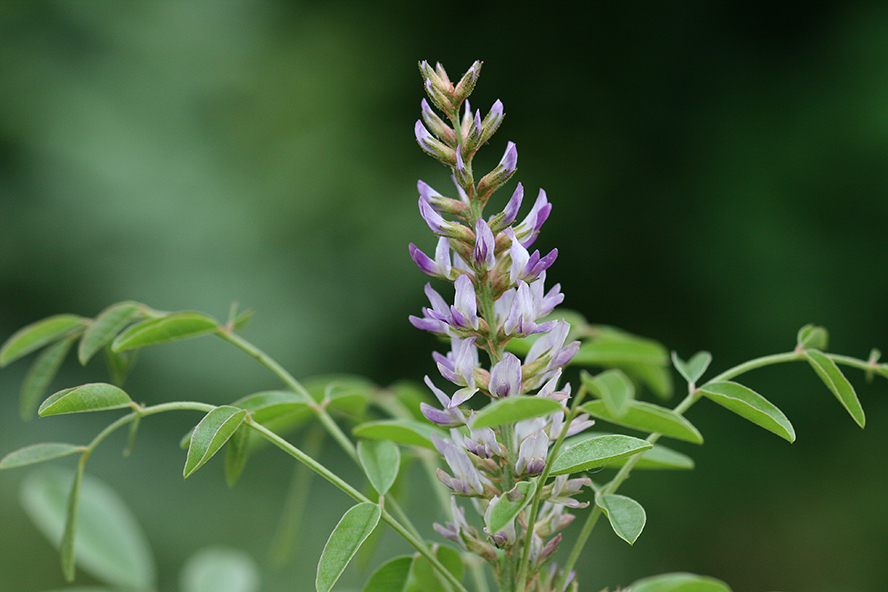
Quick facts
- Family: Fabaceae
- Difficulty: Easy to care for
- Watering: every 7 days
- Light: Full sun
- Temperature: 5–35 °C
- Toxicity: Toxic to pets
About Liquorice
Glycyrrhiza glabra, commonly known as licorice, is a perennial herbaceous plant belonging to the Fabaceae family, prized for its sweet and medicinal roots. It develops erect stems and pinnate leaves, with purple or bluish flowers arranged in spikes. It is ideal for herb and medicinal plant gardens, or for borders where its rhizomatous growth can be contained.
Native range
Southern Europe and Asia, from the Mediterranean to China.
Care tips
It requires full sun to partial shade exposure and well-drained, sandy, fertile soil, preferably alkaline. Watering should be moderate, allowing the top layer of the substrate to dry out between waterings, although it toler tolerates some drought once established. A common mistake is not controlling its tendency to spread vigorously via its rhizomes, so it is recommended to grow it in large pots or with underground barriers in the garden. It does not tolerate waterlogging.
How to save a dying Liquorice
- Warning signs
- Yellow, wilted, or spotted leaves. Stunted growth. Soft or rotting stems from the base.
- First aid
- Check drainage. Reduce watering if waterlogged. If pests are present, remove gently. Ensure adequate light.
- What kills it
- Overwatering causes root rot. Insufficient light weakens the plant. Prolonged extreme drought.
- Can it be saved?
- Yes, if roots aren't completely rotted. Act quickly to correct the issue.