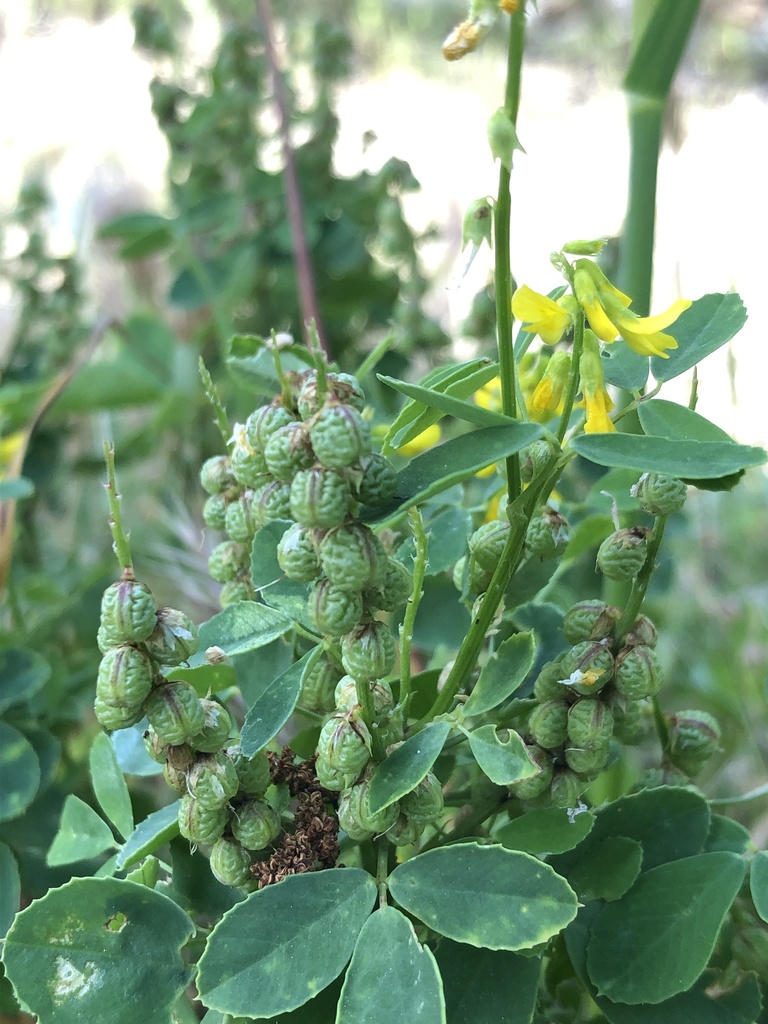
Italian sweetclover (Melilotus italicus)
Care, watering, light and tips for Italian sweetclover on Floravia.
Quick facts
- Family: Fabaceae
- Difficulty: Easy to care for
- Watering: every 5 days
- Light: Full sun
- Temperature: 5–35 °C
- Toxicity: Toxic to pets
About Italian sweetclover
Melilotus italicus, commonly known as Italian Sweetclover, is an annual or biennial herbaceous plant belonging to the legume family, native to the Mediterranean. It grows up to 60 cm tall, featuring branched stems and trifoliate leaves. Its small, yellow flowers, clustered in dense, elongated racemes, are highly attractive to pollinators and add a wild, rustic touch to gardens and meadows.
Native range
Mediterranean region
Care tips
It thrives in full sun for abundant flowering, though it tolerates light partial shade. This plant is not very demanding regarding watering, adapting well to dry soils and tolerating drought once established. It performs best in poor, well-drained, and preferably calcareous soils, enriching the soil with nitrogen. A common mistake is overwatering, which can lead to root rot, as it is adapted to more arid conditions.
How to save a dying Italian sweetclover
- Warning signs
- Yellowing or wilting leaves, soft stems, lack of flowering. May indicate overwatering or nutrient excess.
- First aid
- Reduce watering, ensure good drainage. If potted, consider repotting with fresh, light soil.
- What kills it
- Constant waterlogging, heavy soil, or lack of light. Does not tolerate very acidic soils.
- Can it be saved?
- Yes! It's a robust plant. Act quickly by correcting watering and substrate.