Hungarian vetch (Vicia pannonica)
Care, watering, light and tips for Hungarian vetch on Floravia.
Quick facts
- Family: Fabaceae
- Difficulty: Easy to care for
- Watering: every 5 days
- Light: Full sun
- Temperature: 5–35 °C
- Toxicity: Toxic to pets
About Hungarian vetch
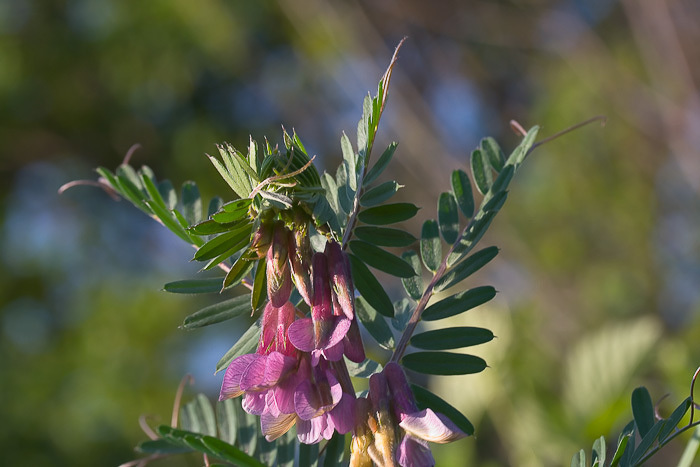
Vicia pannonica, commonly known as Hungarian vetch, is a fast-growing annual legume, valued for its use as green manure and forage. It features climbing or semi-erect stems with pinnately compound leaves and purple or whitish flowers in racemes. It is ideal for improving soil structure in vegetable gardens or agricultural fields, as well as for covering bare ground and attracting pollinators.
Native range
Europe, Anatolia, and the Caucasus
Care tips
It prefers full sun exposure and well-drained soils, although it tolerates a wide range of soil types, including poor ones. Watering should be moderate, allowing the top layer of the substrate to dry out between waterings, and is particularly important during dry periods. It does not require additional fertilization if grown as green manure, as it fixes atmospheric nitrogen. A common mistake to avoid is sowing too late in the season, which can reduce its establishment capacity and biomass production.
How to save a dying Hungarian vetch
- Warning signs
- Yellowing or wilting leaves, soft stems, no flowering.
- First aid
- Check soil drainage and moisture. Ensure good ventilation.
- What kills it
- Overwatering or waterlogged soil; insufficient light or dense shade.
- Can it be saved?
- Yes, if you act quickly to correct watering and sun exposure.