Cowpea (Vigna unguiculata)
Care, watering, light and tips for Cowpea on Floravia.
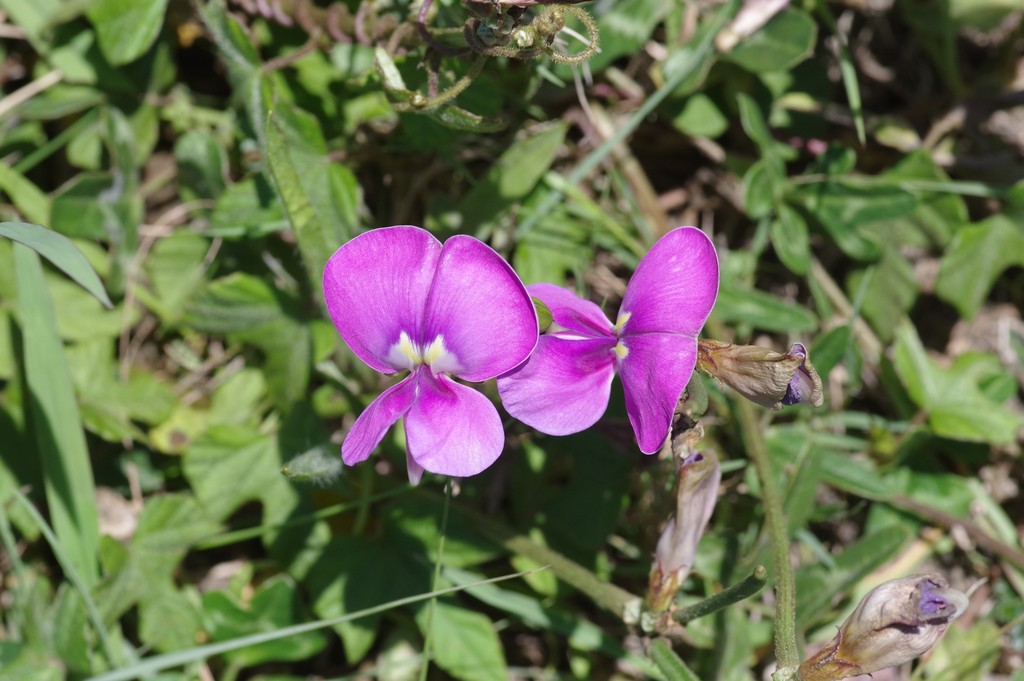
Quick facts
- Family: Fabaceae
- Difficulty: Easy to care for
- Watering: every 3 days
- Light: Full sun
- Temperature: 5–35 °C
About Cowpea
Vigna unguiculata, commonly known as black-eyed pea or cowpea, is an annual legume from the Fabaceae family, valued for its nutritious seeds and its ability to improve soil fertility. It exhibits vigorous growth, with trailing or climbing stems and deep green trifoliate leaves, producing long, slender pods. It is ideal for vegetable gardens, intercropping, or as a cover crop, adding a rustic and productive touch.
Native range
West Africa
Care tips
This plant thrives in full sun, requiring at least 6-8 hours daily for good pod production. Watering should be regular, keeping the soil moist but well-drained, especially during flowering and pod development, avoiding waterlogging. It prefers well-drained soils, with a pH between 6.0 and 7.0, enriched with organic matter; it is not demanding in nitrogen nutrients due to its nitrogen-fixing ability. A common mistake to avoid is overwatering in early stages, which can encourage fungal diseases.
How to save a dying Cowpea
- Warning signs
- Yellow or wilted leaves, stunted growth, small or absent pods.
- First aid
- Check soil moisture, protect from extreme cold and intense sun. Ensure good drainage.
- What kills it
- Constant waterlogging, low temperatures, lack of direct sun or poor soils.
- Can it be saved?
- Yes, if you act quickly correcting watering, temperature, and light. It's quite resilient.