Eastern redbud (Cercis canadensis)
Care, watering, light and tips for Eastern redbud on Floravia.
Quick facts
- Family: Fabaceae
- Difficulty: Moderate care
- Watering: every 7 days
- Light: Full sun
- Temperature: 5–35 °C
About Eastern redbud
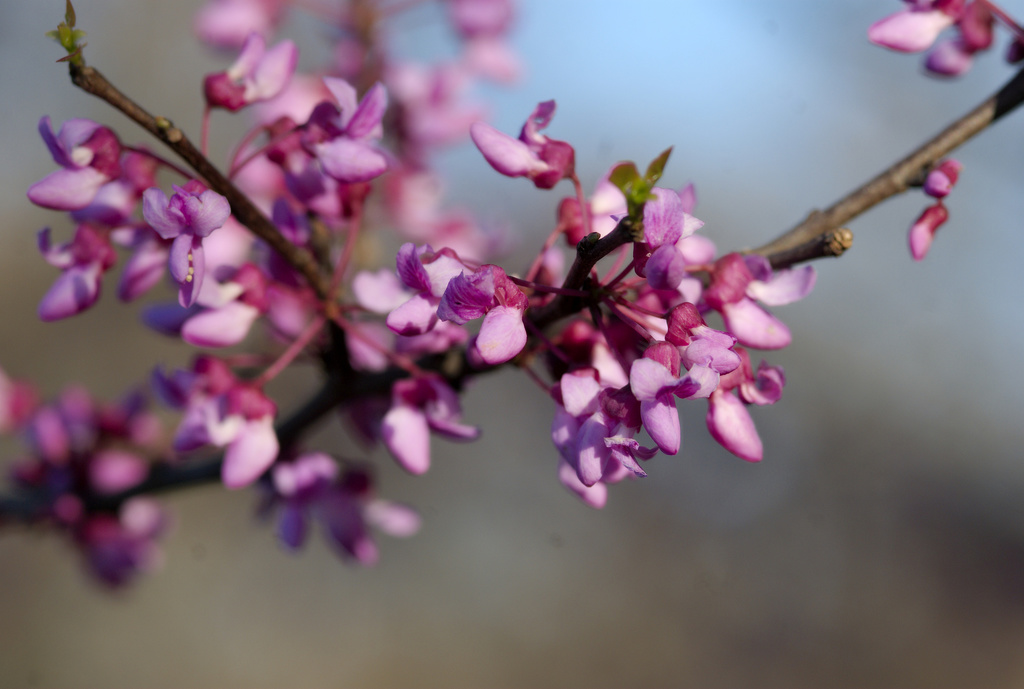
Cercis canadensis, commonly known as Eastern Redbud, is a small to medium-sized deciduous tree renowned for its spectacular spring bloom. Its small, purplish-pink flowers emerge directly from the trunk and branches before the heart-shaped leaves appear, creating a stunning visual impact. It is ideal as a specimen tree in small gardens, as a light shade tree, or to add a vibrant splash of color to the landscape in early spring.
Native range
Eastern North America
Care tips
It prefers full sun to partial shade, thriving with at least 4-6 hours of direct sunlight daily. Watering should be regular during the first year for establishment, then moderate, allowing the soil to dry out slightly between waterings; it is susceptible to overwatering. It requires well-drained soil, preferably fertile and slightly acidic to neutral. A common mistake is planting it in heavy, poorly drained soils, which can lead to root rot.
How to save a dying Eastern redbud
- Warning signs
- Yellowish or brown, wilting leaves; dry or brittle branches; no flowering.
- First aid
- Check drainage and watering. Provide good mulch. Prune dry branches, disinfecting tools.
- What kills it
- Overwatering (especially in clay soils), poor drainage, excessive or ill-timed pruning.
- Can it be saved?
- Yes, if you act quickly. Proper water and soil management are key.