Cytisus supranubius
Care, watering, light and tips for Cytisus supranubius on Floravia.
Quick facts
- Family: Fabaceae
- Difficulty: Demanding
- Watering: every 5 days
- Light: Full sun
- Temperature: 5–35 °C
- Toxicity: Toxic to pets
About Cytisus supranubius
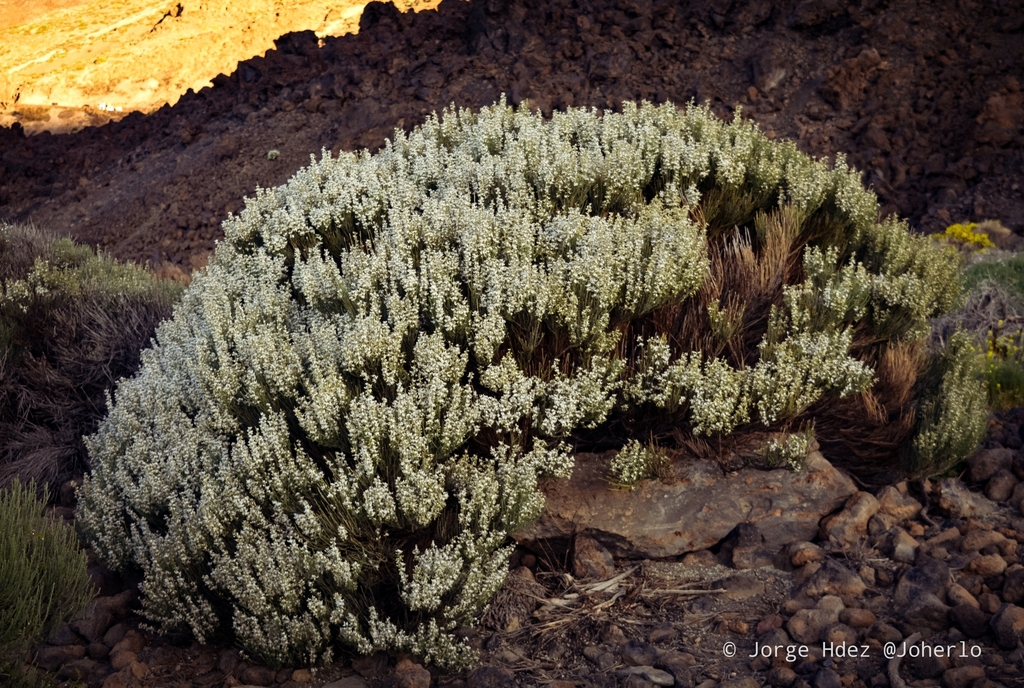
Cytisus supranubius, commonly known as Teide Broom, is an endemic shrub found in the high altitudes of the Canary Islands, renowned for its spectacular white and fragrant bloom. Its rounded, dense habit gives it a robust and ornamental appearance, perfect for rock gardens, xeriscaping, or as a solitary specimen in arid landscapes. It's a resilient plant that adds a wild, aromatic touch, attracting pollinators.
Native range
Canary Islands, Spain
Care tips
This broom thrives in full sun and requires well-drained soil, preferably sandy or volcanic, with low organic matter content. It is extremely drought-tolerant once established, so watering should be sparse, especially in winter to prevent root rot. Avoid excessive fertilization, as it is adapted to poor soils and it can be counterproductive. A common mistake is planting it in wet soils or with insufficient sun exposure, which weakens its flowering and overall health.
How to save a dying Cytisus supranubius
- Warning signs
- Yellowish or dropped leaves, no flowering, dry stems.
- First aid
- Move to a cool spot with indirect light. Check substrate: water if dry, but avoid waterlogging. Prune dry branches.
- What kills it
- Overwatering (root rot) or total lack of water and extreme heat. Does not tolerate constant root moisture.
- Can it be saved?
- Yes, if roots aren't completely rotted and green stems remain. Act quickly.