Bird's-foot trefoil (Lotus corniculatus)
Care, watering, light and tips for Bird's-foot trefoil on Floravia.
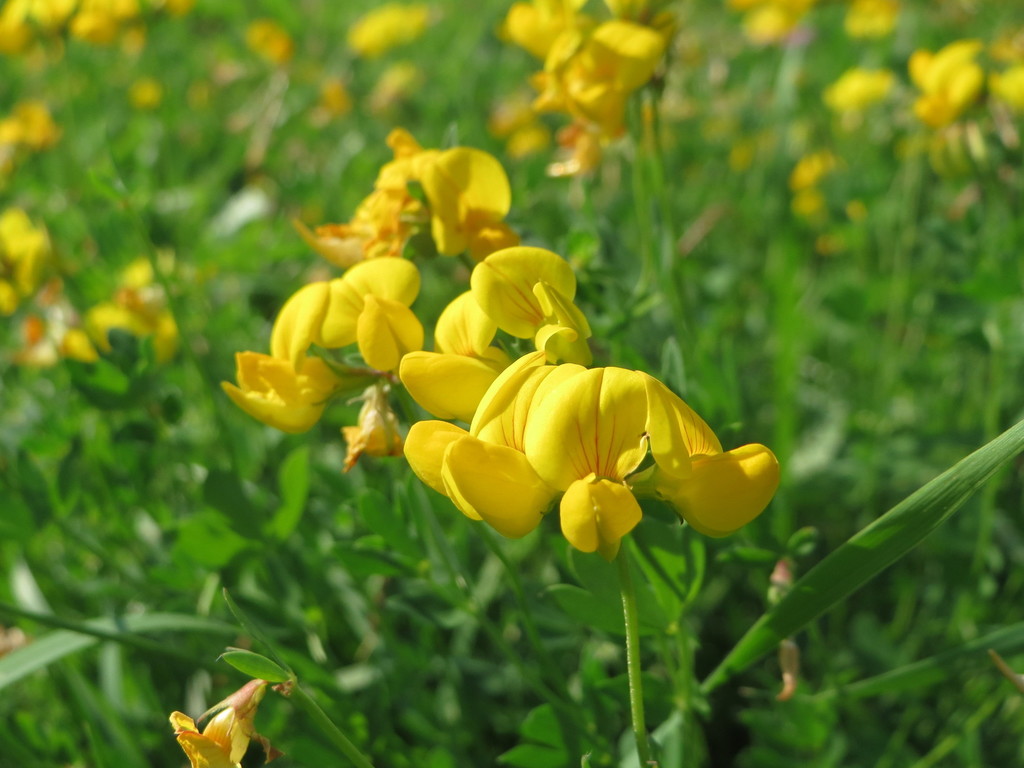
Quick facts
- Family: Fabaceae
- Difficulty: Easy to care for
- Watering: every 7 days
- Light: Full sun
- Temperature: 5–35 °C
- Toxicity: Toxic to pets
About Bird's-foot trefoil
Lotus corniculatus, commonly known as bird's-foot trefoil, is a perennial herbaceous plant from the Fabaceae family, characterized by its attractive bright yellow flowers that grow in clusters. It's an excellent choice for ground cover, rock gardens, or wild flower meadows, adding a touch of wild and vibrant color. Its low-growing and spreading habit makes it ideal for borders or as part of a naturalized meadow.
Native range
Europe, Asia, and North Africa
Care tips
It prefers full sun exposure for abundant flowering, although it toler tolerates some partial shade. It is a drought-tolerant plant once established, so watering should be moderate, allowing the substrate to dry out between waterings. It adapts to a wide range of soils, as long as they have good drainage; poor and even calcareous soils are favorable for it. Avoid waterlogging, as it is prone to root rot in excessively wet conditions.
How to save a dying Bird's-foot trefoil
- Warning signs
- Yellowing or wilting leaves, soft stems. May indicate overwatering or root rot.
- First aid
- Check drainage. If waterlogged, repot into lighter, airier soil, trimming damaged roots.
- What kills it
- Constant waterlogging suffocates its roots, especially in heavy soils. Also complete lack of water.
- Can it be saved?
- Yes, if you act quickly. Good drainage and moderate watering are key to recovery.