Honey mesquite (Prosopis glandulosa)
Care, watering, light and tips for Honey mesquite on Floravia.
Quick facts
- Family: Fabaceae
- Difficulty: Easy to care for
- Watering: every 14 days
- Light: Full sun
- Temperature: 5–35 °C
About Honey mesquite
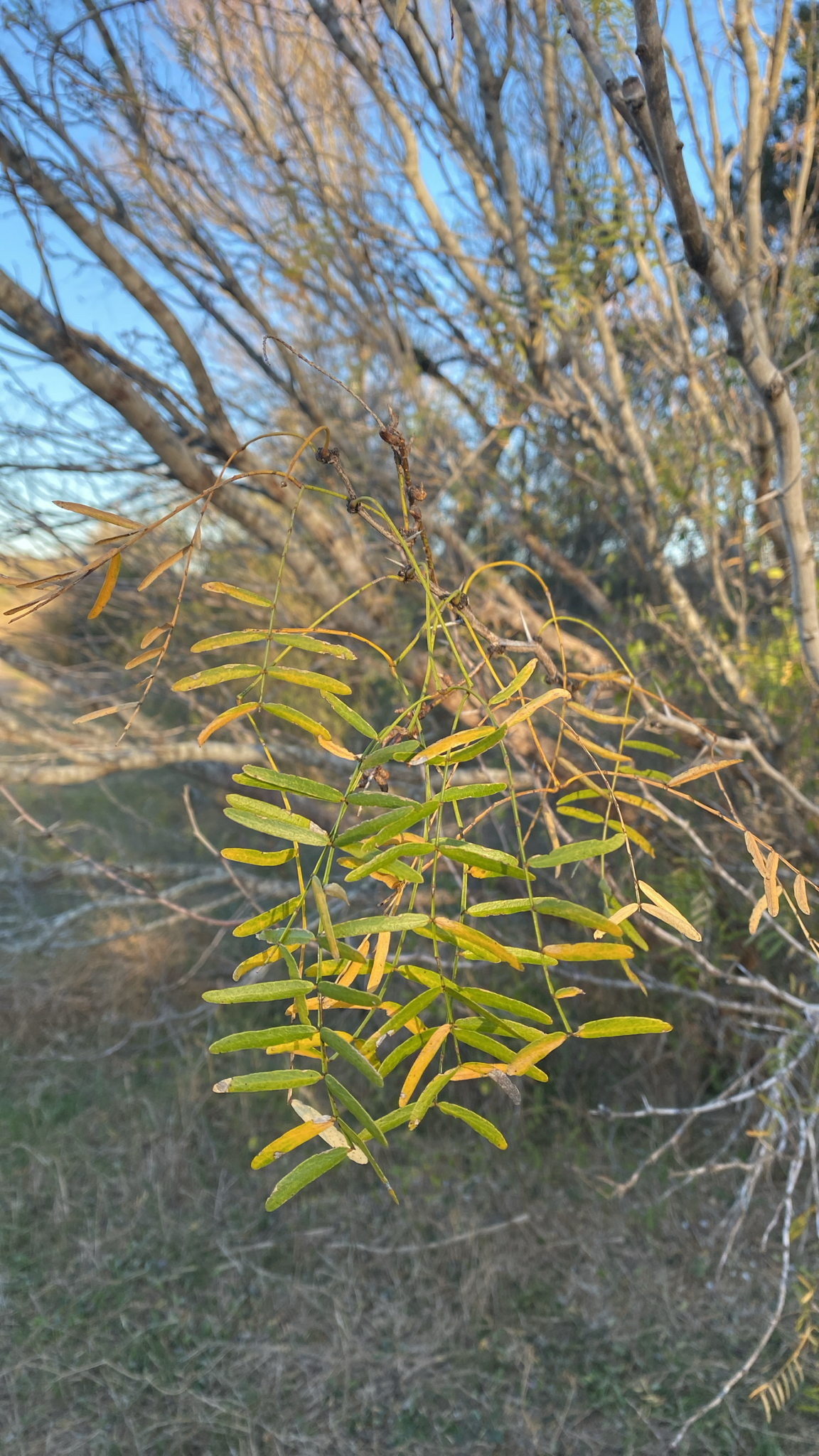
Honey mesquite (Prosopis glandulosa) is a deciduous tree or shrub native to arid and semi-arid regions of North America. It is characterized by its irregular, open canopy, thorny branches, and yellow flowers in spikes, which develop into edible pods. It is ideal for xeriscaping, ecosystem restoration, and as a shade tree in desert gardens.
Native range
Southwestern United States and northern Mexico
Care tips
It requires full sun and is extremely drought-tolerant, so watering should be minimal once established. It prefers well-drained, sandy or rocky soils and does not require fertilization. A common mistake is overwatering, which can lead to fungal diseases and less robust growth.
How to save a dying Honey mesquite
- Warning signs
- Yellowing or premature leaf drop, dry or brittle branches, slow or no growth.
- First aid
- Check drainage, water deeply if soil is dry, protect from extreme cold, prune dead branches.
- What kills it
- Overwatering (causes root rot) or lack of direct sunlight. Does not tolerate waterlogged soil.
- Can it be saved?
- Yes, often recovers if conditions are corrected. Its resilience is remarkable, but act quickly.