White clover (Trifolium repens)
Care, watering, light and tips for White clover on Floravia.
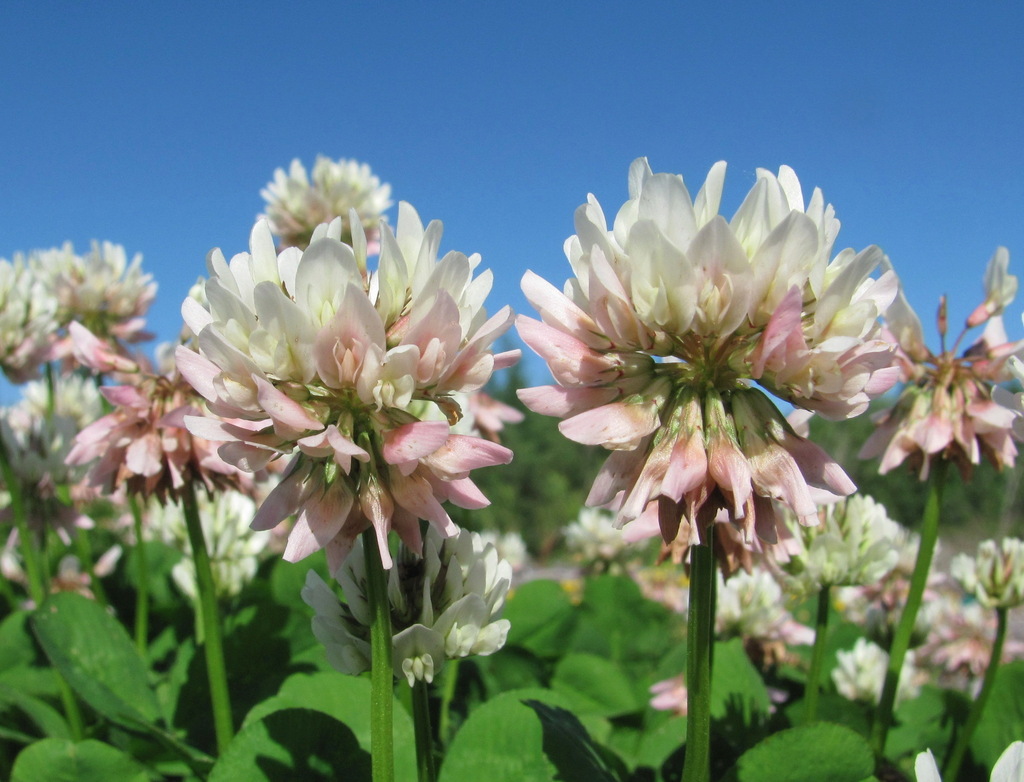
Quick facts
- Family: Fabaceae
- Difficulty: Easy to care for
- Watering: every 4 days
- Light: Full sun
- Temperature: 5–35 °C
About White clover
Trifolium repens, commonly known as white clover or creeping clover, is a perennial herbaceous plant belonging to the legume family, characterized by its trifoliate leaves and small white or pinkish flowers. It forms dense, low-growing mats, making it ideal for ground cover, low-maintenance lawns, or as forage. Its creeping growth habit and nitrogen-fixing ability make it an excellent choice for improving soil health and naturally beautifying gardens.
Native range
Europe and Central Asia
Care tips
It prefers full sun to partial shade, adapting well to various light conditions. Watering should be moderate, allowing the substrate to dry out slightly between waterings, though it tolerates drought periods once established. It adapts to a wide range of soils but prefers well-drained, slightly acidic to neutral ones. A common mistake to avoid is excessive nitrogen fertilization, as white clover fixes its own nitrogen, and an excess could favor other undesirable plants.
How to save a dying White clover
- Warning signs
- Yellowing or brown, wilted leaves, limp and weak appearance, stunted growth.
- First aid
- Check watering (moist, not soggy soil), improve drainage and aeration. Move to partial shade if in full sun.
- What kills it
- Overwatering causing root rot or extreme, prolonged drought.
- Can it be saved?
- Yes, if roots aren't completely rotted or dry. Act fast.