Suckling clover (Trifolium dubium)
Care, watering, light and tips for Suckling clover on Floravia.
Quick facts
- Family: Fabaceae
- Difficulty: Easy to care for
- Watering: every 7 days
- Light: Full sun
- Temperature: 5–35 °C
About Suckling clover
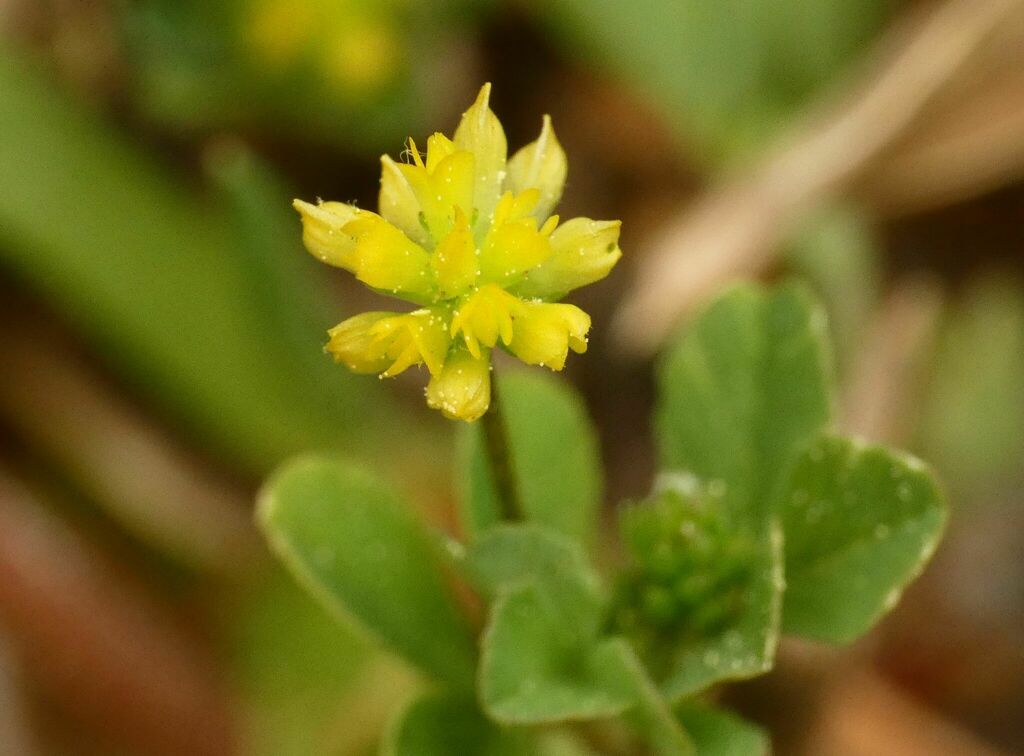
Trifolium dubium, commonly known as lesser trefoil or suckling clover, is a small annual herbaceous plant belonging to the legume family, Fabaceae. It is characterized by its tiny trifoliate leaves and small, globular inflorescences of yellow flowers. This plant is excellent for ground cover in natural gardens, meadows, or as part of low-maintenance lawn mixes, adding a wild and delicate touch.
Native range
Europe, North Africa, and Southwest Asia
Care tips
It prefers full sun to partial shade and well-drained soils, although it is quite tolerant of various soil types. Watering should be moderate, allowing the soil to dry out slightly between waterings, as it tolerates drought better than waterlogging. Avoid very compacted soils or those with excessive organic matter, as this can encourage fungal diseases. A common mistake is overwatering, which can lead to root rot.
How to save a dying Suckling clover
- Warning signs
- Yellowish or brown, wilted, lifeless leaves. Stunted growth.
- First aid
- Check drainage. If waterlogged, repot into fresh, light soil. If dry, water gently.
- What kills it
- Overwatering causing root rot or prolonged extreme drought. Does not tolerate standing water.
- Can it be saved?
- Yes, if roots are not completely rotted. Act quickly upon noticing symptoms.