Vegetable hummingbird (Sesbania grandiflora)
Care, watering, light and tips for Vegetable hummingbird on Floravia.
Quick facts
- Family: Fabaceae
- Difficulty: Moderate care
- Watering: every 3 days
- Light: Full sun
- Temperature: 5–35 °C
- Toxicity: Toxic to pets
About Vegetable hummingbird
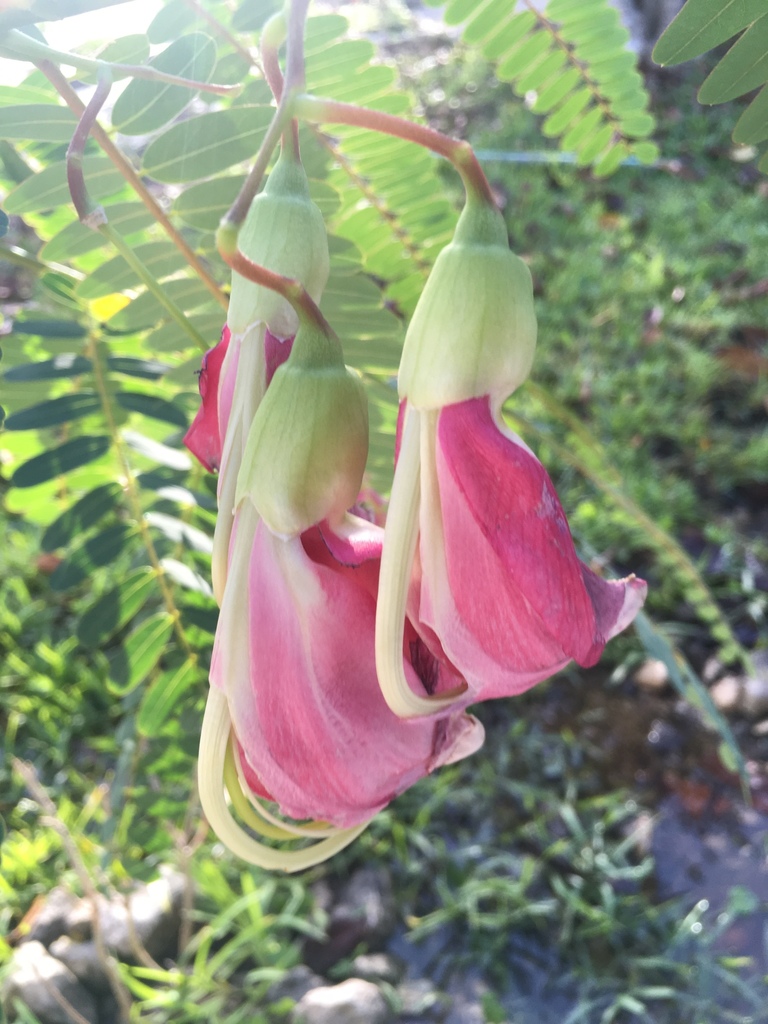
Sesbania grandiflora, commonly known as Vegetable Hummingbird or Agati, is a fast-growing tropical tree renowned for its large, showy, edible flowers that resemble the shape of a hummingbird. Native to Southeast Asia, this medium-sized tree (up to 15 meters) features pinnate leaves and an open canopy, making it ideal for tropical gardens, as a shade tree, or as an ornamental and food-producing plant in warm climates.
Native range
Southeast Asia and Northern Australia
Care tips
It requires full sun for optimal flowering and well-draining soil, preferably rich in organic matter. Watering should be regular during establishment and dry periods, although it is quite drought-tolerant once mature. Avoid waterlogging, as it can lead to root rot. A common mistake is planting it in cold climates, as it does not tolerate frost and prefers warm, humid temperatures.
How to save a dying Vegetable hummingbird
- Warning signs
- Yellowing leaves dropping, stunted growth, general wilting. Can be due to water or nutrient imbalance.
- First aid
- Check soil moisture. If dry, water deeply. If waterlogged, drain and improve substrate. Ensure full sun. Fertilize with compost.
- What kills it
- Lack of direct sun and prolonged drought, or conversely, constant waterlogging leading to root rot.
- Can it be saved?
- Yes, if roots are not completely rotted and it receives proper care promptly. It's a resilient plant.