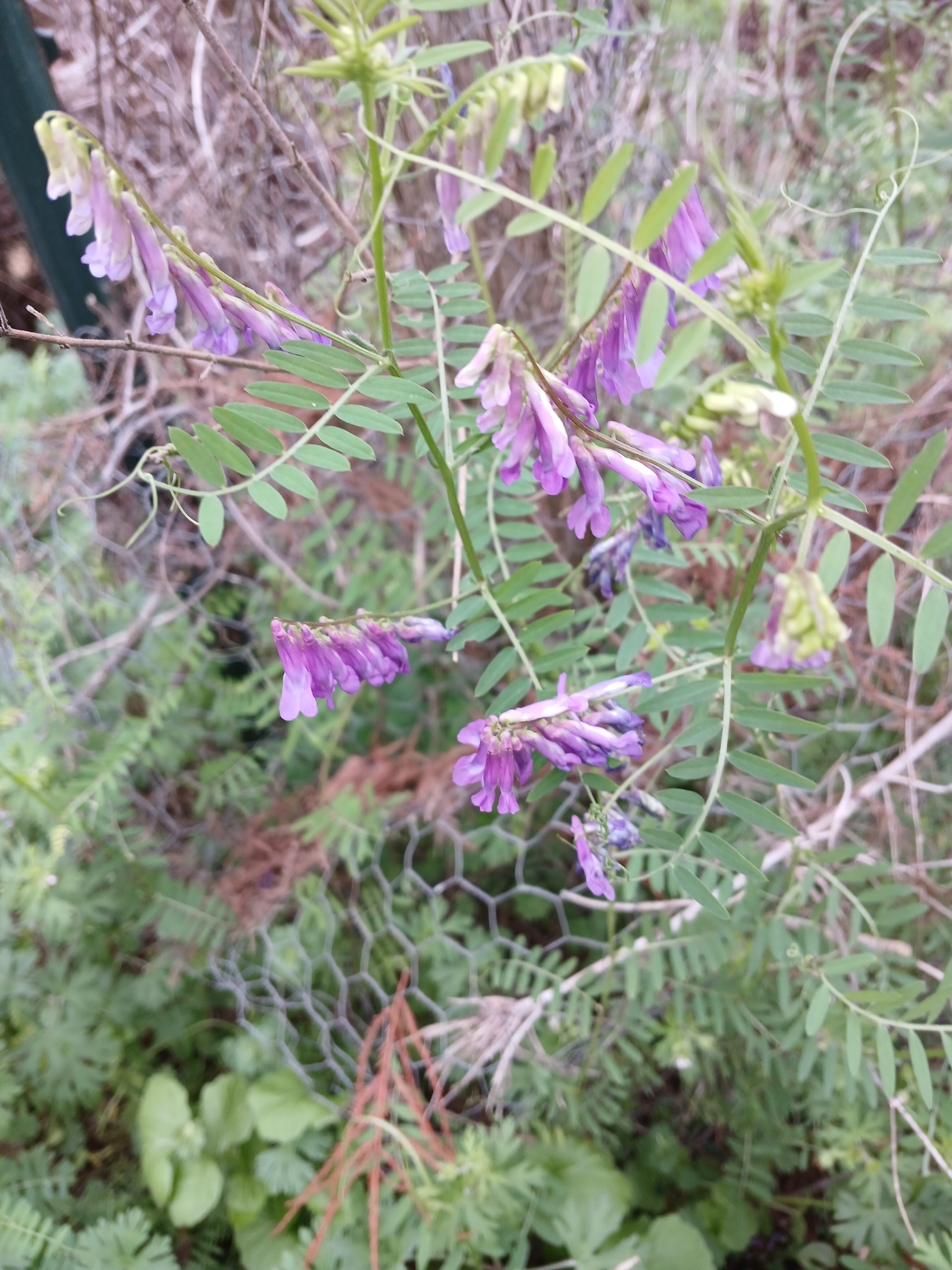
Hairy vetch (Vicia villosa)
Care, watering, light and tips for Hairy vetch on Floravia.
Quick facts
- Family: Fabaceae
- Difficulty: Easy to care for
- Watering: every 5 days
- Light: Full sun
- Temperature: 5–35 °C
- Toxicity: Toxic to pets
About Hairy vetch
Vicia villosa, commonly known as hairy vetch or lodnevikke, is a fast-growing annual or biennial legume valued for its use as green manure and forage. It produces climbing or trailing stems covered in fine hairs and clusters of purple or blue-violet flowers. It is ideal for improving soil structure in vegetable gardens and flowerbeds, providing nitrogen and suppressing weeds, or as a cover crop in agricultural fields.
Native range
Eurasia and North Africa
Care tips
Hairy vetch thrives in full sun to partial shade and adapts to a wide range of soils, though it prefers well-drained and not overly compacted ones. Once established, it is quite drought-tolerant, requiring watering only during prolonged dry spells for optimal growth. For use as green manure, it is recommended to sow in autumn or spring and cut it before seeds mature. Avoid letting the plant become a weed by uncontrolled self-seeding if that is not your intention.
How to save a dying Hairy vetch
- Warning signs
- Yellowing or wilting leaves, soft drooping stems, lack of flowering or pods.
- First aid
- Move to indirect light, water moderately if soil is dry. Check drainage.
- What kills it
- Overwatering causing root rot, or insufficient light. Also very poor or compacted soils.
- Can it be saved?
- Yes, if roots aren't completely rotted. Act fast to adjust watering and light.