Mountain violet (Viola purpurea)
Care, watering, light and tips for Mountain violet on Floravia.
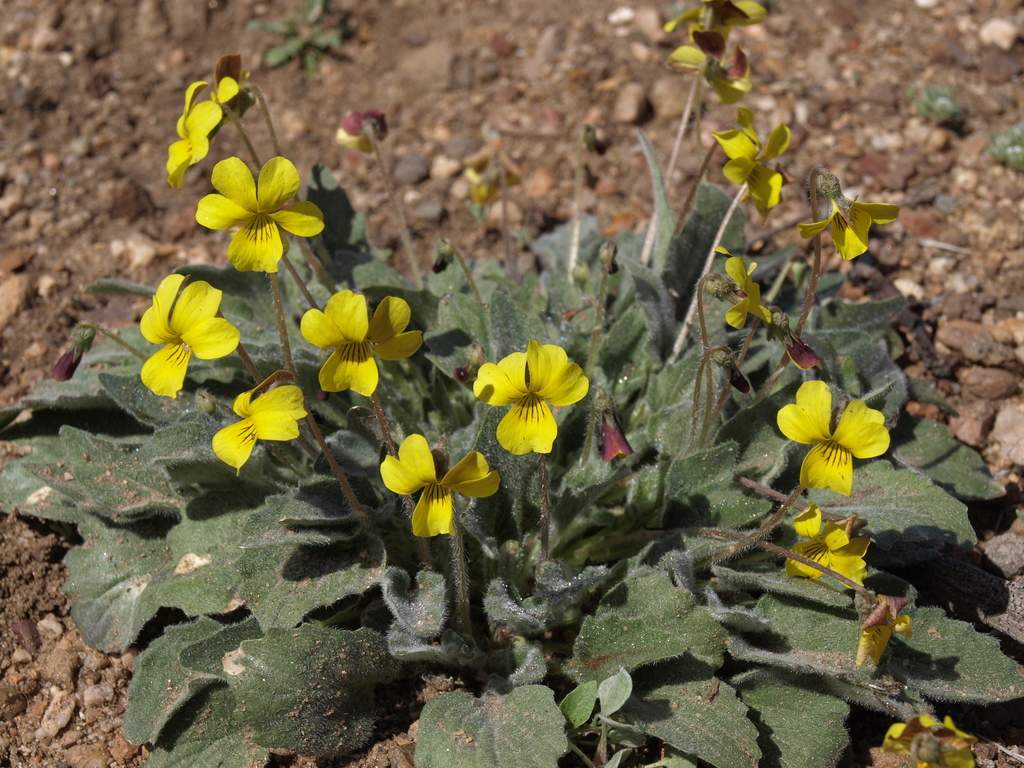
Quick facts
- Family: Violaceae
- Difficulty: Moderate care
- Watering: every 7 days
- Light: Partial shade
- Temperature: 10–30 °C
About Mountain violet
Viola purpurea, commonly known as the purple violet, is a small perennial herbaceous plant native to the mountainous regions of western North America. It is characterized by its delicate, deep purple flowers, often with darker veins, and its bright green foliage, sometimes tinged with purple. It is ideal for rock gardens, path borders, or as ground cover in cool, shady areas of the garden.
Native range
Northwestern North America, including British Columbia and the northwestern United States
Care tips
It prefers partial to full shade, especially in warm climates, to protect its delicate flowers and leaves. Watering should be regular to keep the substrate consistently moist, but never waterlogged, especially during dry periods. It requires well-drained soil, rich in organic matter, and slightly acidic. A common mistake is exposing it to direct full sun in summer, which can scorch its leaves and reduce flowering.
How to save a dying Mountain violet
- Warning signs
- Yellowish/wilted leaves (lack of water), dry/crispy edges (excess sun/dry air), no blooms.
- First aid
- Move to partial shade, water if soil is dry. Prune spent flowers to encourage new ones.
- What kills it
- Strong direct sun, completely dry soil for days, or constant waterlogging that rots roots.
- Can it be saved?
- Yes, if roots aren't rotted and it still has green leaves, it can recover with proper care.