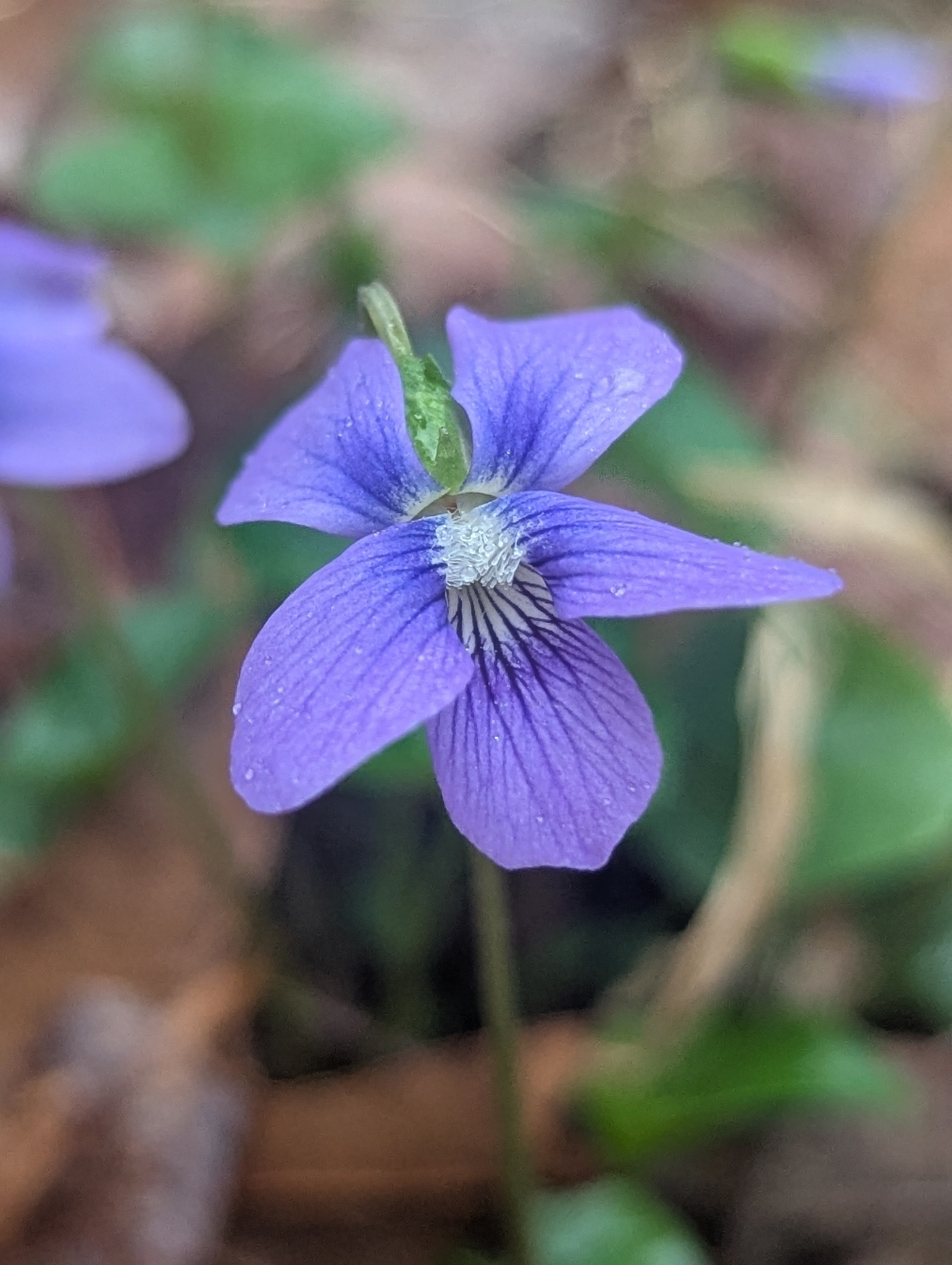
Viola consocia
Care, watering, light and tips for Viola consocia on Floravia.
Quick facts
- Family: Violaceae
- Difficulty: Easy to care for
- Watering: every 3 days
- Light: Partial shade
- Temperature: 10–30 °C
About Viola consocia
Viola consocia, commonly known as violet, is a low-growing perennial herbaceous plant, cherished for its delicate purple or white flowers that emerge in early spring. It forms dense clumps of heart-shaped leaves, creating a charming floral carpet in woodland gardens, rockeries, or as ground cover under deciduous trees. Its compact size and early bloom make it ideal for path edges or to add a subtle splash of color in shady spots.
Native range
North America
Care tips
It prefers partial to full shade and moist, well-drained soils rich in organic matter. Keep the substrate consistently moist, especially during dry periods, but avoid waterlogging to prevent root rot. A common mistake is planting it in full sun in warm climates, which can lead to leaf scorch and sparse flowering. Fertilize lightly with compost in early spring to encourage vigorous growth.
How to save a dying Viola consocia
- Warning signs
- Yellowing or wilting leaves, soft and drooping stems, flowers not opening or rotting.
- First aid
- Remove damaged leaves and flowers. Check soil: if soggy, reduce watering. If dry, hydrate.
- What kills it
- Overwatering causing root rot, or lack of light weakening the plant.
- Can it be saved?
- Yes, if roots are not completely rotted and you act quickly.