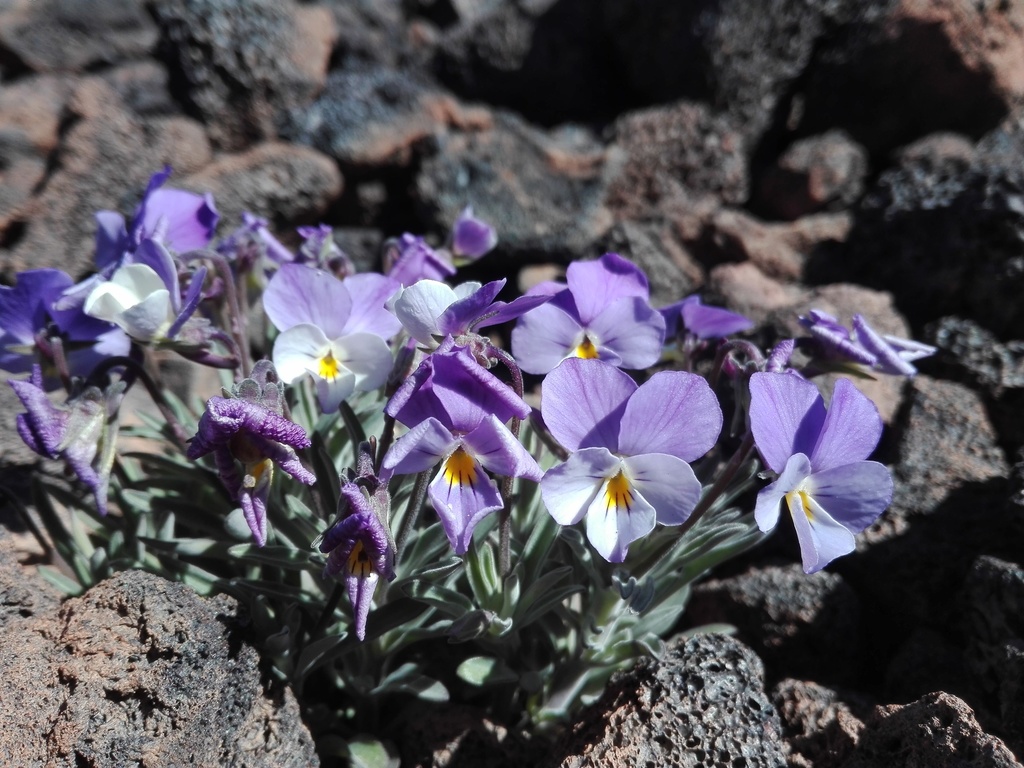
Teide violet (Viola cheiranthifolia)
Care, watering, light and tips for Teide violet on Floravia.
Quick facts
- Family: Violaceae
- Difficulty: Demanding
- Watering: every 7 days
- Light: Partial shade
- Temperature: 10–30 °C
- Toxicity: Toxic to pets
About Teide violet
Viola cheiranthifolia, known as the Teide violet, is a small and resilient flower endemic to the high peaks of Tenerife. Its delicate violet flowers, often with a yellow center, contrast beautifully with the arid volcanic landscape. It is ideal for alpine rock gardens or as a collector's plant in cold, dry climates, where its unique beauty can be appreciated up close.
Native range
Canary Islands (Spain), specifically on the island of Tenerife
Care tips
It requires full sun exposure and very well-draining substrate, preferably sandy or volcanic, poor in organic matter. Watering should be infrequent, allowing the substrate to dry out completely between waterings, as overwatering is its main enemy. Avoid waterlogging at all costs, especially in winter, to prevent root rot. It does not tolerate excessive heat and humidity, so it is best suited for high mountain areas or cool, dry climates.
How to save a dying Teide violet
- Warning signs
- Wilted or yellowing leaves, stunted growth, flowers not opening or falling off.
- First aid
- Move to a cool, shaded spot. Check substrate moisture, water if dry.
- What kills it
- Overwatering causing root rot, or exposure to high temperatures and intense direct sun.
- Can it be saved?
- Yes, if roots aren't completely rotted and action is swift. It's resilient in its ideal climate.