Viola cerasifolia
Care, watering, light and tips for Viola cerasifolia on Floravia.
Quick facts
- Family: Violaceae
- Difficulty: Moderate care
- Watering: every 3 days
- Light: Partial shade
- Temperature: 10–30 °C
- Toxicity: Toxic to pets
About Viola cerasifolia
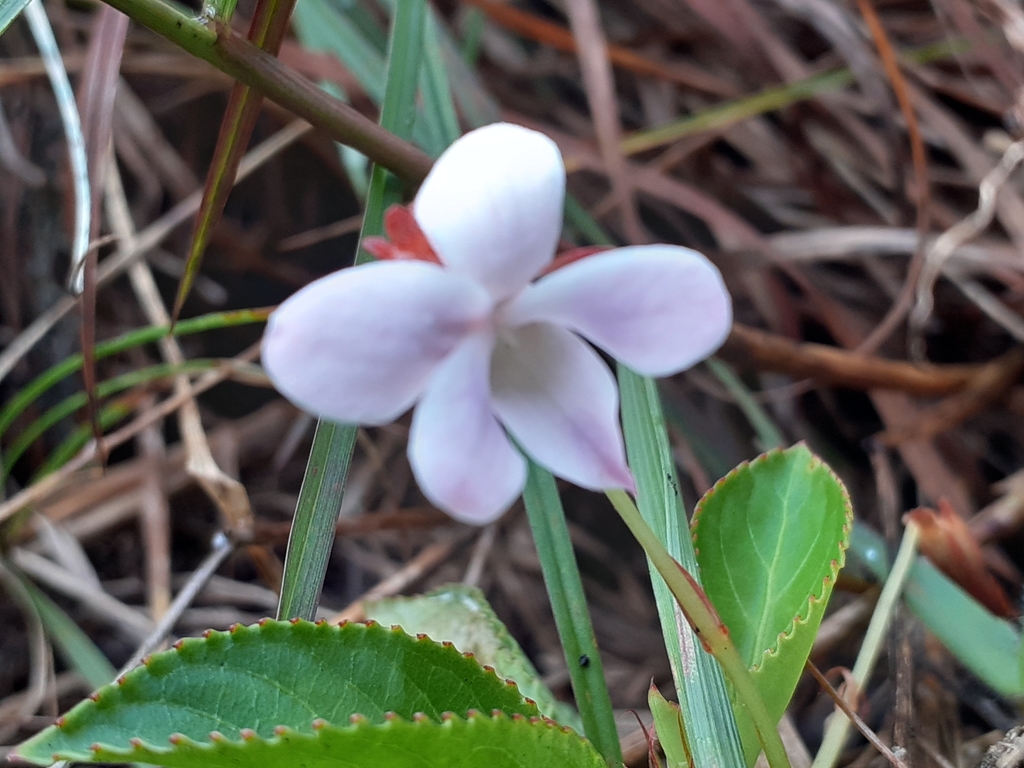
Viola cerasifolia, commonly known as violet, is a small perennial herbaceous plant, prized for its delicate five-petaled flowers, typically in shades of blue, purple, or white, often featuring a distinctive spur. Its leaves are round or heart-shaped, forming a basal rosette. It is ideal for shaded borders, rock gardens, or as ground cover in woodland gardens, adding a subtle and natural touch of color.
Native range
Andes of South America (from Colombia to Chile and Argentina)
Care tips
It prefers partial to full shade, avoiding direct strong sun exposure which can scorch its leaves. Keep the substrate consistently moist but well-drained, as waterlogging is detrimental; water when the top layer of the soil begins to dry out. A substrate rich in organic matter and slightly acidic is ideal for its development. A common mistake is planting it in heavy, poorly drained soils, which can lead to root rot.
How to save a dying Viola cerasifolia
- Warning signs
- Wilted, yellowing, or spotted leaves; no blooming.
- First aid
- Check watering (moist, not soggy soil), place in partial shade with good ventilation.
- What kills it
- Too much direct sun, constant waterlogging, or lack of humidity.
- Can it be saved?
- Yes, if you act quickly to correct watering and location. Remove heavily damaged leaves.