Viola pyrenaica
Care, watering, light and tips for Viola pyrenaica on Floravia.
Quick facts
- Family: Violaceae
- Difficulty: Moderate care
- Watering: every 7 days
- Light: Partial shade
- Temperature: 10–30 °C
- Toxicity: Toxic to pets
About Viola pyrenaica
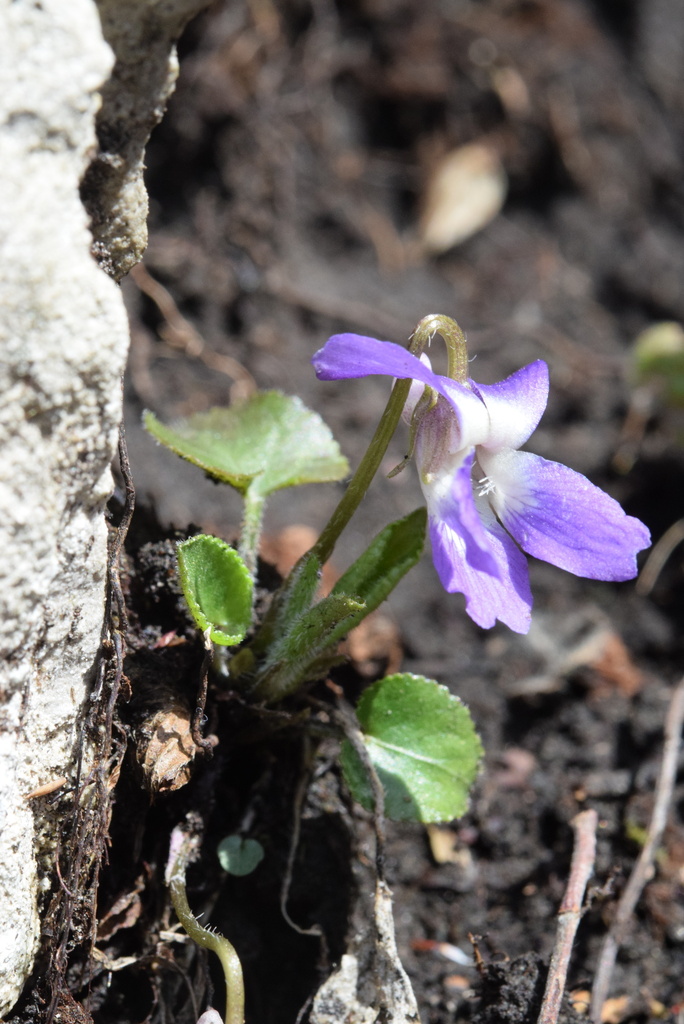
Viola pyrenaica, commonly known as Pyrenean Violet, is a small perennial herbaceous plant, endemic to the mountainous regions of southwestern Europe. Its delicate, intensely violet flowers, often with darker veins, emerge in spring and early summer, forming a charming floral carpet. It is ideal for rockeries, shaded path borders, or as part of an alpine garden, adding a touch of wild and natural color.
Native range
Pyrenees, in Spain, France, and Andorra
Care tips
It prefers semi-shade or partial shade locations, especially in warm climates, although it can tolerate some morning sun in cool areas. The soil should be moist, well-drained, and rich in organic matter, with a neutral to slightly acidic pH. Keep the substrate consistently moist, but avoid waterlogging, especially during winter. A common mistake is planting it in dry soils or overly exposed to the sun, which can cause leaf burn and sparse flowering.
How to save a dying Viola pyrenaica
- Warning signs
- Wilted, yellowing, or spotted leaves; no flowering.
- First aid
- Repot in acidic, well-draining soil; water moderately; place in cool partial shade.
- What kills it
- Excessive direct sun, calcareous or waterlogged soils, lack of humidity.
- Can it be saved?
- Yes! With proper care, it can recover and re-bloom.