Bottle gourd (Lagenaria siceraria)
Care, watering, light and tips for Bottle gourd on Floravia.
Quick facts
- Family: Cucurbitaceae
- Difficulty: Easy to care for
- Watering: every 3 days
- Light: Partial shade
- Temperature: 10–30 °C
- Toxicity: Toxic to pets
About Bottle gourd
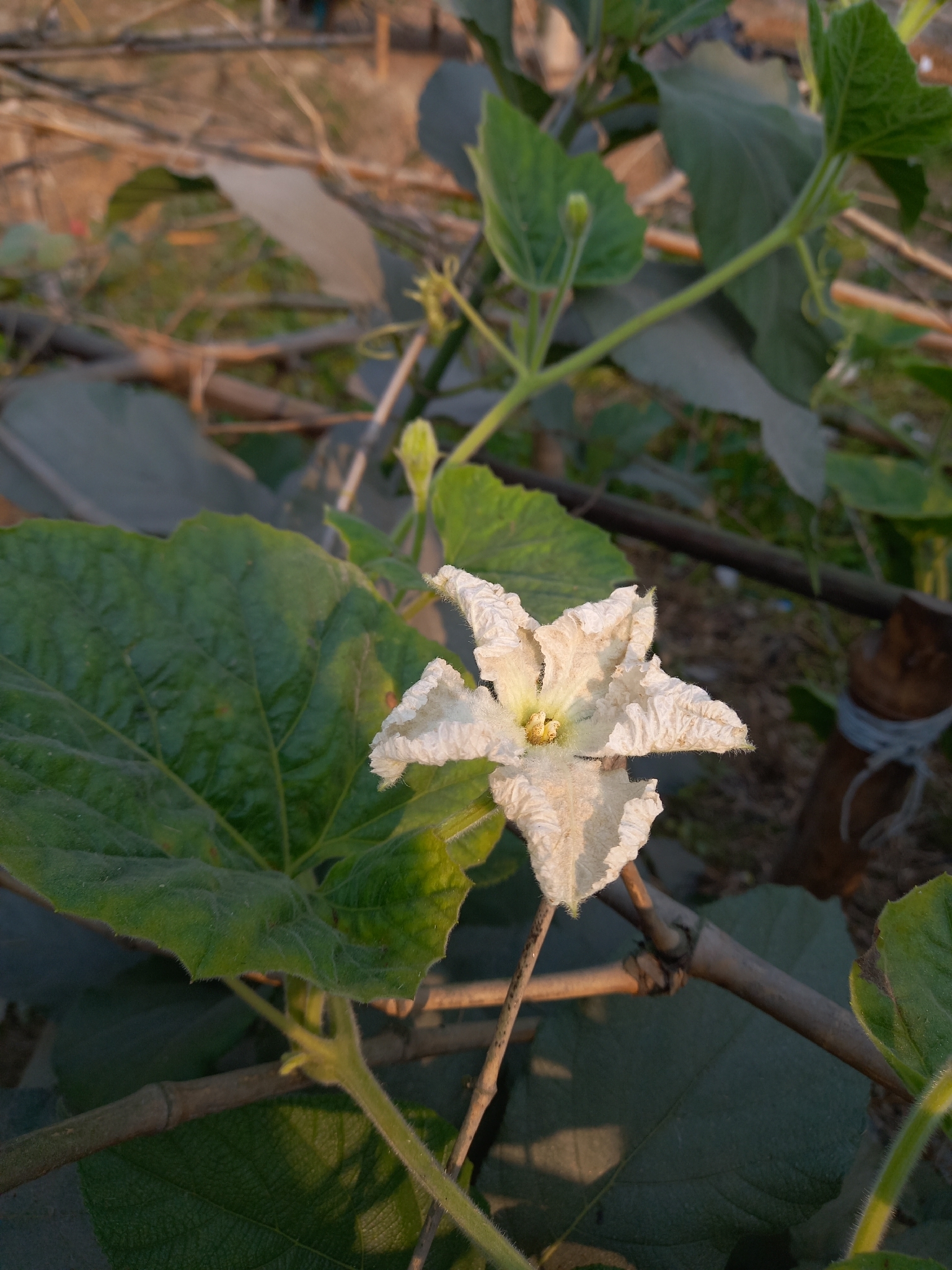
Lagenaria siceraria, commonly known as bottle gourd or calabash, is an annual climbing plant from the Cucurbitaceae family, valued for both its ornamental and utilitarian fruits. Its large leaves and nocturnal white flowers make it attractive on pergolas and trellises. The fruits, with highly varied shapes (from round to elongated or bottle-shaped), harden when dry and are used to make containers, musical instruments, or crafts, adding a rustic and functional touch to the garden.
Native range
Africa and parts of Asia
Care tips
This gourd requires full sun for optimal development and abundant fruiting, at least 6-8 hours daily. It needs well-drained, fertile soil rich in organic matter; ensure abundant and regular watering, especially during flowering and fruit development, avoiding waterlogging. Provide sturdy support, such as a trellis or pergola, for its climbing stems to develop and for the fruits to grow without touching the ground, thus preventing rot. A common mistake is not providing enough space or support, which can result in a messy plant and damaged fruits.
How to save a dying Bottle gourd
- Warning signs
- Yellowing or wilting leaves, no flowering, or small, deformed fruits. Soft or rotting stems at the base.
- First aid
- Check drainage and soil moisture. If potted, repot into a larger one with good substrate. Ensure good ventilation.
- What kills it
- Overwatering that rots the roots, or complete lack of water during dry spells. Insufficient direct sunlight.
- Can it be saved?
- Yes, if the roots are not completely rotted and the main stem hasn't fully collapsed.