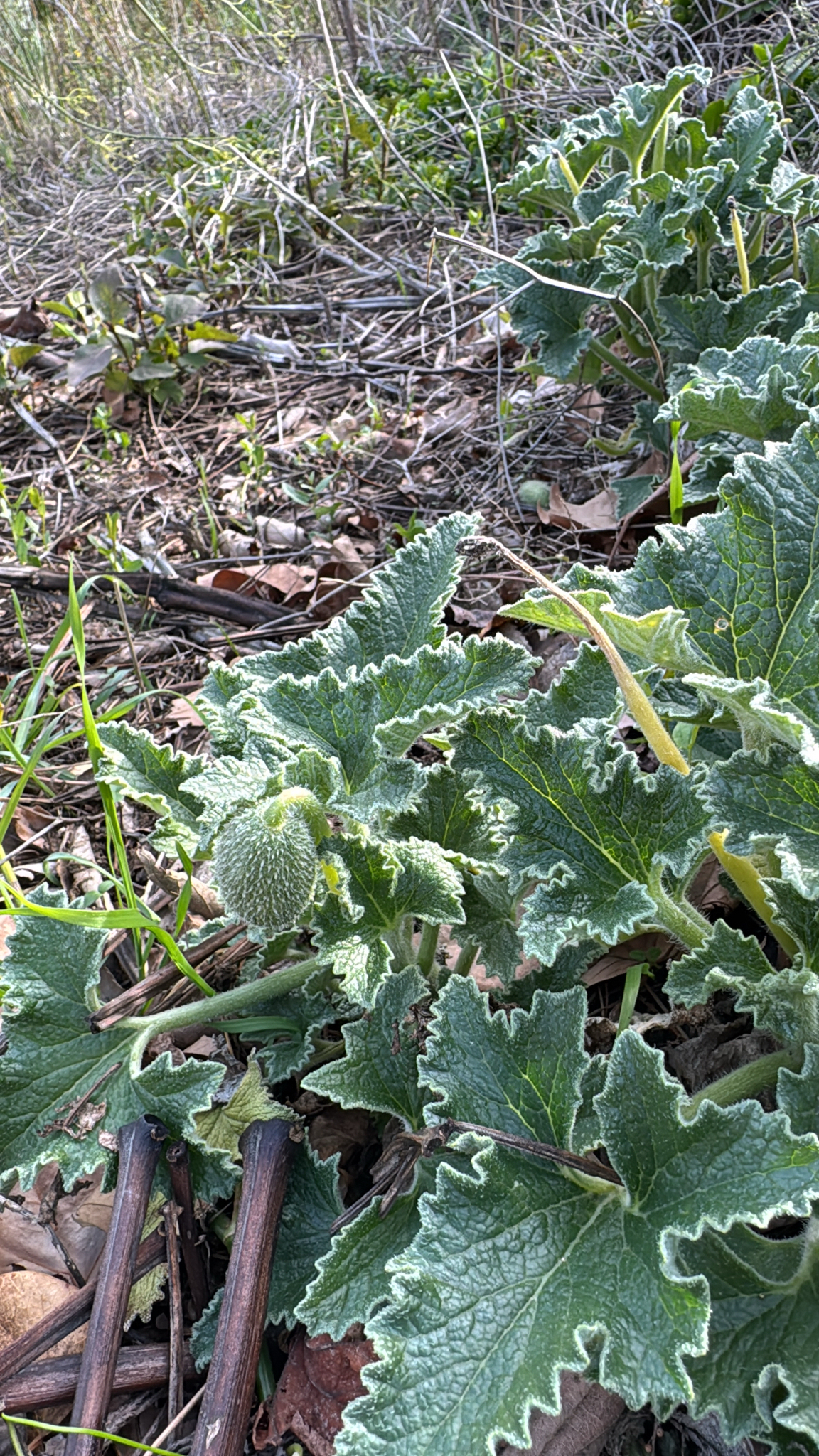
Squirting cucumber (Ecballium elaterium)
Care, watering, light and tips for Squirting cucumber on Floravia.
Quick facts
- Family: Cucurbitaceae
- Difficulty: Easy to care for
- Watering: every 7 days
- Light: Partial shade
- Temperature: 10–30 °C
- Toxicity: Toxic to pets
About Squirting cucumber
Ecballium elaterium, commonly known as Squirting Cucumber, is a perennial herbaceous plant from the Cucurbitaceae family, famous for its peculiar seed dispersal mechanism. Its fruits, resembling small cucumbers, explode upon ripening, ejecting seeds several meters away. It's an interesting plant for botanical gardens or wild areas where its uniqueness can be appreciated without risk of accidental contact.
Native range
Mediterranean region, including Southern Europe, North Africa, and the Middle East.
Care tips
This plant thrives in full sun and well-drained soils, tolerating drought once established. Watering should be moderate, allowing the substrate to dry out between waterings to prevent waterlogging, to which it is sensitive. It is crucial to handle it with caution, as all its parts are toxic and its sap can cause skin and mucous membrane irritation. A common mistake is underestimating its seed dispersal capability, which can lead to unwanted propagation.
How to save a dying Squirting cucumber
- Warning signs
- Yellowing or wilting leaves, soft stems, fruits not exploding or rotting.
- First aid
- Check watering, ensure good drainage and sun exposure. Reduce fertilizers.
- What kills it
- Overwatering causing root rot, or lack of sun.
- Can it be saved?
- Yes, if you act quickly correcting watering and exposure. Requires immediate attention.