Florida strangler fig (Ficus aurea)
Care, watering, light and tips for Florida strangler fig on Floravia.
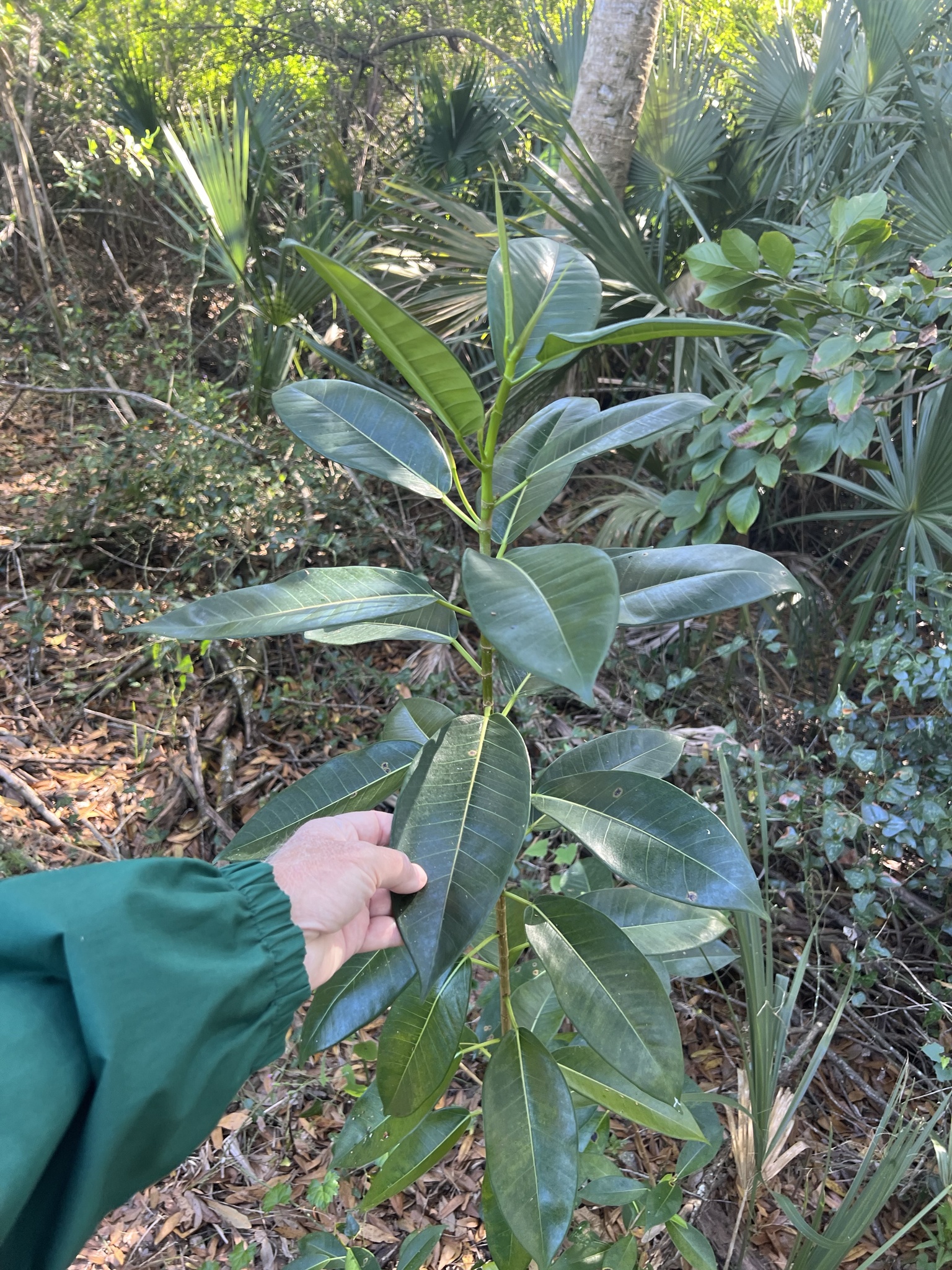
Quick facts
- Family: Moraceae
- Difficulty: Moderate care
- Watering: every 7 days
- Light: Indirect light
- Temperature: 15–35 °C
- Toxicity: Toxic to pets
About Florida strangler fig
Ficus aurea, also known as the Florida Strangler Fig, is a species of fig native to Florida and the Caribbean, renowned for its impressive aerial roots that can eventually engulf other plants. It is an evergreen tree that can reach considerable heights in its natural habitat, developing a dense, wide canopy with bright green, oval leaves. Its majestic stature makes it ideal for large tropical gardens, parks, or as a striking bonsai if properly pruned and trained.
Native range
Florida (United States), Mexico, the Caribbean, and Central America
Care tips
It prefers full to partial sunlight and well-drained soil, although it is adaptable to various conditions once established. Watering should be regular to keep the substrate moist but not waterlogged, especially in its young stages; mature trees are more drought-tolerant. Avoid frequent repotting once the plant has grown, as it can be sensitive to root disturbance. A common mistake is planting it too close to buildings or pavements, as its roots can be very invasive and cause structural damage.
How to save a dying Florida strangler fig
- Warning signs
- Yellow, falling leaves, brown spots, droopy leaves, stunted growth. Soft, dark roots.
- First aid
- Check drainage and roots. Prune damaged parts. Repot with fresh, light substrate. Water only when soil is dry.
- What kills it
- Overwatering causing root rot or lack of light. Doesn't tolerate drafts or sudden location changes.
- Can it be saved?
- Yes, if roots aren't completely rotten. Act fast, it's a resilient plant.