Broomrape (Orobanche crenata)
Care, watering, light and tips for Broomrape on Floravia.
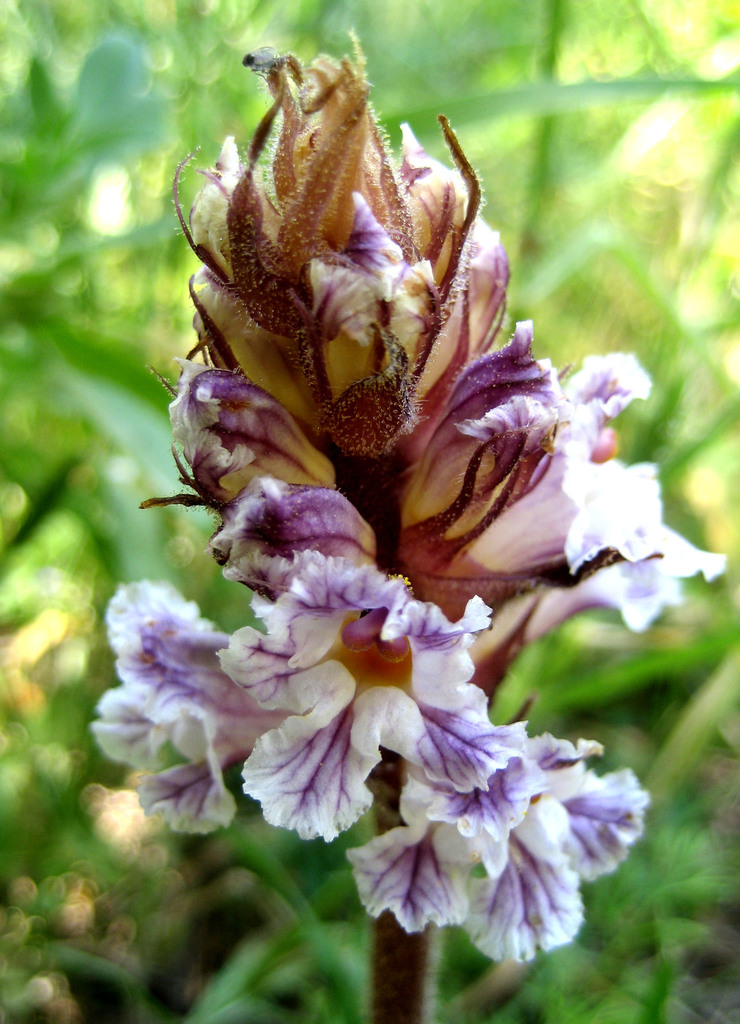
Quick facts
- Family: Orobanchaceae
- Difficulty: Demanding
- Watering: every 7 days
- Light: Partial shade
- Temperature: 10–30 °C
- Toxicity: Toxic to pets
About Broomrape
Orobanche crenata, commonly known as crenate broomrape, is a parasitic herbaceous plant lacking chlorophyll, feeding directly from the roots of other plants, particularly legumes and some solanaceous crops. It features erect, yellowish to purplish stems with tubular white-bluish or violet flowers. It is not an ornamental plant for garden cultivation but rather an organism of botanical or agricultural interest due to its parasitic nature.
Native range
Mediterranean region and Middle East
Care tips
As Orobanche crenata is an obligate parasitic plant, it is not cultivated in a conventional manner. Its 'care' involves managing the host plants it depends on for survival, and in agricultural contexts, it is often considered a weed. Eradication or control of its growth in crop fields is the primary focus, which may include crop rotation or the use of resistant varieties. Intentional propagation is not recommended outside of controlled scientific studies.
How to save a dying Broomrape
- Warning signs
- Rapid wilting of host plant, stunted growth, pale or no flowers on broomrape.
- First aid
- Manually remove emerging broomrapes and their roots before they produce seeds.
- What kills it
- Allowing flowering and seed dispersal, ensuring future infestations.
- Can it be saved?
- The host plant, yes; broomrape is parasitic and must be eradicated.