Branched broomrape (Phelipanche ramosa)
Care, watering, light and tips for Branched broomrape on Floravia.
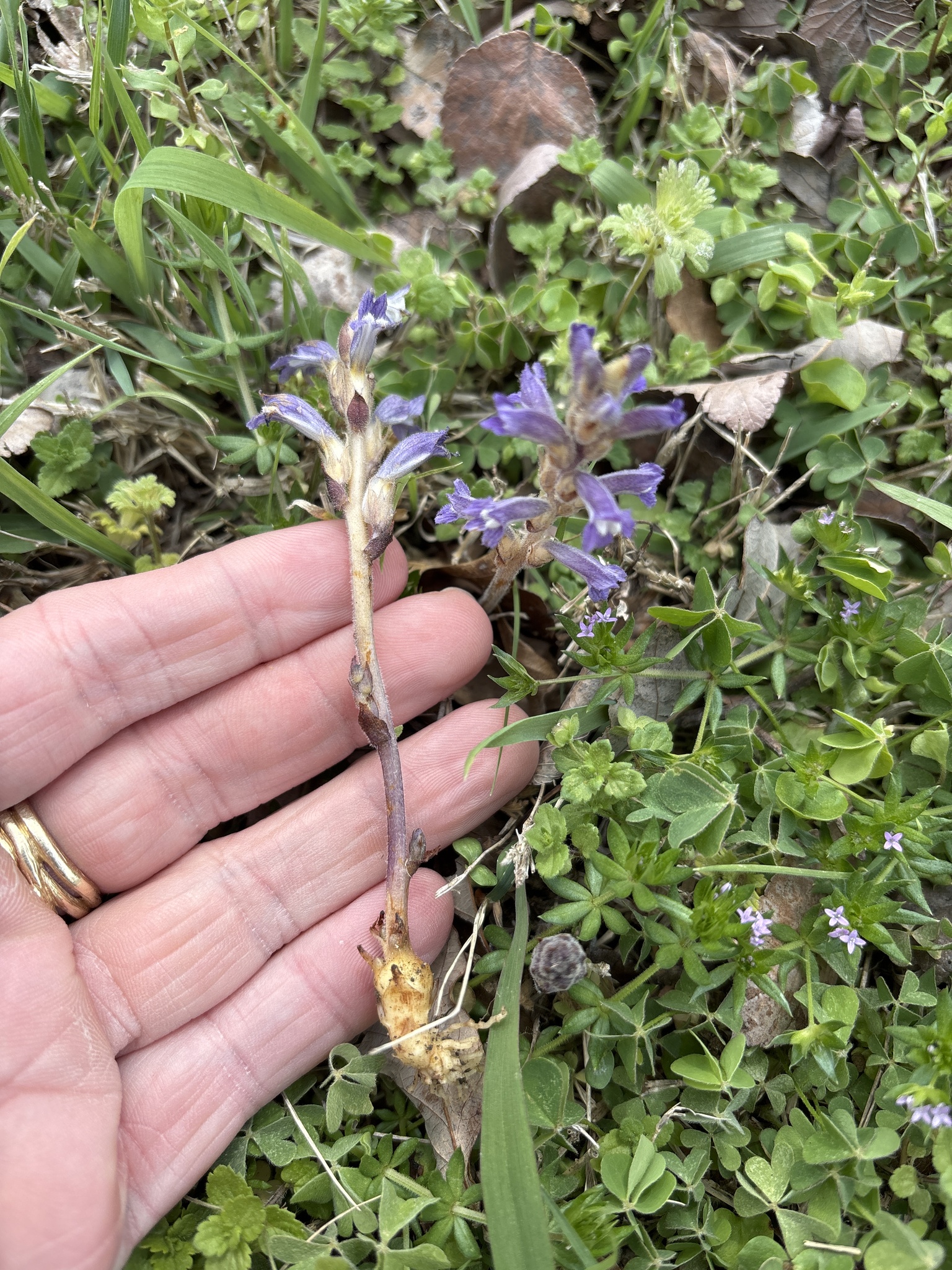
Quick facts
- Family: Orobanchaceae
- Difficulty: Demanding
- Watering: every 7 days
- Light: Partial shade
- Temperature: 10–30 °C
- Toxicity: Toxic to pets
About Branched broomrape
Phelipanche ramosa, also known as branched broomrape, is an annual or biennial parasitic plant belonging to the Orobanchaceae family. Lacking chlorophyll, it lives entirely at the expense of other plants, particularly crops such as tomato, tobacco, or legumes, to whose roots it attaches via haustoria. Its branched stem produces tubular, blue-violet or whitish flowers, clustered in dense spikes; it is not a garden plant but a parasitic weed.
Native range
Mediterranean region and Eurasia
Care tips
Since Phelipanche ramosa is a parasitic plant that causes significant damage to crops, the primary goal in its 'care' is eradication. It is not cultivated intentionally, and its presence indicates an agricultural problem. Control strategies include crop rotation, the use of resistant varieties, and chemical or biological methods to remove it from the soil. Preventing its spread is crucial, as its tiny seeds can remain viable in the soil for many years.
How to save a dying Branched broomrape
- Warning signs
- Widespread wilting, yellowing or blackening of the plant, lack of flower development.
- First aid
- Manually remove affected broomrapes with gloves, ensuring not to spread seeds.
- What kills it
- Trying to treat it like a common plant; it's a parasite and needs a different approach.
- Can it be saved?
- Yes, if acted upon quickly to control its spread and remove it before it releases seeds.