Common toothwort (Lathraea squamaria)
Care, watering, light and tips for Common toothwort on Floravia.
Quick facts
- Family: Orobanchaceae
- Difficulty: Demanding
- Watering: every 7 days
- Light: Partial shade
- Temperature: 10–30 °C
- Toxicity: Toxic to pets
About Common toothwort
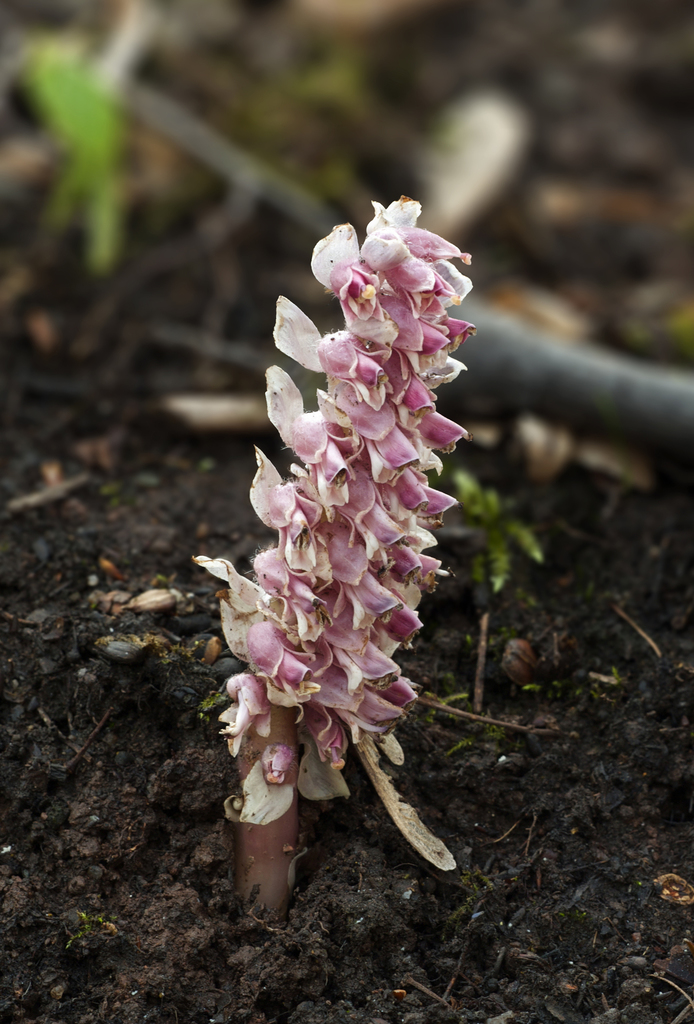
Lathraea squamaria, commonly known as 'toothwort' or 'purple toothwort', is a fascinating parasitic plant that lacks chlorophyll, obtaining all its nutrients from the roots of host trees such as hazels or alders. Its stems emerge from the ground in spring, displaying fleshy, whitish to pink-purple scales instead of green leaves. It makes a curious and educational addition to shaded gardens where host trees are already established, or for those interested in unusual botany.
Native range
Much of Europe and parts of temperate Asia
Care tips
Caring for Lathraea squamaria is very specific, as it is a parasitic plant. It does not require direct watering or fertilization, as it is entirely dependent on its host plant. Ensure the host tree is well-established and healthy in well-drained soil, as the host's health will determine that of the Lathraea. The most common mistake to avoid is attempting to grow it independently or in the absence of a suitable host.
How to save a dying Common toothwort
- Warning signs
- General wilting, lack of shoots, discoloration (yellowish or pale).
- First aid
- Ensure suitable host plant, humid and cool environment. Do not water directly.
- What kills it
- Trying to grow it without its host plant (hazel, poplar). Excess direct light.
- Can it be saved?
- Very difficult without its host. If connected, optimize the host's environment.