Desert willow (Chilopsis linearis)
Care, watering, light and tips for Desert willow on Floravia.
Quick facts
- Family: Bignoniaceae
- Difficulty: Easy to care for
- Watering: every 7 days
- Light: Partial shade
- Temperature: 10–30 °C
About Desert willow
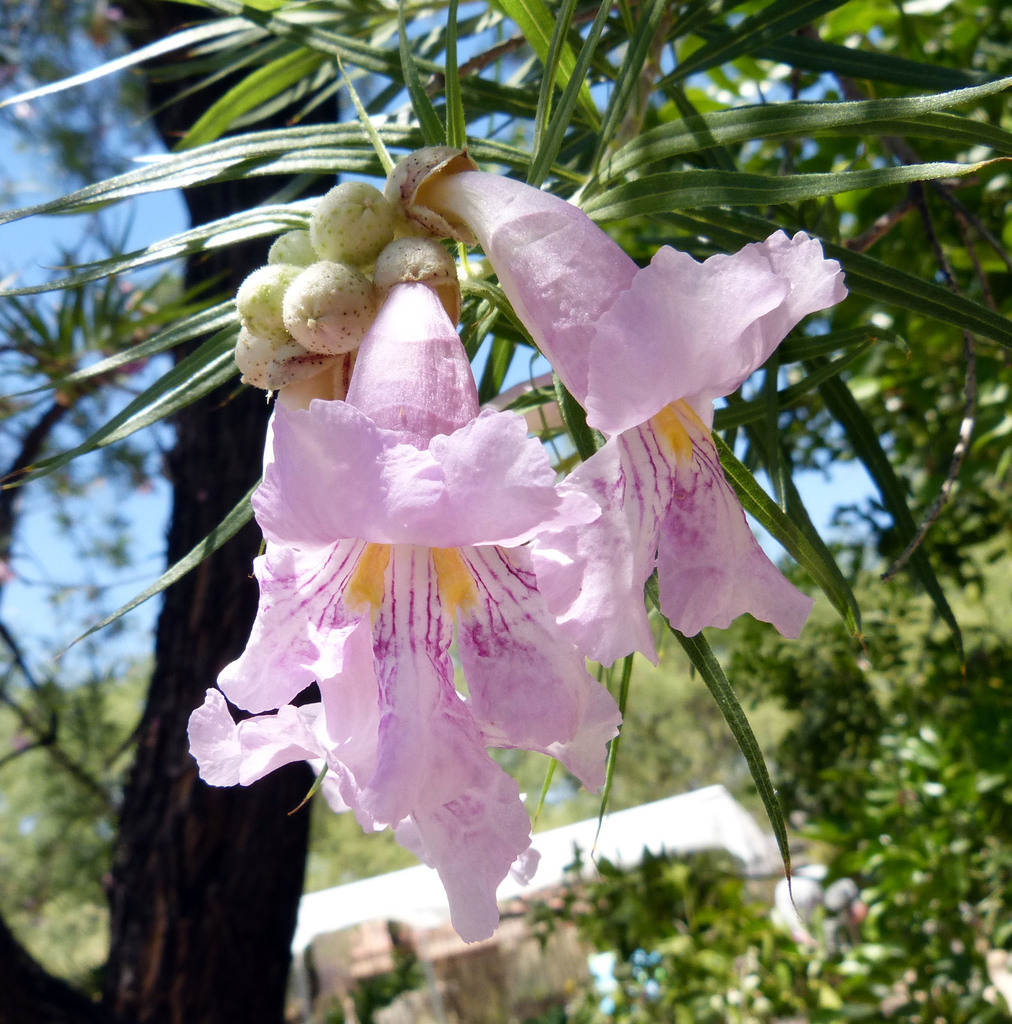
Chilopsis linearis, commonly known as desert willow, is a deciduous shrub or small tree native to arid regions of the southwestern United States and northern Mexico. It is distinguished by its slender, flexible branches resembling those of a willow, and by its showy trumpet-shaped flowers ranging from white and pink to lavender, often with darker streaks. It is an excellent choice for low-maintenance gardens, desert landscapes, xeriscaping, and as a focal ornamental specimen.
Native range
Southwestern United States and northern Mexico
Care tips
It requires full sun for optimal flowering and healthy development. It is extremely drought-tolerant once established, so watering should be infrequent and deep, allowing the soil to dry out completely between waterings. It thrives in well-drained soils, even poor or sandy ones; waterlogging is the most common mistake to avoid, as it can lead to root rot. Pruning for shaping or to remove dead or damaged branches is best done in late winter or early spring.
How to save a dying Desert willow
- Warning signs
- Yellowing or drooping leaves, dry or brittle branches, no blooms.
- First aid
- Check watering, ensure good drainage, prune dead branches.
- What kills it
- Overwatering or poor drainage, rotting its roots.
- Can it be saved?
- Yes, if roots aren't completely rotted and the issue is corrected.