Horse chestnut (Aesculus hippocastanum)
Care, watering, light and tips for Horse chestnut on Floravia.
Quick facts
- Family: Sapindaceae
- Difficulty: Demanding
- Watering: every 7 days
- Light: Partial shade
- Temperature: 10–30 °C
- Toxicity: Toxic to pets
About Horse chestnut
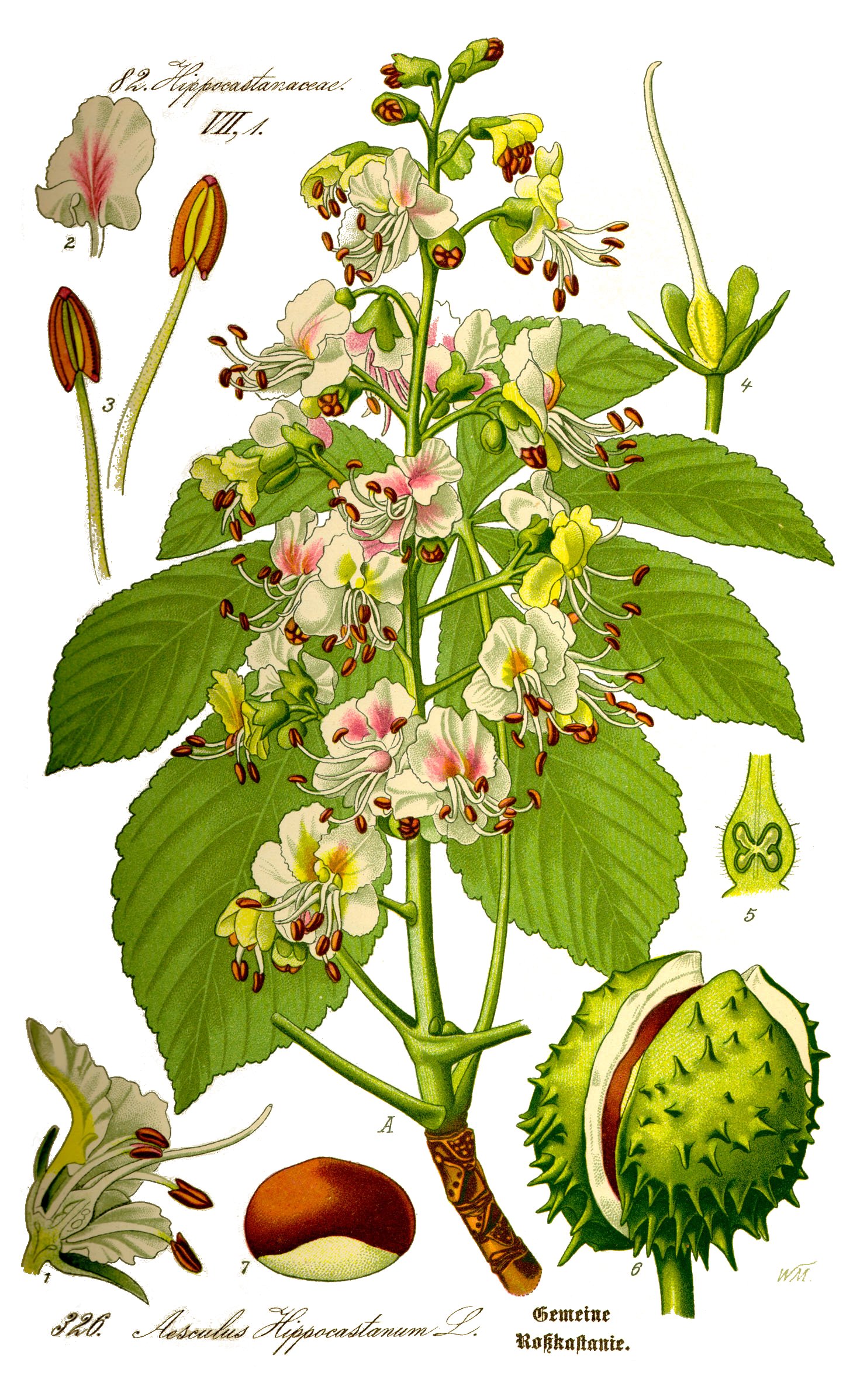
Aesculus hippocastanum, commonly known as the Horse Chestnut, is a majestic deciduous tree, famous for its large palmate leaves and showy white candelabra-like flowers that appear in spring. It reaches a considerable size, creating dense shade, and is ideal for parks, large gardens, or avenues, where its imposing presence can be appreciated. Its spiny fruits, the horse chestnuts, add seasonal interest, although they are not edible for humans.
Native range
Balkan Peninsula, specifically in Albania, Bosnia and Herzegovina, Bulgaria, Greece, North Macedonia, and Serbia.
Care tips
It prefers full sun to partial shade and a deep, fertile, well-drained soil with good organic matter content. Watering should be regular, especially in the first few years and during dry periods, keeping the soil moist but not waterlogged. Avoid very compacted or poorly drained soils, as this can lead to root problems. A common mistake is planting it in confined spaces, which restricts its natural growth and development.
How to save a dying Horse chestnut
- Warning signs
- Brown spots on leaf edges/tips spreading inwards (leaf scorch), premature leaf drop.
- First aid
- Ensure deep, regular watering in dry summers. Protect young trees from intense direct sun. Check soil drainage.
- What kills it
- Prolonged drought in summer and compacted or nutrient-poor soils. Over-fertilization also burns leaves.
- Can it be saved?
- Yes, if addressed promptly. Recovery is possible by improving watering, soil, and environmental protection.