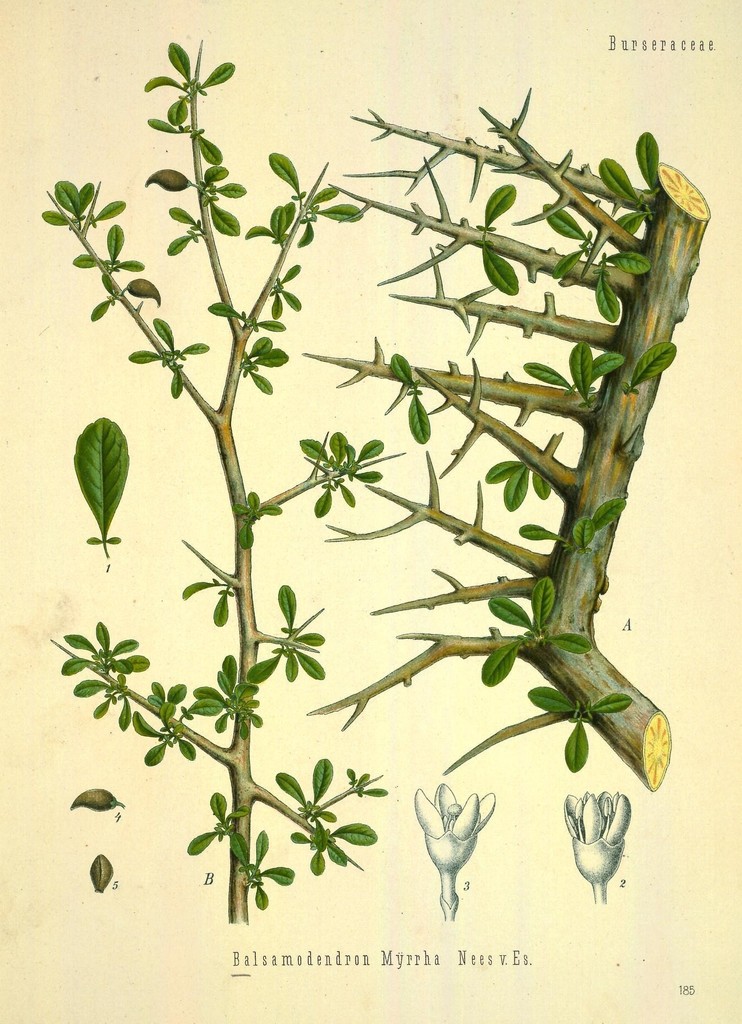
Myrrh (Commiphora myrrha)
Care, watering, light and tips for Myrrh on Floravia.
Quick facts
- Family: Burseraceae
- Difficulty: Demanding
- Watering: every 21 days
- Light: Partial shade
- Temperature: 10–30 °C
About Myrrh
Commiphora myrrha, also known as herabol myrrh, is a thorny shrub or small tree native to the Arabian Peninsula and the Horn of Africa, renowned for its aromatic resin used since ancient times. It features gnarled branches and small leaves, often deciduous in dry conditions, giving it a rustic and sculptural appearance. It is ideal for collectors of rare and xerophytic plants, or as a bonsai, where its natural form can be appreciated.
Native range
Arabian Peninsula and Northeast Africa (especially Somalia, Ethiopia, Eritrea, Eritrea and Yemen)
Care tips
It requires full, direct sunlight for optimal growth and good resin production. Watering should be sporadic and deep, allowing the substrate to dry out completely between waterings, as it is extremely susceptible to root rot from overwatering. Use a very well-draining, sandy or mineral substrate, typical for succulents or cacti. The most common mistake is overwatering, especially in winter, which can be fatal for the plant.
How to save a dying Myrrh
- Warning signs
- Yellow or premature leaf drop, soft/wrinkled stems, no growth during active season.
- First aid
- Remove plant, inspect roots (prune rotten ones), repot in very well-draining mix, water only when dry.
- What kills it
- Overwatering is the main killer; also lack of intense light and high humidity.
- Can it be saved?
- Yes, if you act quickly when detecting root rot or excess moisture. It's resilient.