Balsam poplar (Populus balsamifera)
Care, watering, light and tips for Balsam poplar on Floravia.
Quick facts
- Family: Salicaceae
- Difficulty: Moderate care
- Watering: every 7 days
- Light: Partial shade
- Temperature: 10–30 °C
- Toxicity: Toxic to pets
About Balsam poplar
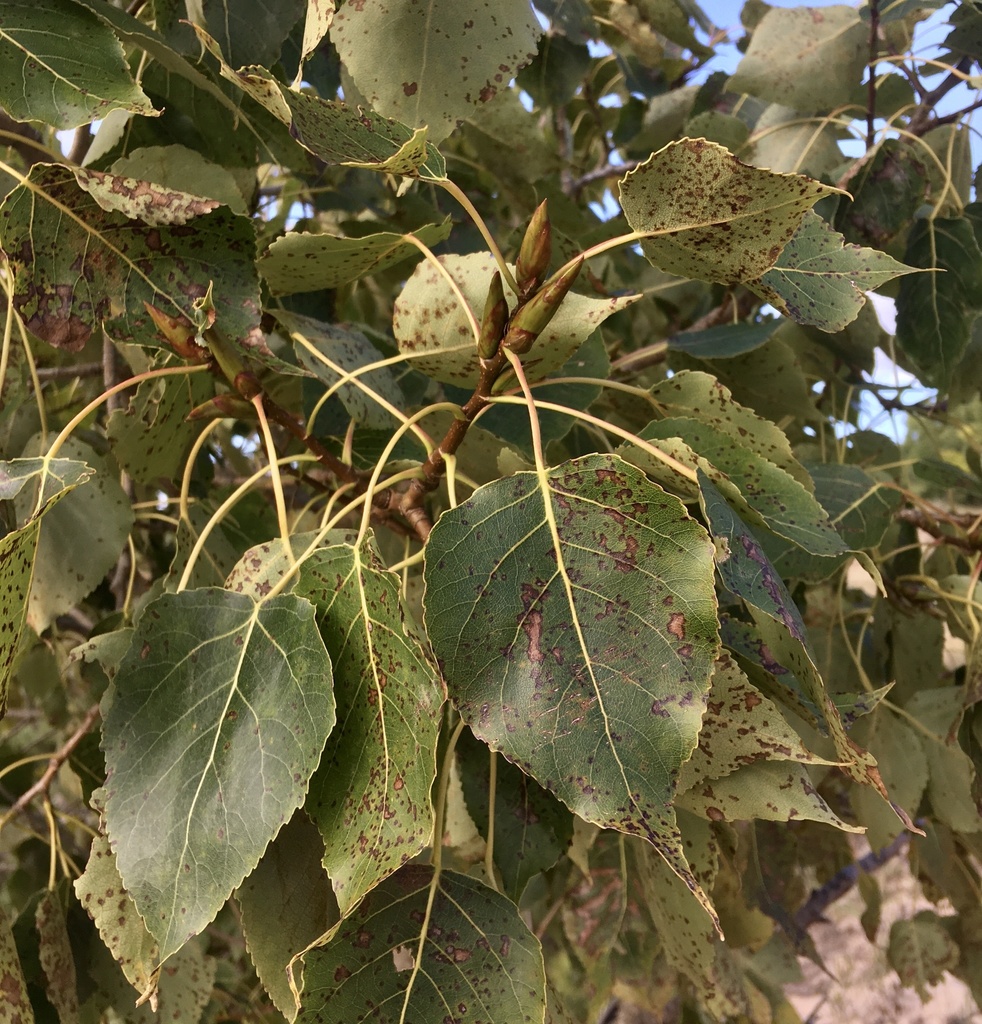
Populus balsamifera, commonly known as balsam poplar, is a deciduous tree native to North America that can reach considerable heights. It is characterized by its smooth, grayish bark that becomes furrowed with age, and its oval leaves with a distinctive balsamic scent when crushed. It is ideal for large open spaces, parks, and riverbanks, where its imposing size and rapid growth can be fully appreciated.
Native range
North America: Canada and the northern United States
Care tips
Balsam poplar thrives in full sun and moist, well-drained, nutrient-rich soils, tolerating a range of soil conditions. It requires abundant watering, especially during dry periods and in its early years of growth. A common mistake is planting it near infrastructure due to its invasive root system, which can cause damage. It's crucial to avoid prolonged drought, as it can weaken the tree and make it more susceptible to pests and diseases.
How to save a dying Balsam poplar
- Warning signs
- Yellowing/browning leaves early, leaf drop outside autumn, cracked/soft bark, weak shoots.
- First aid
- Ensure consistent watering (moist, not waterlogged soil), protect young trees from direct sun. Check for pests.
- What kills it
- Prolonged drought or constant waterlogging. Does not tolerate dry or compacted soils. Water stress.
- Can it be saved?
- Yes, if acted upon quickly. Requires attention to water and good drainage. Recovery is possible with care.