Weeping willow (Salix babylonica)
Care, watering, light and tips for Weeping willow on Floravia.
Quick facts
- Family: Salicaceae
- Difficulty: Moderate care
- Watering: every 3 days
- Light: Partial shade
- Temperature: 10–30 °C
- Toxicity: Toxic to pets
About Weeping willow
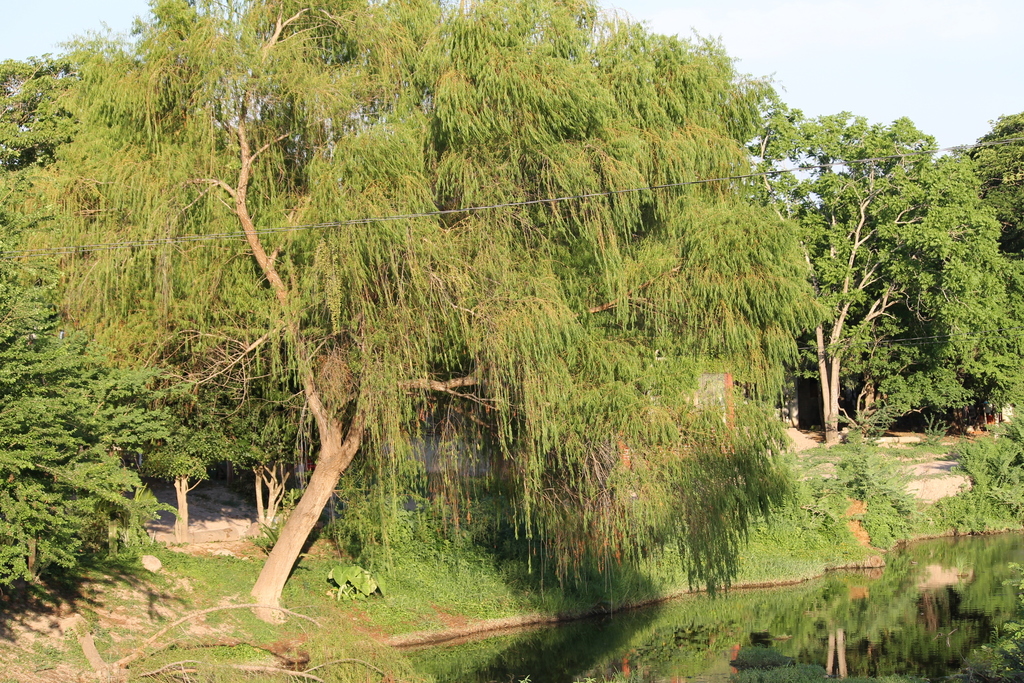
Salix babylonica, commonly known as the Weeping Willow, is an elegant and fast-growing deciduous tree, famous for its pendulous branches that give it a distinctive, melancholic appearance. Its long, slender branches, covered with bright green narrow leaves, create a majestic silhouette that looks spectacular near bodies of water, such as ponds or streams, where its branches can brush the surface. It is ideal for adding a touch of serenity and drama to large gardens or parks.
Native range
Northern China
Care tips
The Weeping Willow thrives in full sun, requiring at least 6 hours of direct sunlight daily for optimal growth. It needs abundant and regular watering, especially during dry periods, as it is a tree that loves moisture and can tolerate waterlogged soils. It prefers moist, well-drained, and slightly acidic to neutral soils. A common mistake to avoid is planting it too close to structures or pipes, as its extensive root system can cause damage.
How to save a dying Weeping willow
- Warning signs
- Dry, brittle, leafless branches; cracked bark or cankers; no new sprouts in spring.
- First aid
- Assess watering, prune dead branches, improve drainage if waterlogged. Check for pests/diseases.
- What kills it
- Prolonged drought (young trees); constant waterlogging; excessive or ill-timed pruning.
- Can it be saved?
- Yes, if acted upon quickly and the main trunk isn't severely damaged. Recovery can be slow.