Salix pyrenaica
Care, watering, light and tips for Salix pyrenaica on Floravia.
Quick facts
- Family: Salicaceae
- Difficulty: Demanding
- Watering: every 7 days
- Light: Partial shade
- Temperature: 10–30 °C
- Toxicity: Toxic to pets
About Salix pyrenaica
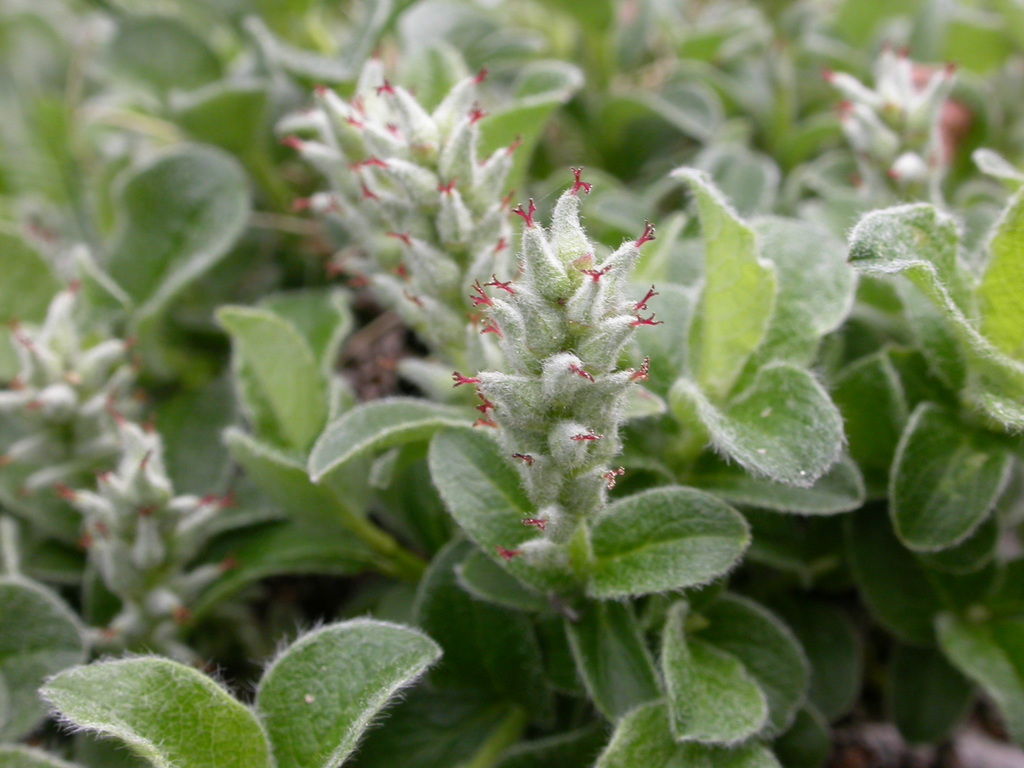
Salix pyrenaica, commonly known as Pyrenean Willow, is a low-growing deciduous shrub typically not exceeding 2 meters in height, native to the mountains of southwestern Europe. Its leaves are elliptical or ovate, usually pubescent on the underside, and its catkins appear before the leaves in early spring, adding seasonal interest. It is ideal for rock gardens, mountain stream banks, or as an element in alpine gardens, where its cold hardiness and compact size make it stand out.
Native range
Pyrenees, a mountain range between Spain and France.
Care tips
It prefers full sun to partial shade and fresh, moist, well-drained soils, preferably acidic or neutral. Regular watering is required, especially in dry climates or during establishment, avoiding prolonged waterlogging which can rot the roots. A common mistake is planting it in dry, calcareous soils, which can lead to poor growth and chlorosis. It is important to ensure good drainage and consistent moisture for its optimal development.
How to save a dying Salix pyrenaica
- Warning signs
- Wilting or yellowing leaves, dry or brittle branches, stunted growth. Soft or moldy roots if overwatered.
- First aid
- Check drainage. If potted, repot with good drainage and light substrate. Prune dead branches. Protect from intense direct sun.
- What kills it
- Constant waterlogging, lack of drainage, heavy soil. Also, water stress if the substrate dries out too quickly in hot environments.
- Can it be saved?
- Yes, if roots are not completely rotted or main trunk is not damaged. Act quickly by correcting watering and substrate.