Japanese cheesewood (Pittosporum tobira)
Care, watering, light and tips for Japanese cheesewood on Floravia.
Quick facts
- Family: Pittosporaceae
- Difficulty: Easy to care for
- Watering: every 7 days
- Light: Partial shade
- Temperature: 10–30 °C
- Toxicity: Toxic to pets
About Japanese cheesewood
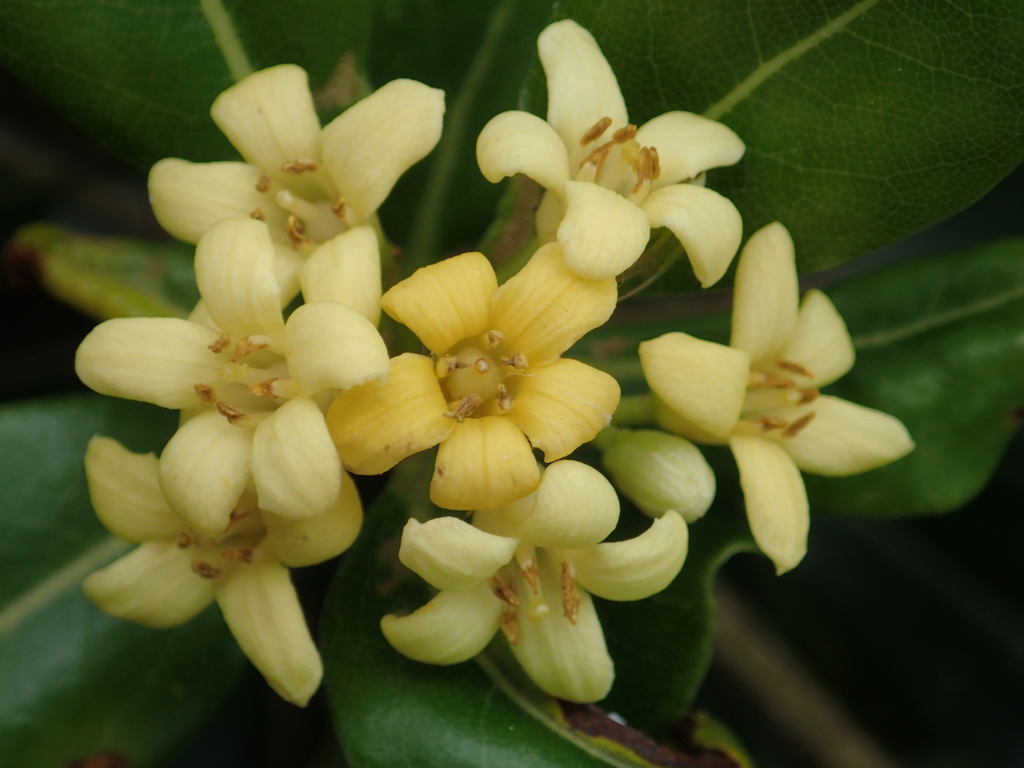
Pittosporum tobira, also known as Japanese Mock Orange or 'Arbre des Hottentots', is a very versatile evergreen shrub native to Asia. It stands out for its dense, glossy dark green foliage and its fragrant creamy white flowers that appear in spring, reminiscent of orange blossom. It is an excellent choice for hedges, screens, or as a standalone specimen in Mediterranean and coastal gardens, providing an elegant texture and a delightful fragrance.
Native range
East Asia, specifically Japan and Korea
Care tips
It prefers full sun to partial shade, tolerating partial shade well although it will flower less. It is drought tolerant once established, but appreciates regular watering in summer, avoiding waterlogging. It adapts to a wide range of soils, as long as they are well-drained, even poor or saline soils. A common mistake is excessive and late pruning, which can reduce the following year's flowering; it is ideal to prune lightly after flowering to maintain its shape.
How to save a dying Japanese cheesewood
- Warning signs
- Yellowish or brown, wilting leaves, excessive leaf drop. Dry, brittle branches.
- First aid
- Check watering (moist but not waterlogged soil). Prune dry branches. Ensure good indirect light. Consider repotting if in a very small pot.
- What kills it
- Overwatering (root rot) or complete lack of water. Location with intense direct sun or dense shade. Poorly drained soil.
- Can it be saved?
- Yes, if you act quickly. Check roots (if soft, poor prognosis). With pruning and care adjustments, it usually recovers.