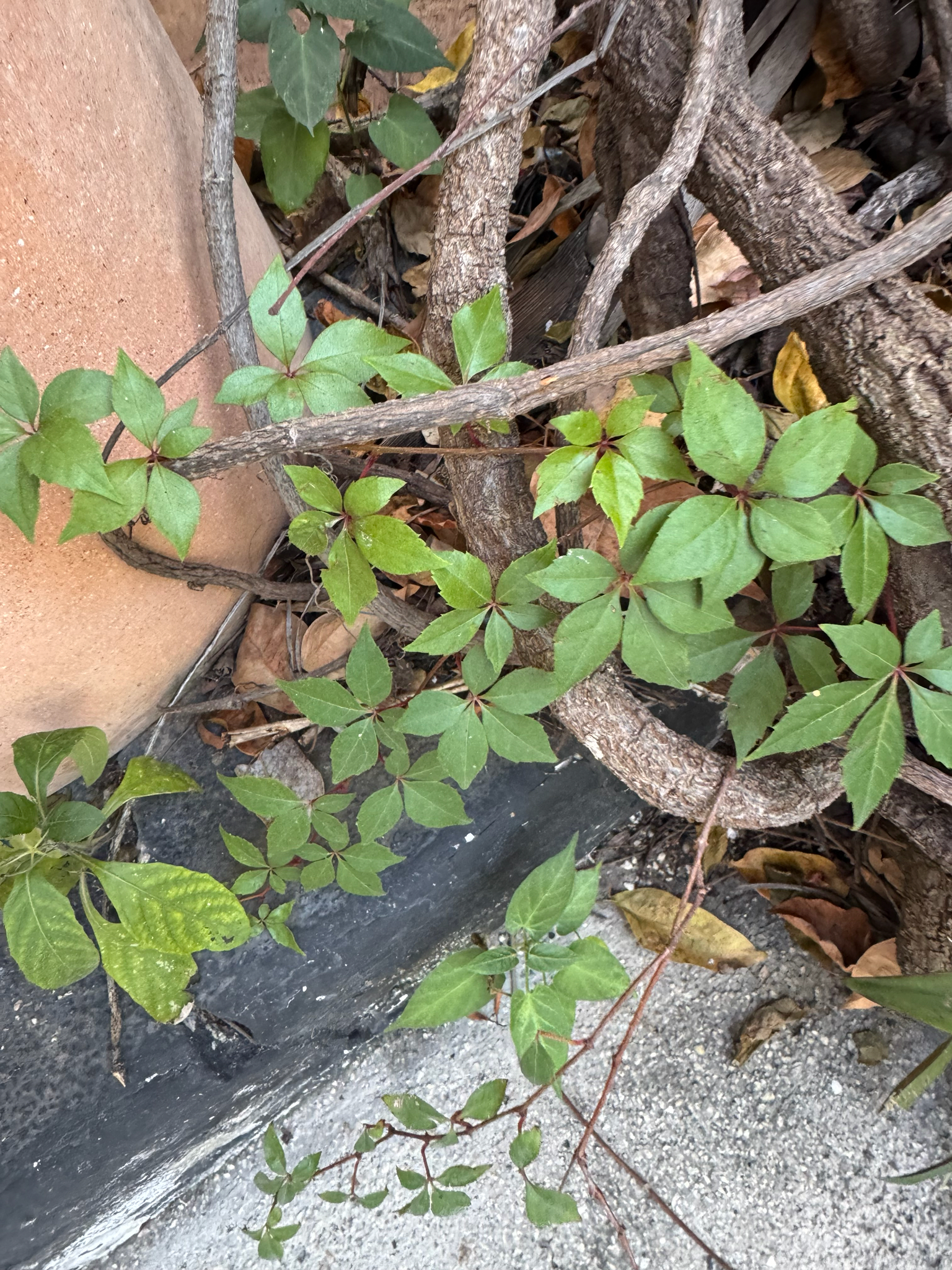
Virginia creeper (Parthenocissus quinquefolia)
Care, watering, light and tips for Virginia creeper on Floravia.
Quick facts
- Family: Vitaceae
- Difficulty: Easy to care for
- Watering: every 4 days
- Light: Partial shade
- Temperature: 10–30 °C
- Toxicity: Toxic to pets
About Virginia creeper
Parthenocissus quinquefolia, also known as 'Virginia Creeper', is a vigorous deciduous vine famous for its foliage that turns intense red in autumn. It's ideal for covering walls, pergolas, or fences, creating a spectacular seasonal backdrop. Its tendrils with adhesive pads allow it to cling to almost any surface without the need for additional support.
Native range
Eastern North America and Mexico
Care tips
This vine thrives in full sun to partial shade, where its autumn coloration will be most vibrant. It is not demanding regarding watering once established, tolerating drought periods, but appreciates regular watering in summer. It prefers well-drained soil, though it adapts to a wide range of soil types. A common mistake is planting it near roofs or gutters, as its strong adhesion can cause damage.
How to save a dying Virginia creeper
- Warning signs
- Wilting, dry leaves with brown edges, excessive leaf drop. Doesn't tolerate waterlogging or extreme drought.
- First aid
- Check soil moisture: if dry, water deeply; if waterlogged, aerate and reduce watering. Prune dry branches. Protect young plants from direct sun.
- What kills it
- Prolonged drought in summer or constant waterlogging. Exposure to severe frost without protection, especially young specimens.
- Can it be saved?
- Yes, it often recovers if watering or exposure issues are corrected quickly. It's quite resilient. Don't give up!