Berberis glaucocarpa
Care, watering, light and tips for Berberis glaucocarpa on Floravia.
Quick facts
- Family: Berberidaceae
- Difficulty: Easy to care for
- Watering: every 7 days
- Light: Partial shade
- Temperature: 10–30 °C
- Toxicity: Toxic to pets
About Berberis glaucocarpa
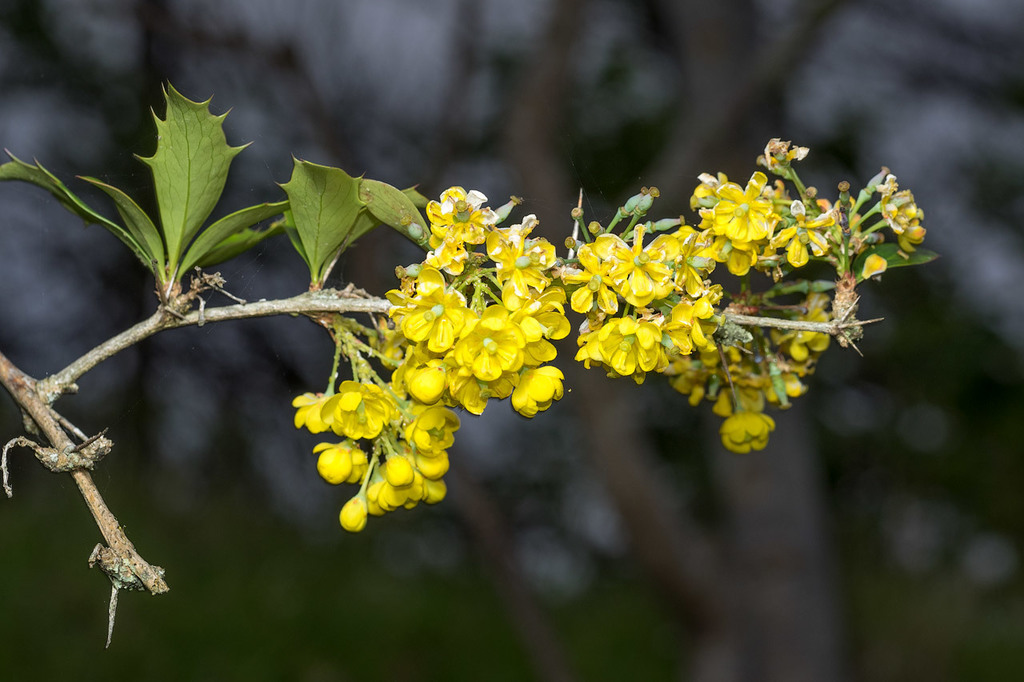
Berberis glaucocarpa, commonly known as barberry, is a deciduous or semi-evergreen shrub native to the Himalayas, prized for its attractive spiny foliage and waxy blue berries. Its leaves, which can vary in color throughout the year, and small yellow flowers make it ideal for defensive hedges or as a specimen plant in rock gardens and along pathways. Its dense, thorny habit makes it an excellent natural barrier.
Native range
Chile and Argentina
Care tips
It thrives in full sun to partial shade for optimal growth and fruiting. Once established, it is drought-tolerant but appreciates regular watering during dry periods, especially in well-drained substrates. It adapts to a wide range of soils, though it prefers slightly acidic to neutral ones. A common mistake is planting it in very heavy, waterlogged soils, which can lead to root rot; ensure good drainage.
How to save a dying Berberis glaucocarpa
- Warning signs
- Yellowish or reddish leaves out of autumn, excessive leaf drop, stunted growth, dry or brittle branches.
- First aid
- Check soil drainage and moisture. Prune dead branches. Protect from extreme summer sun if young.
- What kills it
- Overwatering (especially in winter) or waterlogging, which rots its roots. Very clayey soil.
- Can it be saved?
- Yes, if roots are not completely rotted. Improve drainage and control watering to revive it.