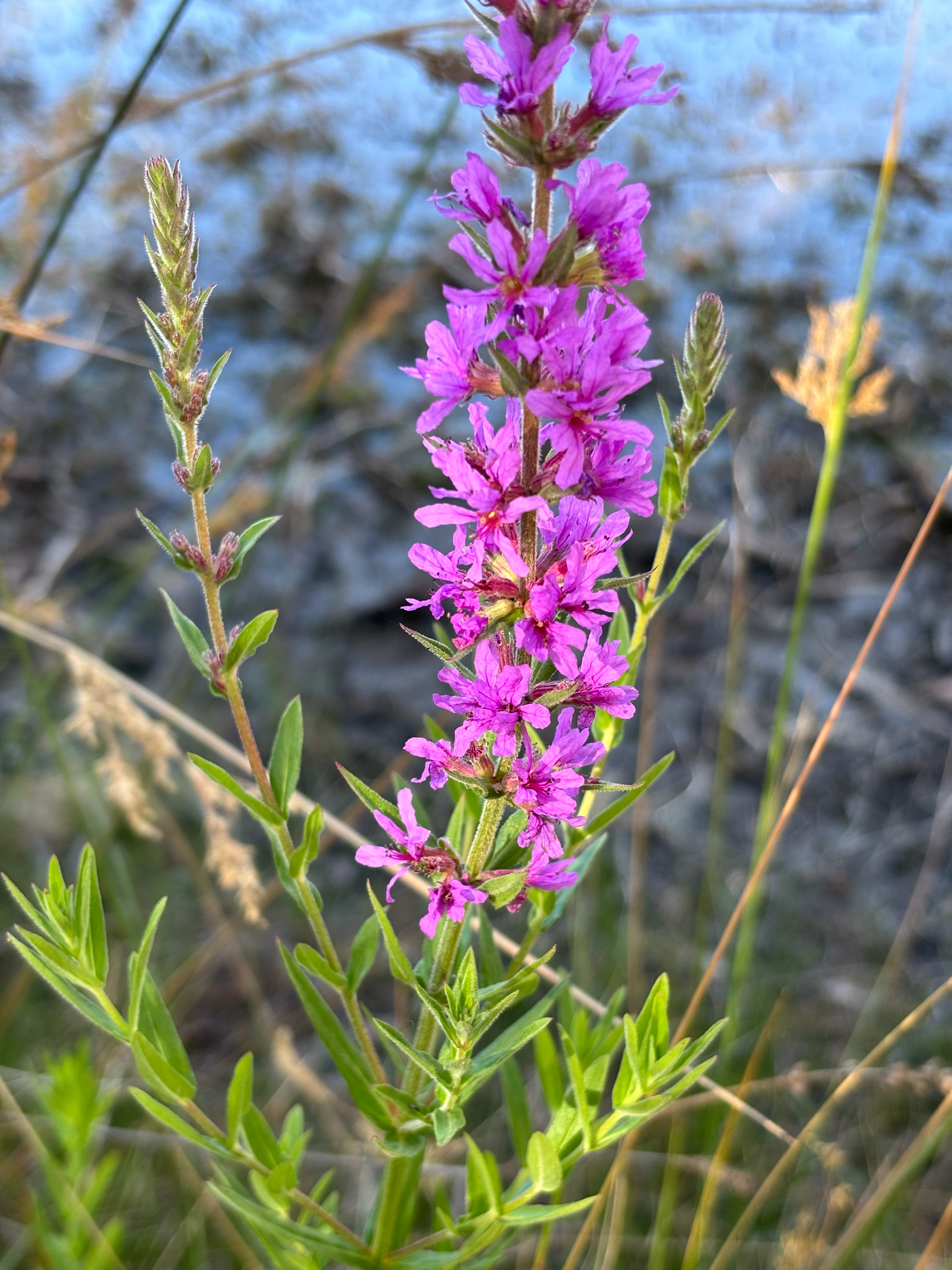
Purple loosestrife (Lythrum salicaria)
Care, watering, light and tips for Purple loosestrife on Floravia.
Quick facts
- Family: Lythraceae
- Difficulty: Easy to care for
- Watering: every 3 days
- Light: Partial shade
- Temperature: 10–30 °C
About Purple loosestrife
Lythrum salicaria, commonly known as Purple Loosestrife or Kattehale, is a herbaceous perennial plant that produces tall, dense spikes of bright purplish-pink flowers during summer. It's ideal for pond margins, wetland gardens, or as part of a rain garden, where its showy blooms attract pollinators. Its presence can add a vibrant and natural touch to aquatic landscapes or damp areas of the garden.
Native range
Europe and temperate Asia
Care tips
It prefers full sun to partial shade and consistently moist or even boggy soils, though it tolerates a range of soil types. Regular watering is essential to maintain moisture, especially in dry climates or when establishing. An ideal substrate is rich in organic matter and well-draining, yet moisture-retentive. A common mistake is planting it in dry soils, which will severely limit its growth and flowering.
How to save a dying Purple loosestrife
- Warning signs
- Wilting, yellowing or dry-edged leaves; flowers not opening or falling prematurely. General decline.
- First aid
- Check soil moisture (must be constant). If dry, water thoroughly. If waterlogged, improve drainage.
- What kills it
- Excessive substrate drying, especially during flowering; lack of direct sun or deep shade.
- Can it be saved?
- Yes, it's resilient. Act quickly by correcting watering and sun exposure. It can regrow if damage isn't extreme.