Pomegranate (Punica granatum)
Care, watering, light and tips for Pomegranate on Floravia.
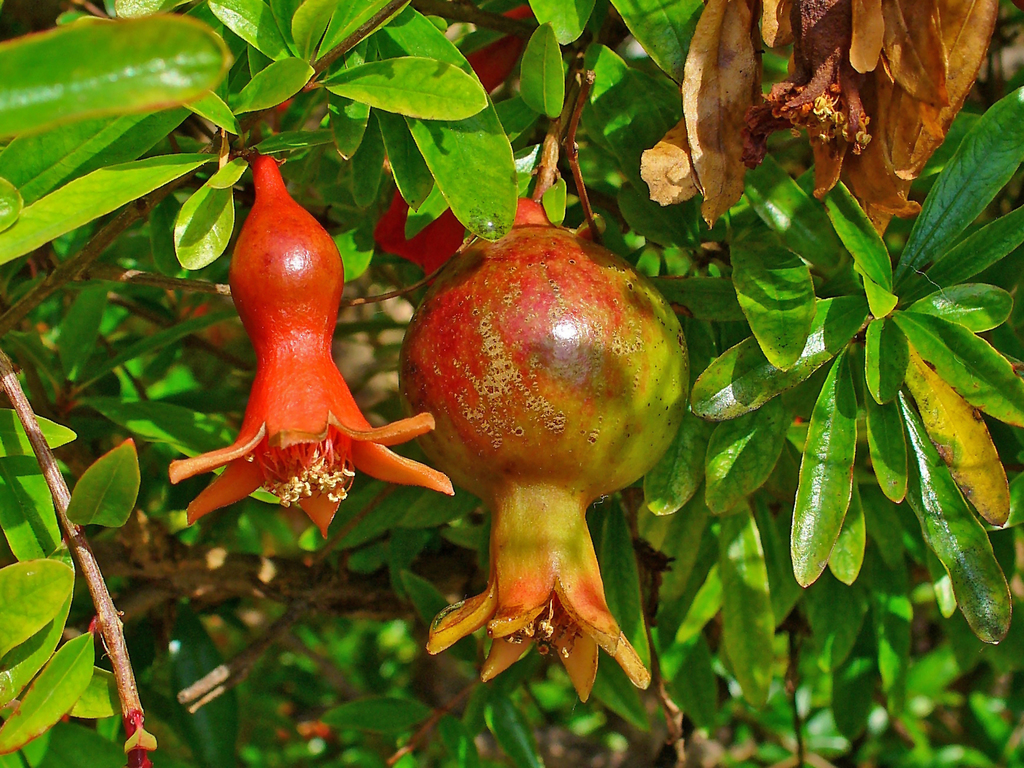
Quick facts
- Family: Lythraceae
- Difficulty: Easy to care for
- Watering: every 4 days
- Light: Partial shade
- Temperature: 10–30 °C
About Pomegranate
Punica granatum, commonly known as pomegranate, is a deciduous shrub or small tree valued for its attractive orange-red flowers and edible fruits. Its branched habit and glossy foliage make it ideal for hedges, as a standalone specimen, or even in large pots in suitable climates. It brings a Mediterranean and exotic touch to any garden or patio.
Native range
Region from Iran to northern India
Care tips
Pomegranate thrives in full sun, requiring at least 6 hours daily for good flowering and fruiting. It is drought-tolerant once established, but regular watering during flowering and fruit development will improve the harvest. It prefers well-drained soils, from slightly acidic to alkaline. A common mistake to avoid is overwatering in heavy soils, which can lead to root rot.
How to save a dying Pomegranate
- Warning signs
- Yellow leaves falling in clumps, dry and brittle branches, unripe or premature fruit drop.
- First aid
- Check watering (moist but not waterlogged soil), prune dry branches, and apply balanced fertilizer in spring.
- What kills it
- Overwatering that rots roots or lack of direct sun, weakening the plant and preventing fruiting.
- Can it be saved?
- Yes, it's a resilient plant. Act quickly by correcting watering and sun exposure. Don't give up on it!