Pomegranate (Punica protopunica)
Care, watering, light and tips for Pomegranate on Floravia.
Quick facts
- Family: Lythraceae
- Difficulty: Moderate care
- Watering: every 3 days
- Light: Partial shade
- Temperature: 10–30 °C
- Toxicity: Toxic to pets
About Pomegranate
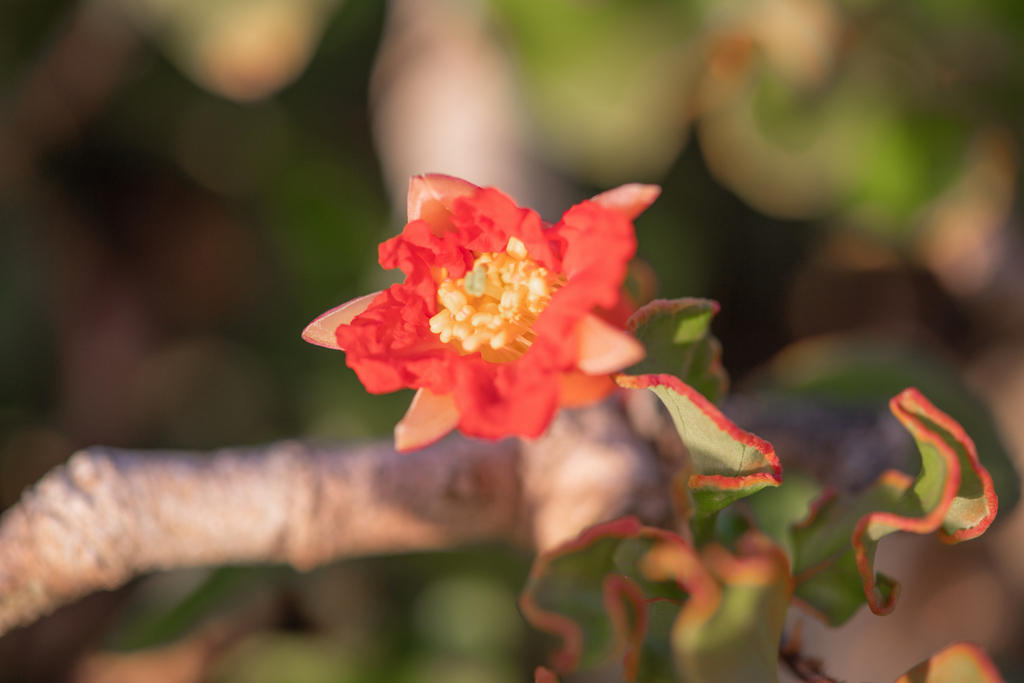
Punica protopunica, also known as the Socotra Wild Pomegranate, is a rare and fascinating species native to the island of Socotra. It is characterized by its glossy leaves and small pink or red flowers that develop into fruits smaller and less sweet than the common pomegranate. This plant is ideal for collectors or arid gardens seeking a unique and resilient species with a shrubby or small tree habit.
Native range
Socotra Island, Yemen
Care tips
It requires full sun for optimal growth and abundant flowering. Watering should be moderate, allowing the substrate to dry out completely between waterings, as it is drought-tolerant. It prefers well-drained, poor soils, ideally sandy or rocky, and does not tolerate waterlogging. A common mistake is overwatering, which can lead to root rot.
How to save a dying Pomegranate
- Warning signs
- Yellow or dropping leaves, dry shoots, no flowers or fruit. Pomegranates are tough, but show stress clearly.
- First aid
- Check watering (underwatering is common). Prune dry branches. Ensure good drainage and sun. Consider repotting if potted.
- What kills it
- Lack of direct sun and poor drainage. Pomegranates need lots of light and don't tolerate waterlogging. Also prolonged underwatering.
- Can it be saved?
- Yes, it's very resilient! With water, sun, and good drainage, it usually recovers. Give it time and patience.