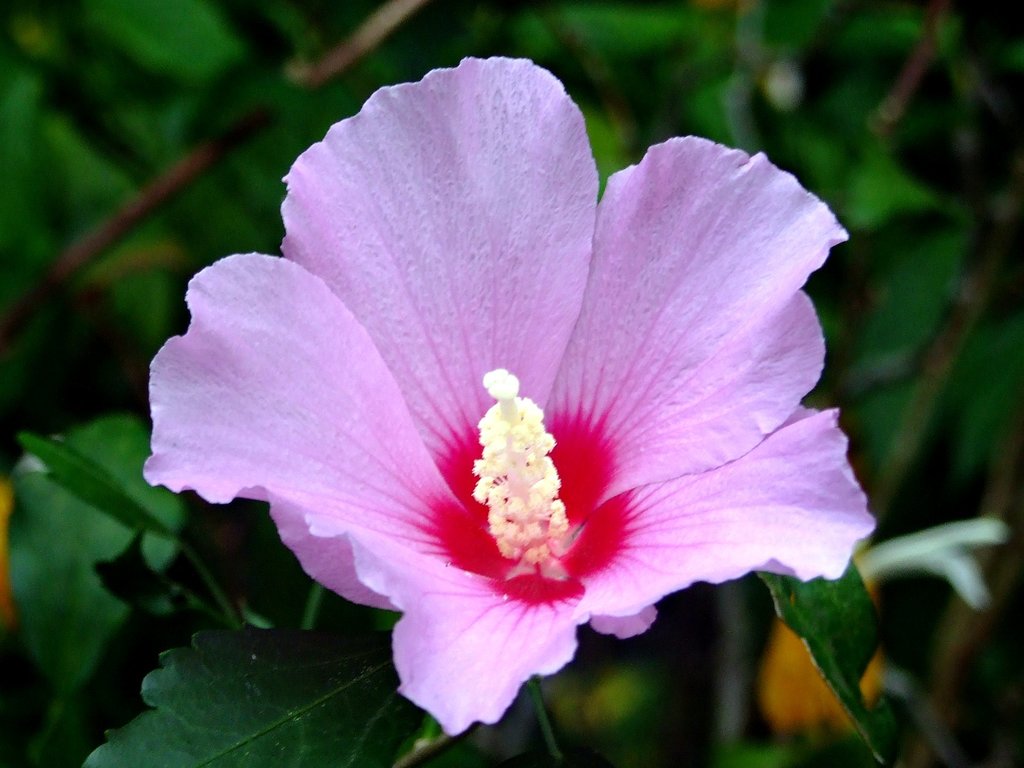
Rose of Sharon (Hibiscus syriacus)
Care, watering, light and tips for Rose of Sharon on Floravia.
Quick facts
- Family: Malvaceae
- Difficulty: Easy to care for
- Watering: every 3 days
- Light: Partial shade
- Temperature: 10–30 °C
- Toxicity: Toxic to pets
About Rose of Sharon
Hibiscus syriacus, also known as Rose of Sharon, is a deciduous, long-flowering shrub belonging to the Malvaceae family. It is characterized by its large, showy, trumpet-shaped flowers that appear from summer to autumn, in shades of white, pink, purple, and blue, often with a contrasting eye. This plant is ideal for hedges, flower beds, or as a solitary specimen in temperate climate gardens, adding an exotic and colorful touch.
Native range
Eastern Asia
Care tips
It prefers full sun exposure for abundant flowering, although it tolerates some partial shade. Regular watering is needed, especially during dry periods, keeping the substrate moist but well-drained. It adapts to a wide range of soils but prefers those rich in organic matter and with good drainage; a common mistake is waterlogging, which can lead to root rot. Pruning in early spring stimulates more vigorous flowering and helps maintain its shape.
How to save a dying Rose of Sharon
- Warning signs
- Yellowing or sudden leaf drop, flower buds failing to open or dropping, dry or brittle branches.
- First aid
- Check watering (neither dry nor waterlogged). Prune dead branches. Protect from extreme sun or late frosts. Ensure good drainage.
- What kills it
- Prolonged drought or constant waterlogging. Lack of pruning or incorrect pruning. Location with insufficient sun or severe frosts.
- Can it be saved?
- Yes, if roots are not rotted. With good care and patience, it can sprout and recover.